
Imphal: Myanmar has officially dethroned Afghanistan as the world’s top opium producer, and the tremors are being felt hard in India’s northeast. The Narcotics Control Bureau’s 2026 report, which documents this shift, delivers a sobering verdict for Manipur: the state is no longer just a passage for narcotics, it has become a major hub.
According to the NCB, Myanmar’s Golden Triangle has ballooned into both an opiate supplier and a dominant methamphetamine production center, particularly in territories held by ethnic armed groups in Shan State. This “poly-drug production” setup, as the bureau describes it, is now feeding directly into India through the Manipur corridor. National Highway 102, which runs through the state, has turned into the primary land route for heroin and methamphetamine, including Yaba tablets entering the country.
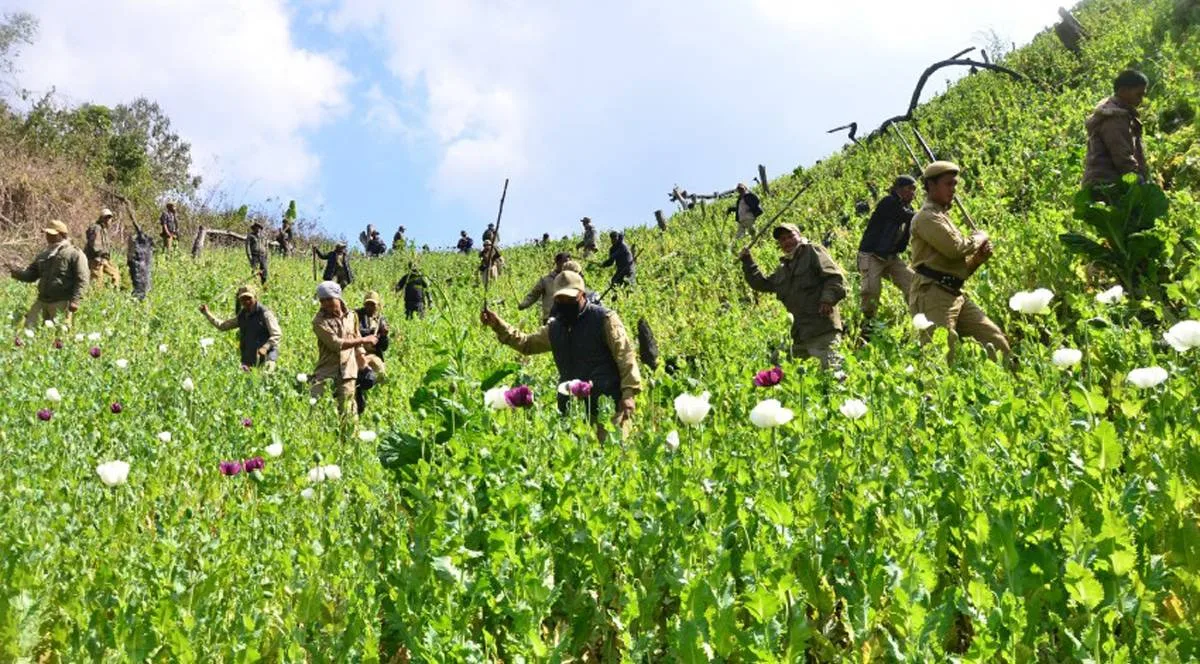
The scale of the problem is staggering. Opium farming in Myanmar shot up 56 percent between 2021 and 2023, covering 45,200 hectares. The spillover is impossible to miss in Manipur’s hill country, where jungle is being cleared at an alarming rate to plant poppy. The environmental damage, officials note, has been catastrophic. Hillsides stripped of forest cover are bleeding soil into the valleys below, and without trees to soak up monsoon rain, runoff is triggering floods in the plains. Remote ridges, once thick with forest, are now dotted with settlements built specifically around opium gum harvesting.
The local dimensions of the crisis have raised serious questions. The report indicates that villagers in the hill areas have been driving much of the cultivation, cutting deep into the jungle to sow poppy across the high ridges.
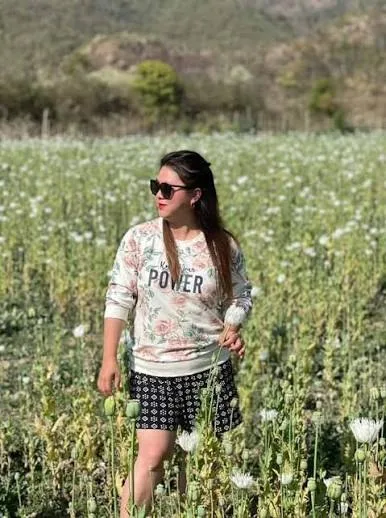
Kuki MLAPhotographs that reportedly surfaced appeared to show Kuki MLA Kimneo Haokip from Saikul AC posing with poppy flowers at an illegal farm, a visual that, if verified, points to troubling intersections between politics and the narcotics economy.
Enforcement data tells its own story. Since 2017, security forces have wiped out more than 19,000 acres of poppy fields across 12 hilly districts. Records suggest Kangpokpi and Churachandpur districts with significant Kuki population have seen the most intense activity. The money involved is eye-watering. Raw opium commands up to ₹1.5 lakh per kilogram in the local market during the off-season. Refined into pure heroin and smuggled into international markets, the drugs from the destroyed fields alone would be worth billions of dollars.
The Manipur government claims it has seized or incinerated narcotics worth ₹60,000 crore and put nearly 3,000 people behind bars under tough anti-drug laws. Still, the trade booms. Every time authorities torch one field, fresh plantations appear on the next ridge. The profits are simply too large, and the alternatives too few, for the cycle to break.
But the real problem runs deeper. The arrests, by all accounts, are not touching the people who matter. Police regularly pick up couriers, drivers, and destitute farmers, the disposable bottom rung of the operation. The financiers and organizers, the ones who actually run these networks, are nowhere in the dock. The report makes a startling claim: the Manipur government has not managed to imprison a single major drug lord behind these operations. Shielded by wealth, influence, and the labyrinthine politics of the region, the kingpins walk free.
Chasing mules will not stop a trade this organized. Until investigators start dismantling the networks at the top rather than harvesting easy arrests at the bottom, the heroin and meth will keep rolling down Highway 102. And with Myanmar’s fields producing more opium than ever, Manipur is running out of time.
Editor's Note: This report is based on the 2026 NCB findings and official government data. Claims regarding specific individuals and photographs are attributed to the original source material and remain subject to independent verification.




Comments