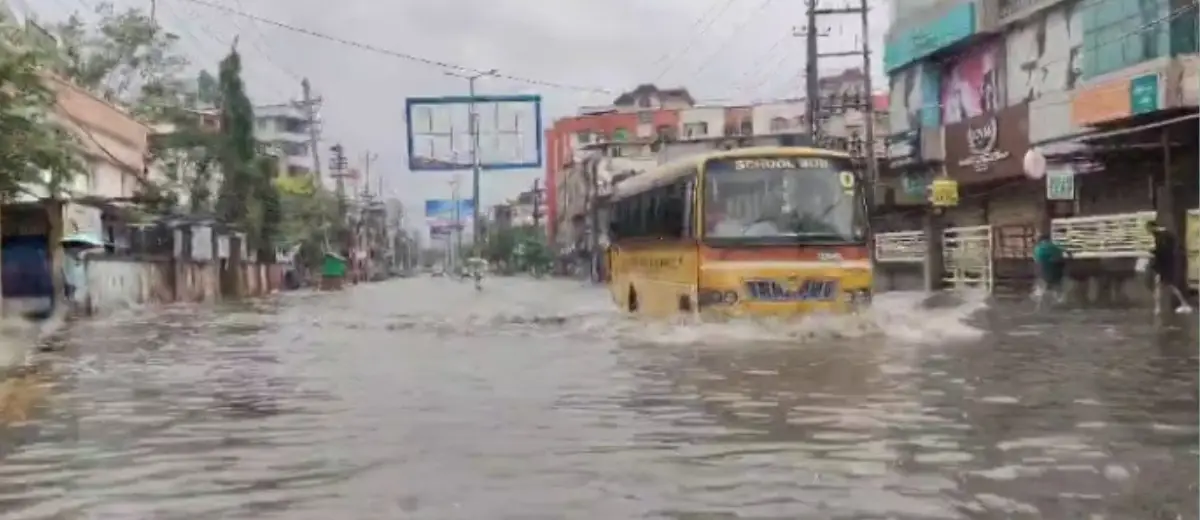
 Photo Courtesy: nenow
Guwahati: Guwahati faces a recurring crisis that goes beyond rainfall and drains. Experts note that physical hazards do not dictate the full scale of disaster. Social inequality shapes the real damage. A 2020 study in the International Journal of Disaster Risk Reduction analyzed 31 municipal wards using expert mapping and surveys of 1,023 citizens. Results showed that 38.70 per cent of wards dropped a category once human vulnerability was calculated alongside physical risk.
Flood impact varies by household. A person with savings and a car experiences a temporary nuisance. A daily-wage worker loses their livelihood. "The rain may be the same. The vulnerability is not." This disparity forces planners to look past geography. Poor, low-lying areas often bear the heaviest burden when infrastructure fails.
The Bharalu basin serves as a stark example. Rapid, unplanned development and clogged drains regularly stall the area. Research published in the Journal of Environmental Management highlights how this basin’s issues affect the entire city network. Blocked roads stop workers, students, and patients. Mobility functions as an economic resource, yet daily commuters and those relying on public transport suffer most when these systems break down.
Economic costs often remain invisible. Beyond property damage, families face lost wages and rising debt. Recovery is equally uneven. While some residents repair their homes easily, others must borrow money or cut food spending to survive. Repeated floods create a cycle of poverty that traps households long after the water clears.
City leaders must map social vulnerability alongside physical terrain. Better flood management requires protecting wetlands, improving drainage, and securing vital transport routes. Officials should prioritize households dependent on daily wages. Future urban policy must treat flood resilience as a matter of social justice, not just civil engineering.





Comments