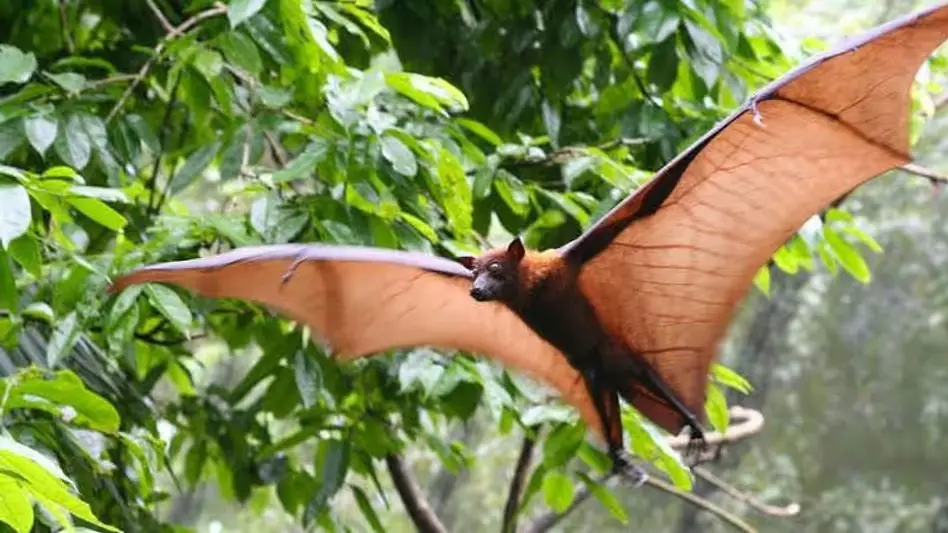
 Photo Courtesy: India Today Group
Guwahati: A recent study in Assam's Kamrup district tracked 115 trees used by bats for roosting. The findings appear in the Journal of Threatened Taxa, published October 26. Researchers mapped 16 distinct roosting sites across nine separate locations. They documented 23 different tree species acting as homes for these animals.
Anindita Deka, Malabika Kakati Saikia, and Prasanta Kumar Saikia from Gauhati University led the project. They conducted field surveys from November 2019 through March 2025. Besides trees, the team found bats using tree cavities, leaves, bamboo internodes, residential houses, and building crevices. Tall trees with high trunks boosted bat numbers.
Data shows a model explaining 28.2 percent of the variation in bat population density. Exotic tree species hosted more bats than native varieties. Evergreen and deciduous trees showed no significant difference in occupancy. Distance to water and human settlements mattered. Bats prefer staying closer to people and water sources. As the authors stated: "The findings highlight the need to reconsider how trees and other potential roosting habitats are managed, particularly as human activity alters natural landscapes."
Conservationists must save mature trees, standing dead timber, and bamboo stands. Human structures also provide vital shelter. Bats provide natural insect control, seed dispersal, and pollination. The study provides necessary data to help manage habitats in Northeast India.







Comments