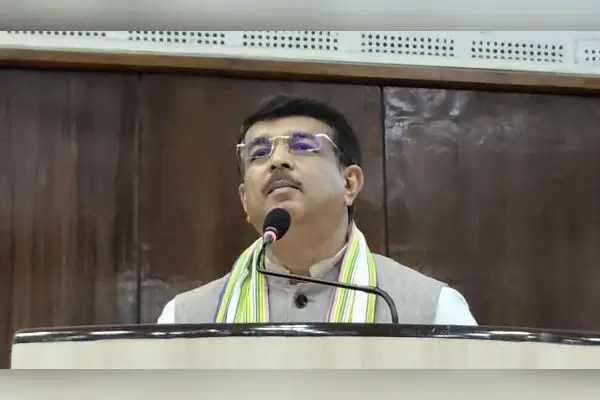
 Photo Courtesy: tripuratimes
Agartala: Tripura Public Works Department and Health Secretary Kiran Gitte wants a joint initiative with Bangladesh to solve perennial flooding. Agartala, Kailashahar, and Belonia face rising water levels because drainage channels cross the border into neighboring land. These areas suffer when water hits flat ground without proper exits.
Gitte highlighted the transboundary nature of the crisis during a recent session on Agartala waterlogging. "Most of the water discharged by major channels of Agartala city enters into Bangladesh," Gitte stated. The official argued that local solutions alone cannot fix this. Bangladesh counterparts have shown interest in working together during Joint River Commission meetings.
Funding remains a key factor for future projects. Gitte suggested either asking the Bangladesh government for money or requesting the Government of India to finance work on both sides. This model reflects the existing Akhaura-Agartala railway project, which India fully funded. Connectivity between the nations currently spans rail, road, and water networks.
The National Institute of Hydrology in Roorkee is now studying Agartala's drainage network. Workers aim to close a 650-meter gap on the Northern Bank of the Howrah River to protect parts of the city. Officials plan to resettle families to finish this barrier. This will stop flooding from Maharaj Ganja Bazar to the City Centre. However, experts fear this may push water pressure toward the river's Southern side.
Agartala serves six lakh residents and two lakh daily visitors. Current infrastructure meets 80 percent of water demand. Gitte plans to source more surface drinking water from the Gomati River and other state waterways to bridge the gap.




Comments