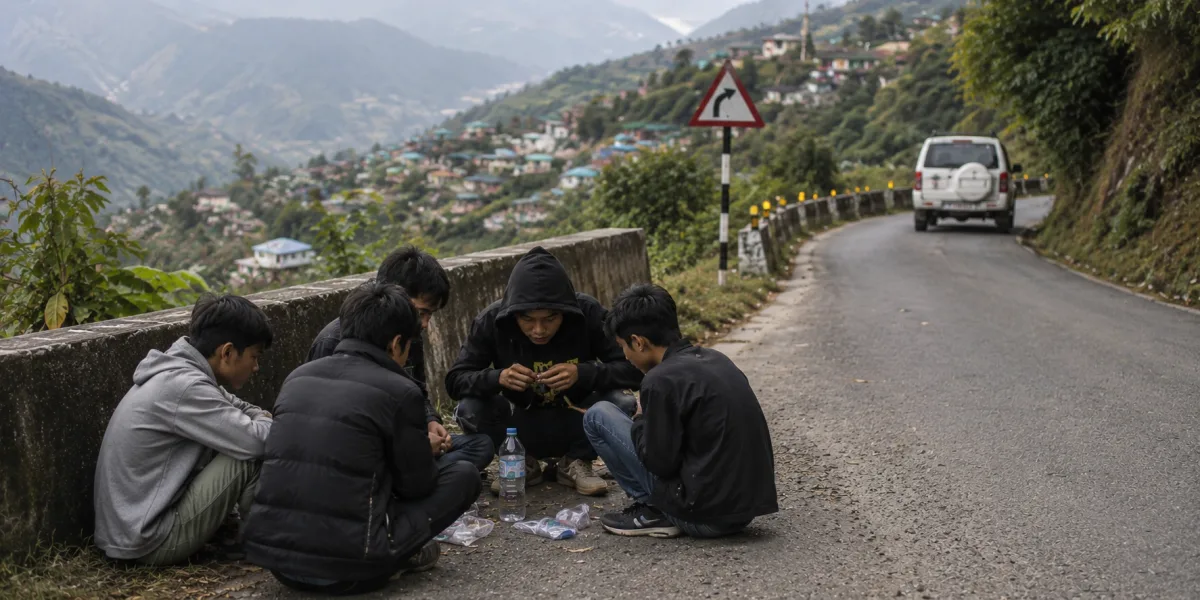
 Photo Courtesy: Representative Image
A young man in a remote Arunachal Pradesh village slips into opioid dependence. His family, bound by the quiet shame that still surrounds addiction in close-knit tribal communities, does not take him to a hospital. Even if they wanted to, the nearest medically supervised de-addiction ward is hours away across mountainous terrain, and the travel costs are prohibitive. Instead, he is handed over to a local grassroots group, where rehabilitation means spiritual discipline and informal counseling, far from the reach of clinical psychiatry or state oversight. This is not an isolated tragedy. It is the daily reality of a silent epidemic. Arunachal Pradesh may be watching an entire generation slip away, and the state’s primary response has been to count the drugs it confiscates rather than the lives it fails to save.
The documentary record presents a stark paradox. On paper, the state is waging a formidable war on narcotics. Police data from operations like "Operation Dawn 2.0" highlight hundreds of arrests and seizures worth crores of rupees under the Narcotic Drugs and Psychotropic Substances Act. The Arunachal Pradesh Police Narcotics Cell is visibly active, projecting an image of zero-tolerance enforcement along the porous Indo-Myanmar border. Yet this supply-side aggression masks a profound demand-side collapse. Surveys conducted by the Ministry of Social Justice and Empowerment consistently rank Arunachal Pradesh among the top four states in India for the prevalence of alcohol and opioid use. When the State Cabinet approved the Psychoactive Substance Policy in 2021, it mandated a three-pronged strategy: controlling supply, reducing demand, and expanding treatment. Half a decade later, the third prong remains largely theoretical. Academic and policy assessments document that the number of functional, medically supervised de-addiction centers in the state remains remarkably small, entirely disproportionate to the scale of the crisis.
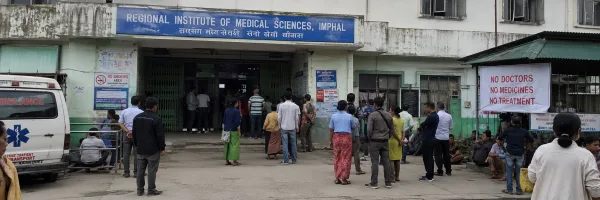
What does this infrastructural deficit actually look like on the ground? It looks like remote district hospitals where physical buildings may have been upgraded, but specialized psychiatric wards sit critically understaffed. It looks like families managing agonizing medical withdrawals at home because the stigma of addiction is compounded by the sheer economic impossibility of accessing care. The geographic reality of isolated villages means that seeking help is a luxury most cannot afford.
When the state abdicates its public health responsibilities, a vacuum emerges. Civil society organizations and anti-drug activists have stepped into this void, performing indispensable work in areas where the government is absent. But relying on informal, spirituality-driven interventions to treat severe chemical dependencies is a desperate adaptation to state failure, not a sustainable public health model. This reliance also carries severe legal and ethical risks. Recent public records indicate that certain prominent anti-drug activists and grassroots volunteers have faced serious legal charges, including allegations under the Protection of Children from Sexual Offences Act. When vulnerable, often underage, addicts are placed in unregulated setups lacking statutory oversight, the potential for exploitation rises sharply. The state cannot outsource its constitutional obligations to unmonitored volunteers and then express surprise when those arrangements fracture under legal scrutiny.
The institutional challenge here is not merely administrative. Under Article 21, the state bears a positive obligation to protect the right to life, which includes the right to health. By prioritizing the optics of law enforcement over the quiet, unglamorous work of medical rehabilitation, the Arunachal Pradesh government is failing its most vulnerable demographic. The Arunachal Pradesh Psychoactive Substances Control Authority and the Department of Health have allowed a dangerous disconnect to fester between the Narcotics Cell and public health infrastructure. Seizing heroin at the border is a necessary security measure. Arresting a user without providing a medical pathway to recovery merely criminalizes a disease, transforming a public health crisis into a revolving door of incarceration and relapse.
The 2021 Psychoactive Substance Policy is currently a documented failure in implementation. The state government has demonstrated a willingness to fund punitive measures while starving therapeutic ones. This is not a resource constraint; it is a misallocation of priorities. An administration that can mobilize massive police operations across difficult terrain can certainly staff a de-addiction ward in a district hospital. The absence of medical infrastructure may be seen as a choice.
To reverse this abandonment, institutional action must be specific and audited. The State Government must publish an annual, district-wise report detailing the exact ratio of functional rehabilitation beds to the estimated population requiring treatment. The Department of Health must allocate ring-fenced funding in the next state budget exclusively for staffing and equipping de-addiction wards. Simultaneously, the Psychoactive Substances Control Authority must establish and enforce rigorous medical, financial, and legal oversight protocols for all NGO-run centers, ensuring that civil society interventions operate within a framework that protects vulnerable youth.
A society is judged by how it treats those who have lost the ability to protect themselves. In Arunachal Pradesh, the state is currently choosing the spectacle of the seizure over the sanctuary of the clinic. Until the government recognizes that a confiscated packet of narcotics is not a substitute for a functioning hospital bed, the silence surrounding this crisis will only be broken by the loss of another generation.
— The Editorial Team, NEWire.in

Comments