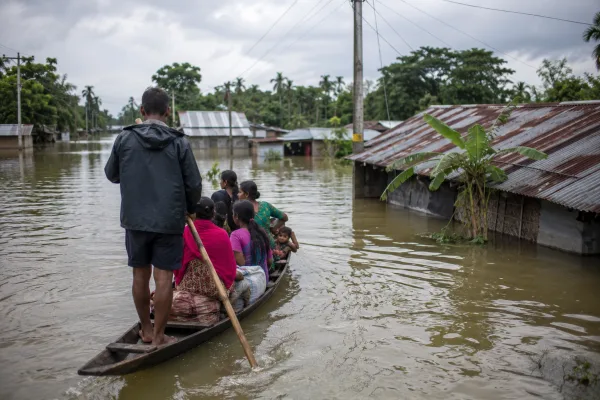
 Photo Courtesy: Representative Image
"NEWire.in editorial examines Manipur's machinery of extraction through CAG findings, documenting how public funds are diverted before reaching citizens and demanding accountability from the restored government."
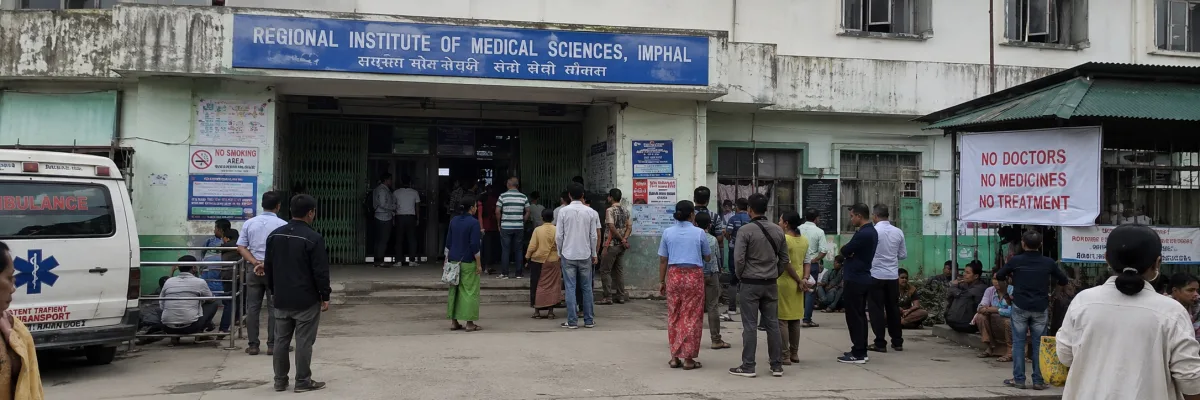
A mother in a hill district of Manipur pays Rs 6,452 out of her own pocket to deliver a child in a government hospital. If she needs referral transport to Imphal, the ambulance costs another Rs 3,000 to 5,000. Official data confirm this is the highest childbirth burden in India. In a state that has received crores in central health funding, the question is not whether the system is strained. It is whether the system exists at all.
The answer lies in a machinery of extraction that converts public money into private gain before a single brick is laid or a single patient is treated.
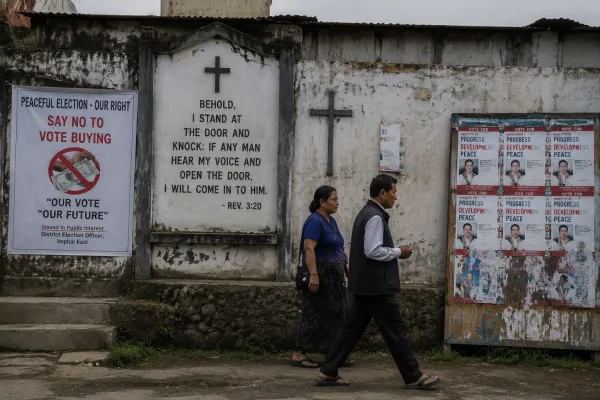
Consider the arithmetic of representation. In the 2022 Assembly elections, 53 per cent of candidates declared assets exceeding Rs 1 crore. Re-contesting MLAs recorded an average asset growth of 85 per cent over five years. One leader's wealth surged 1,700 per cent. The Election Commission seized cash, drugs, and inducements worth over Rs 200 crore across five states including Manipur during that poll period. When elections are bought, the victors arrive in office already indebted to their financiers.
Those debts are recovered through public contracts. The Hill and Plain Contractors' Association has publicly alleged that only contractors with political connections receive timely payments; others are left waiting indefinitely. An E-Pao editorial citing police analysis reported that engineers in the Public Works Department, Irrigation and Flood Control, Power, Public Health Engineering, and Minor Irrigation deduct "eighty to ninety per cent" from contractor bills, a pattern consistent with the CAG's subsequent findings of systemic financial irregularity and unsubstantiated expenditure across these same departments. Under the National Highways and Infrastructure Development Corporation Limited, 26 of 33 ongoing projects in Manipur are delayed, with key corridors stalled at 38 to 41 per cent physical progress years after their deadlines.
The contractor's remaining margin faces a second levy. A field survey by the Vivekananda International Foundation found contractors paying underground groups between 10 and 25 per cent of contract value; while the survey data is not current, it remains the most comprehensive documentation available, and conservative estimates still place total annual extortion at Rs 100 crore. The extraction does not stop at construction sites. In 2009, the state Finance Department acknowledged the problem by ordering compulsory bank payment of salaries, after finding that Drawing and Disbursing Officers were deducting 60 to 70 per cent from employee salaries for militant groups.
These three mechanisms do not operate in isolation. They form a single extraction cycle. Electoral money power produces representatives who owe their allegiance to financiers rather than voters. Those representatives influence contract allocation. Engineers extract their percentage. Underground groups take theirs. What reaches the ground is a fraction of what was budgeted.
The Comptroller and Auditor General has mapped the consequences in exacting detail. Report No. 2 of 2025 found that Abstract Contingent bills worth Rs 102.40 crore drawn by the Tourism Department lacked the Detailed Countersigned Contingent bills required to verify whether the money was spent for sanctioned purposes. Nine tourism projects, budgeted at Rs 88.57 crore, were abandoned after incurring Rs 25.31 crore in expenditure, with delays stretching from seven to thirteen years. At the Khongjom War Memorial Complex, an open-air theatre and children's amusement park built at Rs 35.31 lakh were not found during physical verification; the CAG noted they had been demolished.
The audit also found that income tax of Rs 76.41 lakh deducted from contractors was not deposited with the Central Government for up to 37 months. Labour cess of Rs 83.88 lakh was withheld from the Building and Other Construction Workers' Welfare Board. Seventy-three cheques worth Rs 16.08 crore presented for deposit into the welfare board account were dishonoured by banks. The state government itself attributed delays in releasing central funds to implementing agencies, ranging from 40 to 573 days, to its "poor financial condition."
Human cost bleeds through every page of the documentary record. Approximately 1,400 doctors serve a population of 30 lakh against a requirement of roughly 3,000. Staff nurse availability stands at 40 per cent of requirement. In the hills, Community Health Centres face a 40 per cent shortfall, despite Article 371C's special provisions for hill-area governance. A village chairman told researchers that due to persistent doctor absence, villagers had conceded that their Primary Health Centre "no more exist." The High Court directed the state in 2021 to fill vacant health posts, warning that unfilled positions engage Article 21 and expose the state to liability. In June 2025, over 100 health experts petitioned the President of India describing the healthcare system as collapsing.
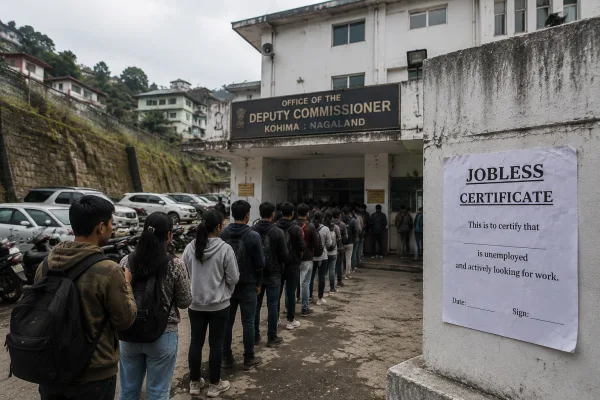
The economy offers no escape. The secondary sector contributes only 10.4 per cent to the state's gross value added. Between October 2019 and March 2026, foreign direct investment totalled Rs 1.01 crore. Seventy-two per cent of workers are self-employed, often in subsistence activity. Documented economic stagnation suggests why young workers continue to leave for cities elsewhere, though systematic migration data remains unavailable. Administrative instability compounds the decay. The Department of Information and Public Relations has had 51 Directors since March 1974. Manipur has endured eleven impositions of President's Rule, the most recent lasting 355 days until February 2026.
Some will attribute this collapse to ethnic conflict or central neglect. The violence since May 2023 has undoubtedly compounded suffering. Yet the CAG's abandoned projects, unsubstantiated bills, and irregular advances predate that violence by years. Central funds were available; the state failed to release them to implementing agencies for up to 573 days, diverted central money for agency charges, and abandoned projects after spending crores. Militant extortion is real, but it coexists with, and is enabled by, official extraction. The primary failure is institutional, not external.
The restoration of elected government in February 2026 offers a constitutional moment that must not be wasted. The state government should publish a compliance timeline for CAG Report No. 2 of 2025, beginning with substantiation of the Rs 102.40 crore in outstanding bills and recovery of the Rs 25.31 crore in wasteful expenditure. The Health Department must file a compliance affidavit in the High Court demonstrating progress on filling vacant posts. The Lokayukta should publish an annual report disclosing cases received, disposed, and convictions secured since 2019. The NHIDCL must publicly disclose revised timelines for its 26 delayed projects. The Public Works Department and allied agencies should implement an online contractor payment portal showing bill status, deduction break-up, and release dates.
The mother paying Rs 6,452 for childbirth is not experiencing an abstract governance failure. She is experiencing the precise difference between the constitutional mandate of Articles 38 and 47, welfare and public health, and its systematic dismantlement. When public funds are extracted at every stage of the governance chain, citizens do not merely lose services. They pay twice, once through taxation, and again with their bodies, their assets, and their dignity. That is not administrative limitation. It is institutional breakdown, and the documentary record has already named the institutions responsible.
— The Editorial Team, NEWire.in

Comments