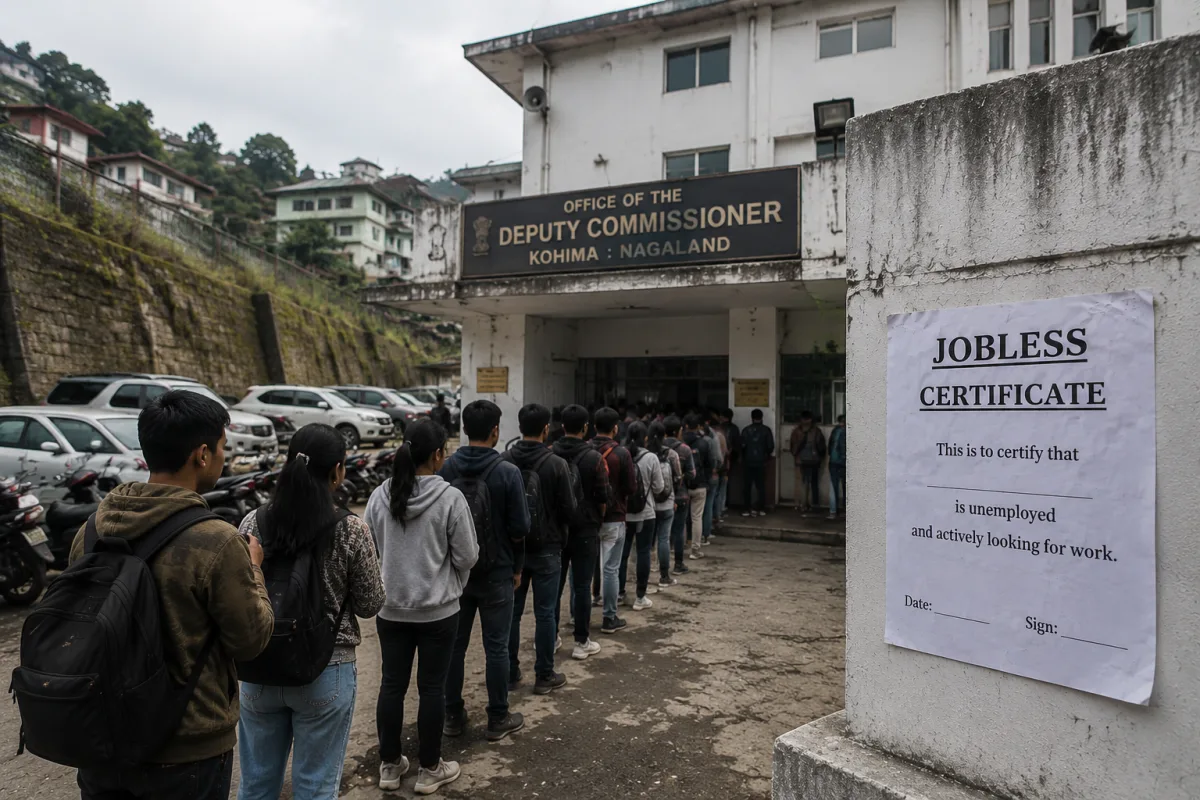
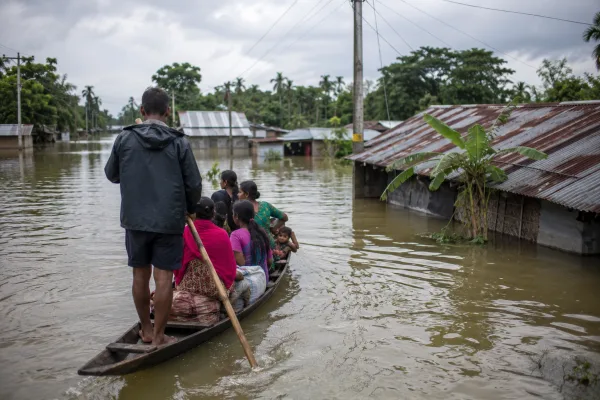
 Photo Courtesy: Representative Image
"NEWire.in editorial on Nagaland's economic crisis: fiscal dependency, factional taxation, unemployment, democratic deficit, and the stalled peace process."
A self-employed carpenter in Kohima queues outside the employment exchange not for work, but for paper proof that he has none. His family urged him to obtain the certificate. Without it, he cannot unlock the government scooty scheme. With it, he becomes officially unemployed, employed in every practical sense, yet jobless on paper.
Documented evidence establishes the structural trap beneath this paradox. Nagaland derives 87 per cent of its revenue from central transfers. Its own tax effort amounts to merely 4.2 per cent of GSDP. The state does not generate the wealth it spends; it distributes Delhi's grants. When government employment becomes the primary livelihood, a certificate of joblessness turns into a survival document.
The queue is longer than it should be. According to the state employment survey of 2025, unemployment stands at 16.07 per cent. Fifty-five per cent of the unemployed have been jobless for over three years. Seventy-eight per cent have no prior work experience. In Phek district, the figure reaches 25 per cent. Independent data from the Centre for Monitoring Indian Economy places Nagaland's unemployment above 20 per cent, the highest in India. The certificate, in other words, is not the exception. It is the emblem.
Yet the state's fiscal dependency is only one layer of the extraction. Consider the Dimapur shopkeeper who pays entry tax to multiple armed factions at multiple checkpoints, then five per cent to NSCN (IM), then government taxes, then union fees. The Confederation of Nagaland Chamber of Commerce and Industry has documented that multiple taxation raises prices of non-GST items by 10 to 15 per cent above market rates. Its members have testified that there is "nothing untaxed except the air and the sky."
The evidence establishes a pattern of documented extraction without governance return. NSCN (IM) levies up to 12 per cent on government employees and a minimum of five per cent on commercial establishments. More than twenty factions impose overlapping claims. Contractors have faced death threats for non-payment. The High Power Committee report on illegal taxation remains unimplemented despite years of civil society pressure, including the 2013 ACAUT rally. The parallel economy extracts; it does not build.
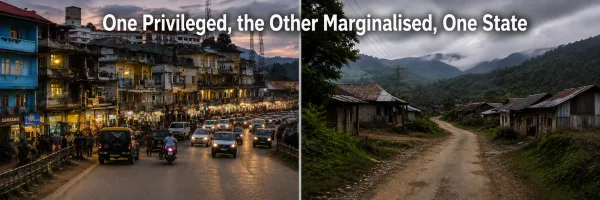
The burden falls heaviest where the state is weakest. In eastern Nagaland, youth leave Mon and Tuensang not for opportunity but for survival. The Eastern Nagaland Students' Federation has documented that 15,000 to 20,000 young people have migrated as domestic workers, many labouring without salary for two square meals. Not a single all-weather road serves the region. For many eastern Naga families, rice remains a luxury.
The Eastern Nagaland People's Organization has long claimed government employment representation of merely 3 per cent, alongside exclusion from the first four Five-Year Plans. The Frontier Nagaland Territorial Authority Bill, deferred again in 2026, leaves a decade-long grievance unresolved. The state budget allocates ₹100.57 crore for FNTA, but without substantive legislative and financial powers, the grant risks becoming another patronage stream rather than a remedy for structural neglect.
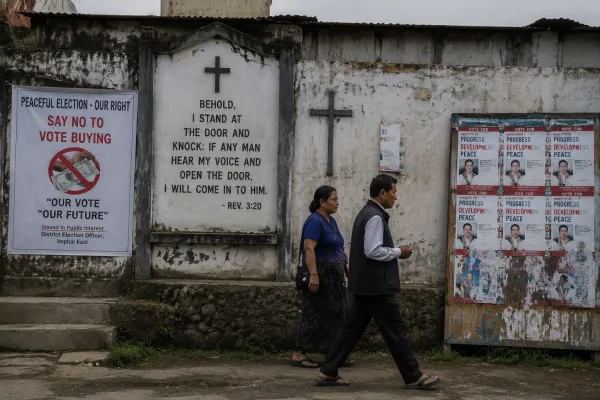
This economic desperation feeds a political marketplace where votes are sold and sovereignty is priced by the crore. In the 2023 assembly election, 63 per cent of candidates were crorepatis. Former Chief Minister Shürhozelie Liezietsu observed that election in Nagaland has been reduced to "a game of money." The Election Commission of India seized ₹0.31 crore, a sum it publicly acknowledges as a fraction of actual deployment. One voter, responding to a public poll, rationalized the transaction as a five-year investment.
The investment yields no accountability. The 2023 election produced an opposition-less legislature: sixty MLAs and zero opposition. Even the single JDU MLA submitted support. No one remains to ask why 55 per cent of the unemployed have been jobless for three years, or why the HPC report gathers dust. The chamber has become a comfort zone where economic mismanagement faces no interrogation.
Against this reality, the peace process stalls on symbolic questions. The Framework Agreement with NSCN (IM), unsigned since 2015, has avoided the economic spine of the conflict; jobs, taxation, development equity, fiscal autonomy. The evidence strongly supports the view that factional competition for territorial taxation revenue, intensified after the 1988 NSCN split, has transformed the movement from unified resistance into fragmented extraction.
Young Naga priorities have shifted beneath the leadership's feet. Where sovereignty once commanded universal sacrifice, employment now commands the queue. Since the 1997 ceasefire, the "Chaplee" finance structures of multiple factions have formalized open taxation. The state survives on Delhi's transfers. Its youth survive on certificates of joblessness. The movement's internal fracture is inseparable from this economic competition.
The Government of India must bring the Framework Agreement to a conclusion that explicitly addresses economic dimensions rather than stalling on flags and constitutions. It must expedite the FNTA Bill with substantive legislative and financial powers, not mere administrative reorganization. The Finance Commission must address structural fiscal dependency through incentives for own-revenue generation rather than perpetual grant dependency.
The Government of Nagaland must implement the High Power Committee report immediately, reform the unemployment certificate system to stop incentivizing joblessness, and publish tribal-disaggregated government employment data to resolve the ENPO dispute with transparency. It must restore democratic opposition by ending the opposition-less practice that eliminates legislative accountability. The Election Commission must enhance enforcement beyond token seizures. The Naga Political Groups must cease documented extraction and demonstrate public services rendered in return. Civil society must move beyond periodic protest and demand structural economic reform with transparent funding.
The queue outside the employment exchange remains. The carpenter waits not for a job, but for a certificate proving he has none. That is the economic equation in human form, a state living on Delhi's money while its armed factions tax every salary, its elections function as cash markets, its eastern youth migrate for two square meals, and its legislature governs without opposition. The question the peace process has refused to ask is now unavoidable: what is the meaning of sovereignty without economic dignity, or democracy without a single voice raised in dissent?
— The Editorial Team, NEWire.in

Comments