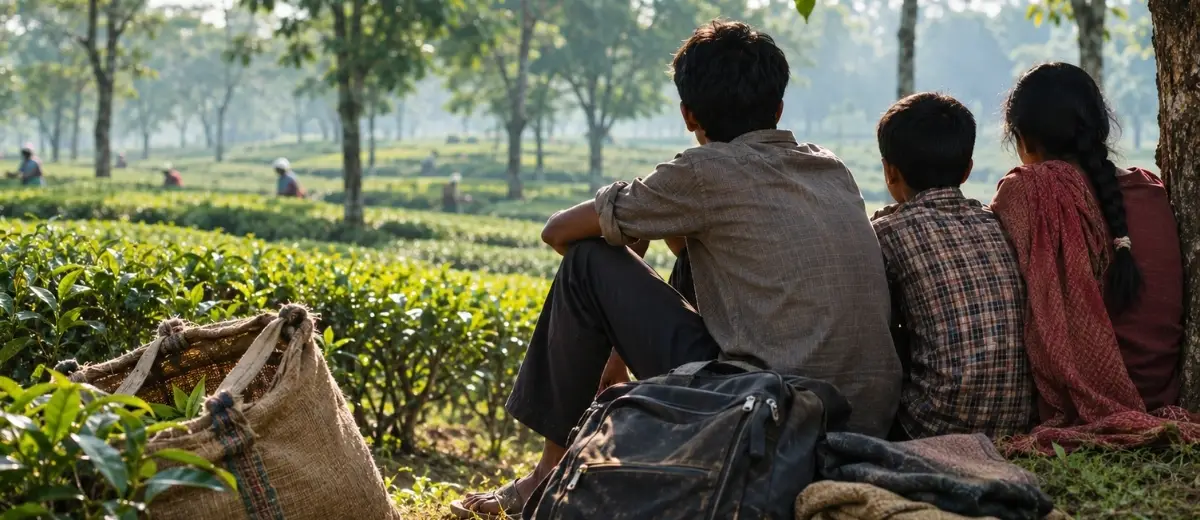
 Photo Courtesy: nenow
Guwahati: Human trafficking rings are systematically stripping children from the tea estates of Tinsukia, Assam. These networks lure desperate families with fraudulent job offers and promises of education. Often, the trap starts with local middlemen. The target is the poverty-stricken tea tribe community.
Monu Karmakar, 16, spent three agonizing years as a forced laborer in Mechuka, Arunachal Pradesh. A relative duped his family in February 2022, promising work and schooling. Instead, he and his siblings were sold. Monu recalled the abuse. "When I asked for my salary, they said we had been sold for Rs 60,000," he stated. He eventually escaped via a goods carrier and helped police rescue his younger siblings.
The scale of the crisis is vast. Tinsukia authorities report that traffickers frequently exploit the porous border with Arunachal Pradesh, where a massive labor shortage drives demand for cheap, domestic workers. This year alone, responders rescued approximately 70 people. Many victims are underage. They end up in hotels, homestays, or private homes. Many serve as domestic help.
In May, police rescued three minor girls from Papum Pare district, leading to the arrest of Ajit Karmakar, Paresh Kalandi, and Amir Limbo. Authorities registered Case No. 72/25 under Section 143(5) of the BNS at the Doomdooma police station. Another incident on October 6, 2025, saw local residents and the Assam Tea Tribe Students’ Association stop a night bus near Makum to save four children. Agent Nayana Chakma had allegedly arranged their transit to Itanagar.
Poverty remains the primary weapon for these traffickers. Casual tea pluckers often earn only Rs 250 daily. Families sometimes accept upfront payments from agents, only to be abandoned when the traffickers stop sending money. Senior officials, including the District Child Protection Unit, note that awareness initiatives are ongoing alongside police crackdowns. Still, many cases remain buried. Families fear the stigma or harbor hope of eventual payment. Silence protects the predators.






Comments