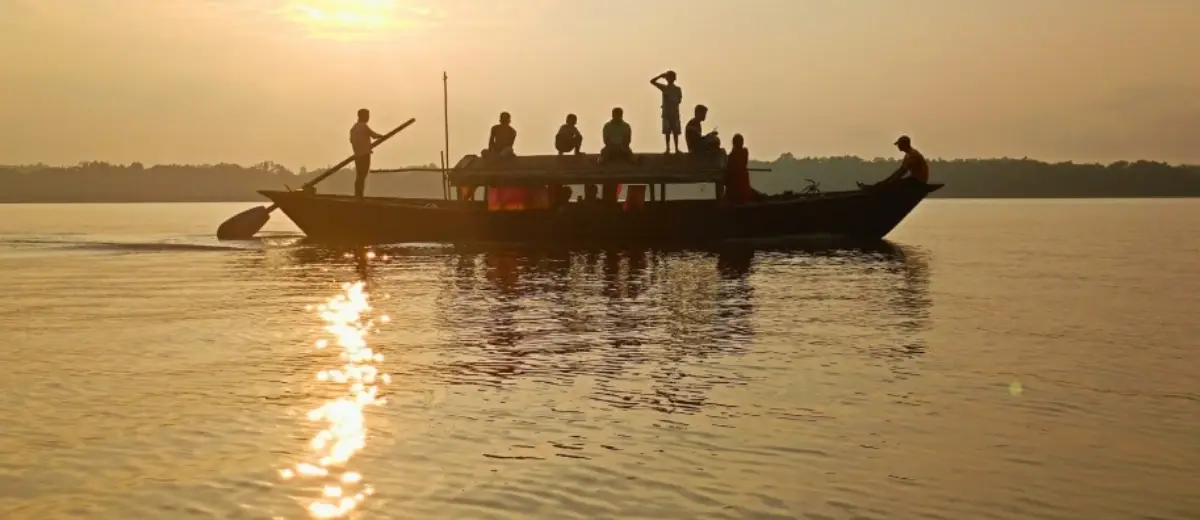
 Photo Courtesy: nenow
Guwahati: Son Beel, the largest wetland in Assam, is struggling. More than 50,000 people rely on its seasonal floods to survive. Climate change is shrinking the wetland, and local communities are scrambling to adapt. Erratic rainfall, severe flooding, and rapid siltation have made traditional fishing and farming risky. Some families are shifting to integrated models to stay afloat.
Arup Das, a farmer in Dargarbond, shifted from cattle to an integrated system in 2020. He now raises 1,200 Nageshwari ducks and 300 Sonali chickens. His farm also produces boro rice, pulses, and vegetables. He uses duck droppings to feed fish in his ponds. He keeps his incubator at a strict 37 degrees Celsius. "The incubator must maintain a temperature of 37°Celsius, a requirement that becomes harder to manage when temperatures fluctuate beneath the farm’s tin roof," Das says. He remains a rare success story.
A December 2025 study of 160 households found that only 5% of farmers have adopted livelihood diversification. Many lack the capital for livestock or the land for fishponds. Pulakabha Chowdhury of the Krishi Vigyan Kendra notes that only 15% of farmers know about alternative crops. Others fear that shifting to new crops like foxnuts or dragon fruit lacks a guaranteed market. Meanwhile, fishermen like Maheshwar Das struggle with seasonal fish diseases and the rising costs of net fishing. Many local fish species, such as pabda and basa, have vanished from the area.
The ecological toll is stark. Satellite data shows the wetland’s perennial core halved in size between 2015 and 2024. Silt from the Singla River is clogging the basin while invasive water hyacinth chokes the remaining pools. Tourism and plastic pollution further strain the ecosystem. While the state government pushes for new tourism infrastructure and a floating solar project, major restoration efforts like the Asian Development Bank-backed SWIFT initiative have bypassed Son Beel entirely. Tapati Das of Assam University warns that intervention requires more data. We need to track water levels and sediment before planning, she says. Until then, families continue to adapt on their own.







Comments