 Photo Courtesy: India Today Group
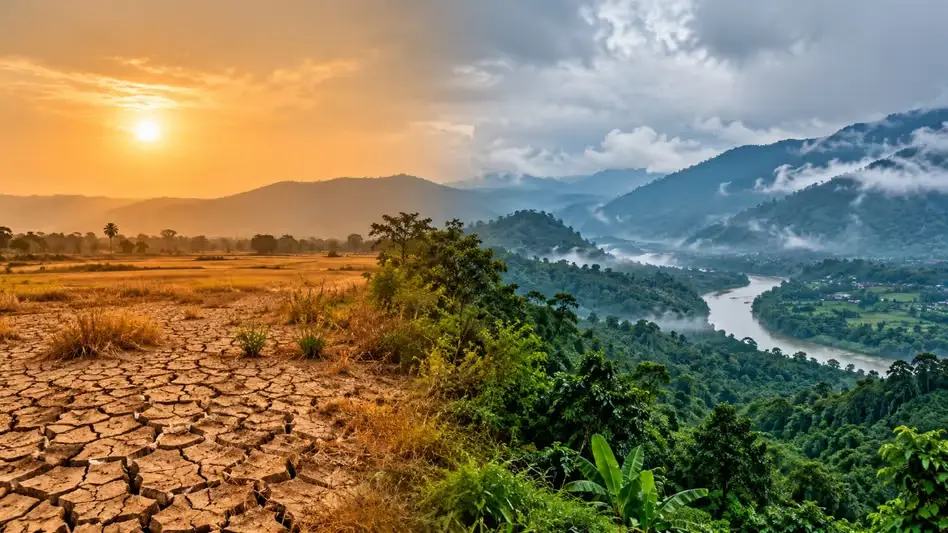
Shillong: Northeast India is getting cooler. Or rather, it is losing its tropical heat. A study from the India Meteorological Department and the Indian Institute of Tropical Meteorology shows the region's tropical savannah climate zone is vanishing. It dropped from 18 per cent coverage between 1951 and 1980 to just 12 per cent by 2020.
Temperate zones now dominate the area. They cover more than 80 per cent of the northeast. This shift follows a seven-decade trend. Researchers blame rising maximum temperatures for the expansion. The tropical zone stays warm all year, but the temperate zone brings hot summers and mild, dry winters.
Rainfall is also drying up. Eastern and northeastern India saw a 25.6 per cent rainfall deficit this monsoon. Meghalaya suffered a 60 per cent shortfall. Bihar dropped 32 per cent and Assam fell 28 per cent. Gangetic West Bengal stayed near normal, but experts noted a long-term decline in that state and Bihar spanning back to 1981.
Scientists link this dryness to the Victoria Mode. This North Pacific Ocean pattern pushes moisture away from the Gangetic plains. It creates high-pressure zones that kill rain. IITM Pune researcher Rajib Chattopadhyay noted that while El Niño weakened this year's monsoon, the drying trend is much older. He said, "Chattopadhyay stressed the importance of monitoring the Victoria Mode alongside El Niño to improve understanding of rainfall patterns and support agricultural planning, particularly for rice-growing areas."
The impact is real. Paddy farmers face uncertain sowing and harvesting schedules. IMD Director General Mrutyunjay Mohapatra warned that these shifts threaten food security, water supplies, and local livelihoods. Officials plan to factor these ocean patterns into future agricultural forecasts.





Comments