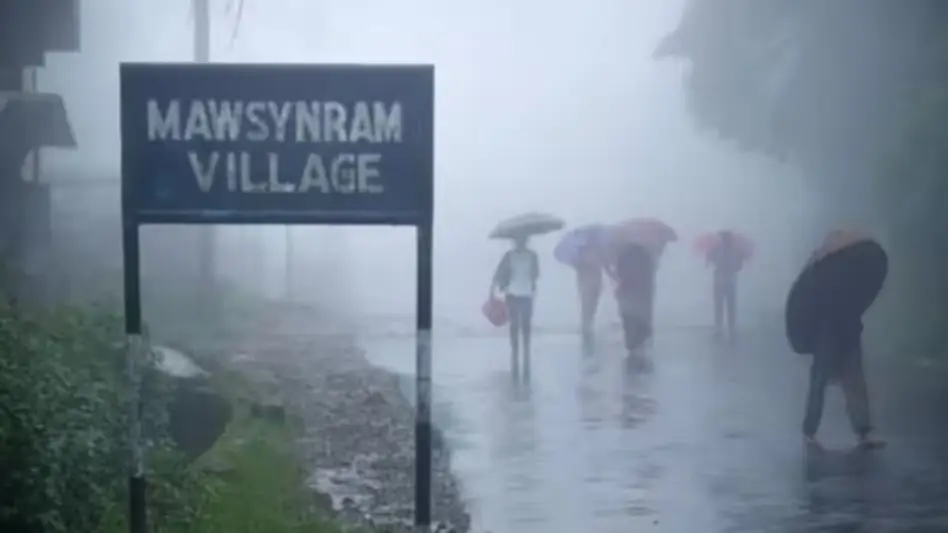
 Photo Courtesy: India Today Group
Shillong: Mawsynram and Cherrapunji sit among the wettest places on Earth. Now, they face a growing threat of drought. A new study in Theoretical and Applied Climatology analyzed climate data from 1981 to 2100. It shows that climate change brings intense rainfall spikes, fewer rainy days, and higher temperatures to Meghalaya.
Researchers Ashesh Rudra Paul and Pankaj Kumar Roy found the Simple Daily Intensity Index rose by up to 0.08 mm per day annually. Meanwhile, rainy days dropped by an average of 0.40 days each year. Steep terrain and shallow soils prevent water absorption. Instead, heavy rain creates runoff, killing groundwater recharge. Minimum temperatures are also climbing by 0.08 degrees Celsius per year, fueling evapotranspiration. Water vanishes from soil and plants faster.
The study used the Standardized Precipitation Evapotranspiration Index to track drought. It warns that extreme and severe drought events will likely increase under high-emission scenarios. Projections show mean annual streamflow dropping by nearly 10 percent in the Sari-Gowain basin and 11.6 percent in the Surma-Meghna basin. River flows peak in June and July, leaving little water for the rest of the year.
Locals feel the sting. Waterbodies and falls are shrinking early. P Hujon, a guest house operator in Mawkisyiem, noted the changing landscape firsthand. “Many waterfalls in Sohra area are getting dried, and I am seeing this as early as mid September.”
The researchers noted their data ignores human factors like deforestation and urban growth. They urged scientists and leaders to cooperate on better water management. Effective strategies must address temperature spikes and shifting rain patterns to secure the region's future.



Comments