 Photo Courtesy: nenow
Guwahati: Researchers from Assam University identified 34 plant species that sustain the endangered Western Hoolock Gibbon. Parag Jyoti Kashyap and Sahana Bose conducted the study in the Marat Longri-Patradisa-Longnit Forest Complex within the Karbi Anglong district. Field observations ran from September 2023 through August 2024. The results appeared this year in the Asian Journal of Geographical Research.
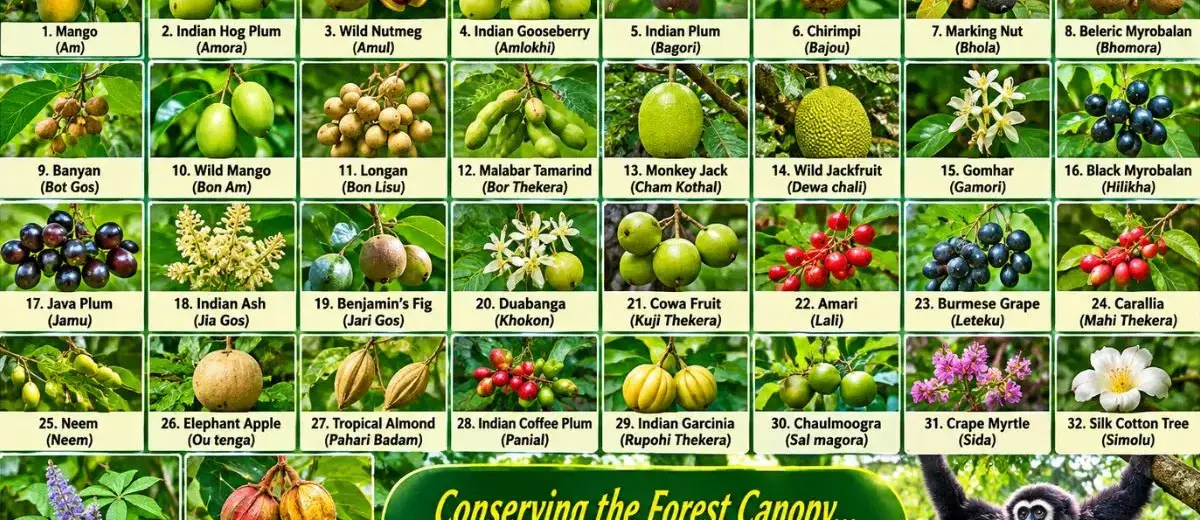
Gibbons rely heavily on diverse forest vegetation. The list of food sources includes mango, Indian hog plum, wild nutmeg, Indian gooseberry, Indian plum, chirimpi, marking nut, beleric myrobalan, banyan, wild mango, longan, Malabar tamarind, monkey jack, wild jackfruit, gomhar, black myrobalan, Java plum, Indian ash, Benjamin’s fig, duabanga, cowa fruit, amari, Burmese grape, carallia, neem, elephant apple, tropical almond, Indian coffee plum, Indian Garcinia, chaulmoogra, small-flowered crape myrtle, silk cotton tree, five-leaf chaste tree and hairy sterculia. Fruits top the list at 67.65 per cent, followed by leaves, seeds, flowers, and bark.
Food availability shifts with the seasons. Winter provides the most diversity at 47.06 per cent, while only one plant species remains available year-round. Experts warn that logging and shifting cultivation jeopardize these vital resources. The researchers noted: "Protecting the species requires more than safeguarding individual animals; it also involves preserving the diverse forest vegetation that provides their food and supports their natural habitat." Conservation efforts should focus on the Ficus, Mangifera, and Terminalia genera to ensure the survival of India’s only ape.







Comments