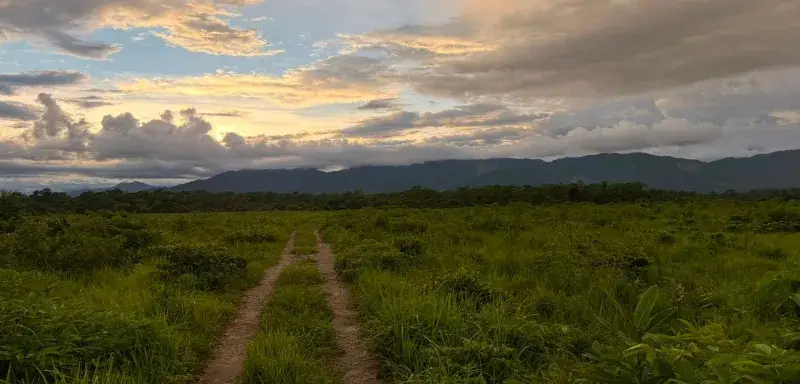
 Photo Courtesy: nenow
Guwahati: Assam’s two UNESCO World Heritage sites are losing their vital floodplain grasslands. Manas National Park and Tiger Reserve faces a deeper crisis than Kaziranga. Habitat loss accelerates daily. The Act Implementation Committee of the Assam Legislative Assembly now accuses UNESCO of ignoring urgent requests for technical support.
Khumtai MLA Mrinal Saikia serves as the Committee chairman. He did not mince words regarding the international body. "UNESCO is a white elephant. We submitted a report to them in 2024. But there is no response," Saikia said. A letter sent on December 5, 2024, warned that ecosystem degradation threatens the park's status.
Manas has lost significant ground. In the 1980s, grasslands covered nearly 60 per cent of the reserve. Today, only 30 per cent remains functional. Woody species like Bombax ceiba and invasive plants including Mikania micrantha, Chromolaena odorata, and Lantana camara are choking out native flora. The decline endangers the eastern swamp deer, pygmy hog, Bengal florican, one-horned rhinoceros, Asian elephant, and Royal Bengal tiger.
Kaziranga struggles too. State-level data indicates Assam has lost nearly 70 per cent of its grasslands over four decades. A 2023 Gauhati University study predicts that by 2050, agricultural land will expand while forests and water bodies shrink. Environment and Forest Minister Jayanta Malla Baruah noted that the grassland-woodland balance has shifted. In 1970, grasslands covered 440 sq km. Now, they occupy less than 30 per cent of the area.
The state has taken some action. Between 2022 and 2025, officials restored 609 hectares of degraded land via the APFPC project. Still, hurdles remain. Manas sits downstream of the Kurichu dam in Bhutan. Flash floods frequently damage the terrain. Encroachment also plagues the borders. Chief Minister Himanta Biswa Sarma confirmed 1,25,326 hectares of forest land have been cleared, with more evictions pending for over 3,60,000 hectares.
Manas Field Director Sonali Ghosh emphasized the urgency. Half of the park's grassland habitat vanished between 2019 and the present. Conservation scientist Alolika Sinha argued that restoration requires more than just planting trees. Science-based strategies must include invasive species control. Without intervention, these unique ecosystems will continue to fail.






Comments