 Photo Courtesy: nenow
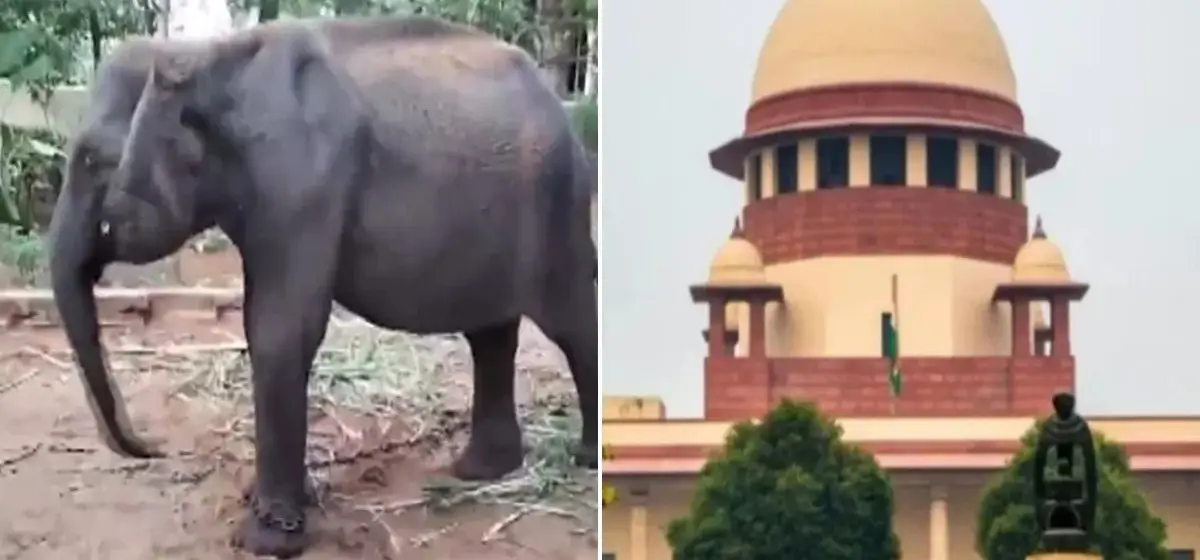
Guwahati: The Supreme Court issued a stern warning regarding the transport of captive elephants. Chief Justice Surya Kant insisted that state authorities must follow established verification rules for ownership and identity. The bench heard a challenge from People for Cattle in India (PFCI) regarding five young elephants moved from Assam to Tamil Nadu temples between early and mid-September 2026.
These animals, named Durga, Hiralal, Shiva, Rupsing, and Bijuli, traveled nearly 3,000 km. Statutory rules require 50 days for proper checks. Durga arrived in Chennai only nine days after the September 4 request. Senior advocate Meenakshi Arora argued that such speed makes legal compliance impossible. The Court noted that since the transfer is complete, it will not order the elephants back now.
"If it was a hasty exercise and it was brought to our notice, we would have interdicted it," Chief Justice Surya Kant observed. The Court allowed PFCI to withdraw the current petition and join a larger, pending case on captive elephant welfare. The organization plans to present documentation to enforce stronger safeguards. PFCI founder Arun Prasanna noted, "We welcome the Supreme Court's clear message that verification of ownership, identity and transport conditions cannot be skipped." The case remains part of ongoing proceedings that have restricted wild elephant capture since 2021.






Comments