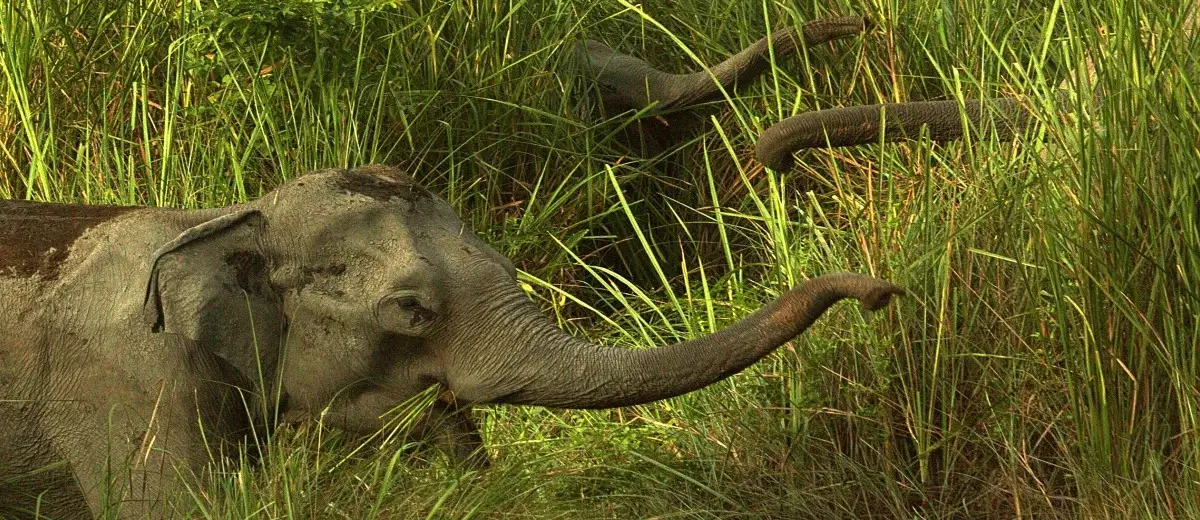
 Photo Courtesy: nenow
Guwahati: Asian elephants in Assam’s Udalguri district are making meals out of tea estates. A recent study shows that grass makes up over 81 percent of their diet in these areas. Researchers logged 103 feeding events between August and November 2024. Grass accounted for 81.6 percent of those observations. Trees and herbs made up the remainder. Elephants graze on plants like Albizia lebbeck, Neolamarckia cadamba, and Cynodon dactylon. They also eat Chrysopogon aciculatus, Setaria, Bombax ceiba, Ziziphus mauritiana, Coccinia grandis, and Desmodium triflorum.
The findings appeared in the Journal of Threatened Taxa. These animals need food. Tea estates provide accessible sustenance during monsoon and post-monsoon months. Lead author Richard Sangma from the Wildlife Institute of India noted that these estates serve as more than just a place for animals to hide. He stated, "Our observations suggest that tea estates are not just a place to take shelter. They also provide palatable food plants, which elephants actively feed on."
However, the study remains limited. Data only covers daytime feeding over a few months. It does not account for nighttime crop raiding or seasonal dietary shifts. The region remains a flashpoint for trouble. Data from the Dhansiri Forest Division shows 221 human casualties and 96 elephant deaths between 2011 and 2024. Habitats are shrinking. Forest conversion and agricultural encroachment force elephants into areas close to human settlements.
Conservationists urge better planning. They suggest protecting grass-rich corridors and riverine habitats to minimize contact. Authorities must involve tea estate management and local communities in coexistence strategies. The research team included members from the Wildlife Institute of India, the Ministry of Environment, Forest and Climate Change, and the Academy of Scientific and Innovative Research. Project Tiger and Elephant Division funded the work under a management initiative for the Chirang-Ripu Elephant Reserve.




Comments