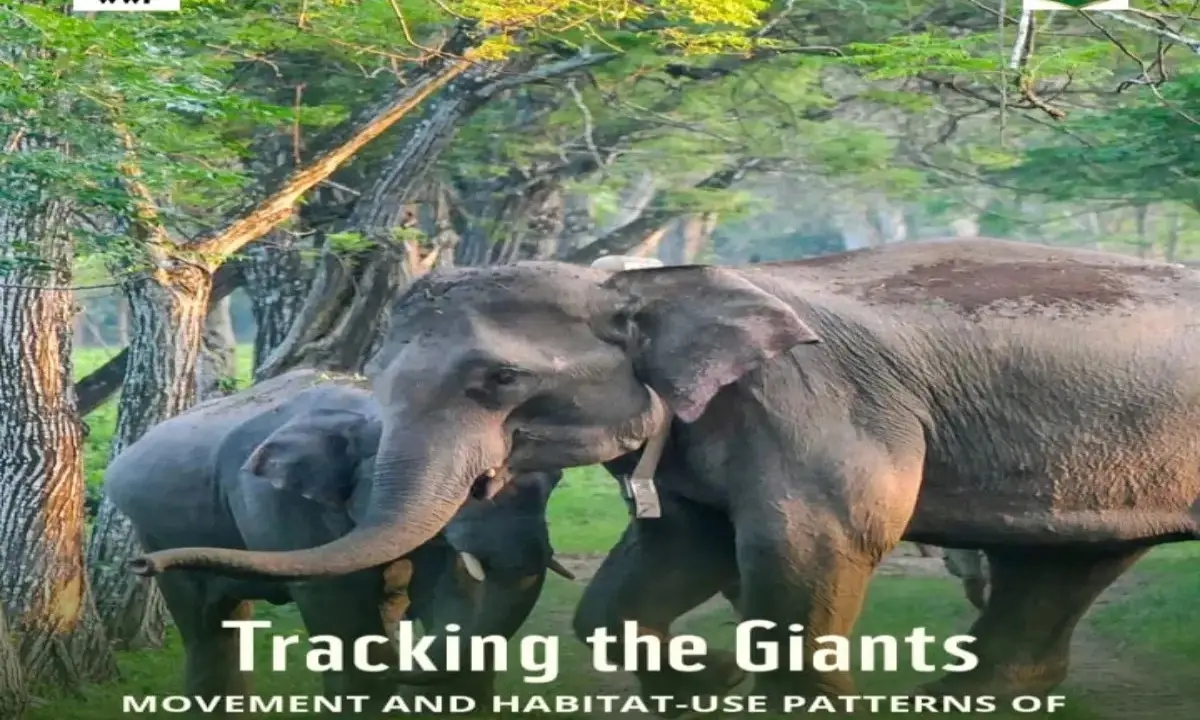
 Photo Courtesy: nenow
Guwahati: Assam’s elephants are ignoring forest boundaries. A five-year GPS study tracked four female-led herds and one solitary male across Udalguri, Sonitpur, and Biswanath from 2021 to 2026. The Assam Forest Department and WWF-India collected over 38,000 location points. The results show these animals treat tea plantations, crop fields, and riverbeds as primary travel corridors.
Environment Minister Jayanta Mallabaruah released the findings in Guwahati during Wildlife Week. Vinay Gupta, the Principal Chief Conservator of Forests-Wildlife, noted the report’s importance. “This report fills a major knowledge gap in terms of elephant presence and movement in the state,” he said. The data provides a baseline to improve coexistence strategies as habitats become increasingly fragmented.
The study highlights how seasonal shifts drive movement. In Udalguri, collared elephants frequented plantations in Barangajuli, Dimakuchi, Paneri, Hatigarh, and Orangajuli. One elephant named Mynow spent 41.4 percent of its time in tea gardens during the monsoon. Another, Budhini’s herd, spent 88 percent of its monsoon tracked time within those same plantations. In Sonitpur, elephants moved into agricultural fields near the paddy harvest. Annual ranges are massive. Bishu, a solitary male in Biswanath, wandered over 947 square kilometers.
The animals also use river channels to shift between Himalayan foothills and the Brahmaputra grasslands. Some even cross into Bhutan during dry seasons, likely searching for water. This behavior forces a rethink of conservation, as human-elephant conflict remains a deadly issue. From 2000 to 2023, 1,468 people died and 626 elephants perished due to electrocution, poisoning, and train collisions.
Aritra Kshettry of WWF-India emphasized that safety depends on knowing these patterns. The report urges tea estates to install better lighting, use safer fencing, and stop the dangerous trend of crowds chasing elephants for selfies. Conservation must now move beyond forest borders to protect the shared spaces where humans and elephants constantly collide.






Comments