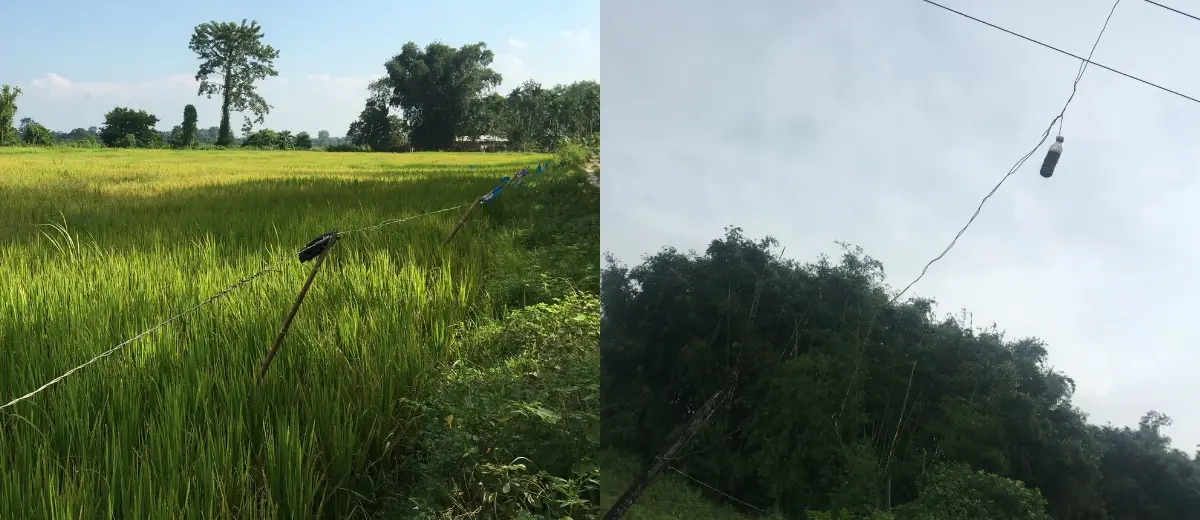
 Photo Courtesy: nenow
Guwahati: Illegal live-wire fences are slaughtering elephants in Assam. A new study published in the European Journal of Wildlife Research links these rogue barriers to 92 percent of verified electrocutions across two major elephant reserves. Researchers analyzed records from 2014 to 2024 covering the Chirang-Ripu and Sonitpur Elephant Reserves.
The team field-verified 50 deaths. They found 46 were caused by illegal live-wire fences. Three came from sagging power lines. One involved a community-managed solar fence. The 4,000 square kilometer area serves as a critical corridor between Assam, Bhutan, and Arunachal Pradesh. Dhansiri Forest Division hit the hardest. It logged 13 incidents, while Haltugaon reported only one.
Risk spikes during the paddy harvest. October to December sees the most deaths as elephants hunt for ripening grain. Farmers push back with lethal power connections. December averages two deaths per month. Researchers found no incidents during March and April. The study notes that "the expansion of agriculture and settlements can increase the overlap between elephant habitats and human-use areas."
Mortality numbers shifted over the decade. Figures stayed low from 2014 to 2017. They climbed to a peak of nine in 2020. Deaths dropped to three by 2024. Officials warn that these records likely miss many unreported cases. The research team included Abhijit Boruah, Subhasish Arandhara, Bibhuti P. Lahkar, and Nagarajan Baskaran.
Infrastructure plays a secondary role. Areas with high road density show higher electrocution risk. Thick forest cover acts as a shield. It keeps elephants away from human-dominated zones where hazards wait. Between 1995 and 2024, the region lost 805 square kilometers of unlogged forest. Most of this land became paddy fields, tea plantations, or housing.
Experts want better enforcement. They demand tougher action against illegal fencing. They also suggest regular power line inspections and better insulation in high-risk zones. Future studies will need to track elephant movements to pinpoint exactly where these lethal encounters happen.






Comments