 Photo Courtesy: nenow
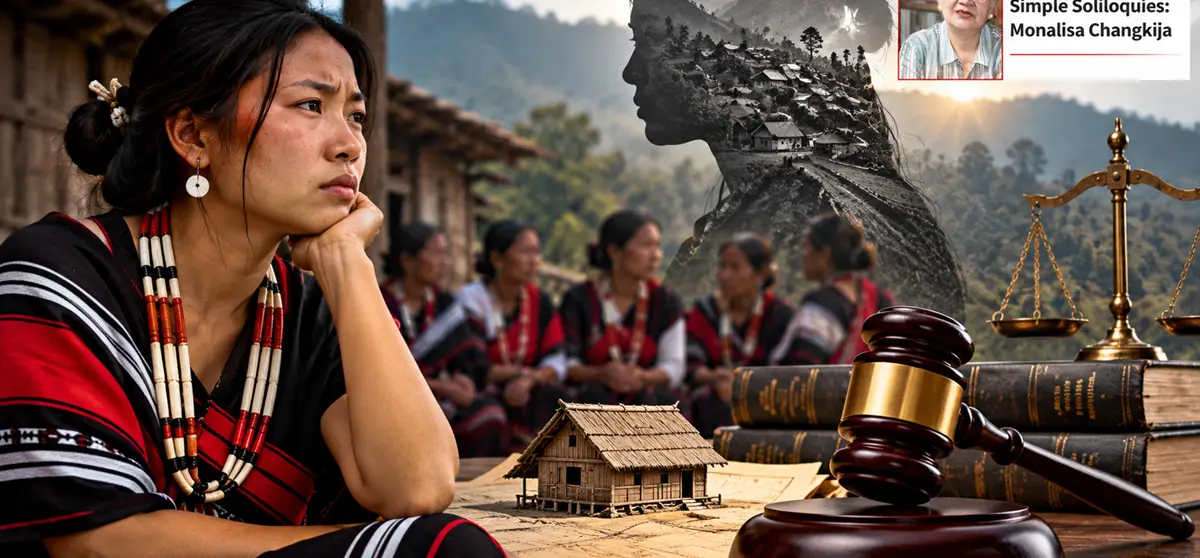
Kohima: Naga customary laws govern life across Nagaland, dictating rules on marriage, property, and inheritance. These ancient practices hold constitutional protection under Article 371(A). Similar provisions exist in Meghalaya, Mizoram, and Sikkim. Despite their age, these laws remain dominant in tribal life.
Traditional Naga society is strictly patriarchal. Men hold all decision-making power. Women remain excluded from these councils. Customary law bars women from owning land. Widows without sons face dispossession even in urban areas. This creates a severe conflict with modern property rights.
Journalist Monalisa Changkija highlights that education alone has failed to dismantle these deep-seated biases. Christianity has often reinforced these patriarchal structures rather than challenging them. Many widows suffer in silence due to these archaic rules. Courts are often too slow and costly for victims to seek relief.
Traditional village councils, comprised solely of men, frequently adjudicate property disputes. They bring these restrictive practices into municipal areas where laws should treat all citizens as equals. This practice forces families to submit to laws that contradict fundamental rights.
A formal assessment of those who interpret and enforce these rules is now necessary. Many lack the legal expertise to handle complex, evolving societal needs. Greed often hides behind the thin mask of tradition. There is an immediate need to update these regulations. As Monalisa Changkija writes, "education without the cultivation of a scientific temper is like water on yam leaves (kochu patta)."
The current legal system protects these customs in total. This prevents women from accessing their guaranteed constitutional protections. Lawmakers must review these policies. They must ensure Naga customary law aligns with human rights and equality standards.



Comments