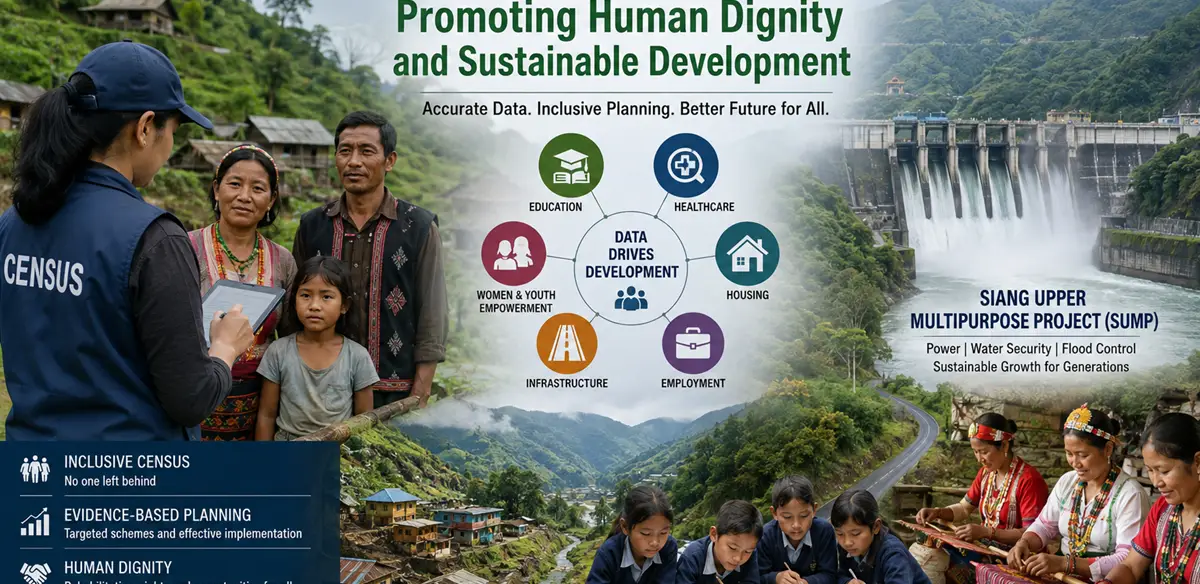
 Photo Courtesy: nenow
Itanagar: The Indian population census remains a massive administrative effort. It tracks demographic, social, and economic data under the Census Act, 1948. The Office of the Registrar General and Census Commissioner manages this process. Precise data shapes political representation and local power distribution.
Officials use household records to identify families displaced by large projects. They verify income, family size, and housing needs. This cuts fraud in welfare programs. Reliable data ensures marginalized, elderly, and ill residents get support. It prevents exclusion from government aid.
Census numbers drive infrastructure planning. In remote Arunachal Pradesh, this includes schools, roads, and healthcare centers. Health data guides the location of maternity and emergency services. It helps authorities build housing suited to rugged, mountainous terrain. Officials also use the data to map skills and education levels. This identifies where to build ITIs, polytechnics, or nursing colleges. Training programs for carpentry or tailoring target areas with high dropout rates.
The Siang Upper Multipurpose Project serves a strategic purpose. It aims to block flood impacts from the sudden release of water from China. It also generates 11,200 MW of power. The project helps stabilize water levels during dry seasons. It acts as a defense against what observers call a, "Chinese ploy to weaponise water resources against India."
Success hinges on rehabilitation. Displaced people need more than cash. They require housing, jobs, and social services. Planners must also guard indigenous identities. Careful use of census data prevents cultural alienation while driving modernization. It allows authorities to track scheme progress. It keeps welfare efforts on target.





Comments