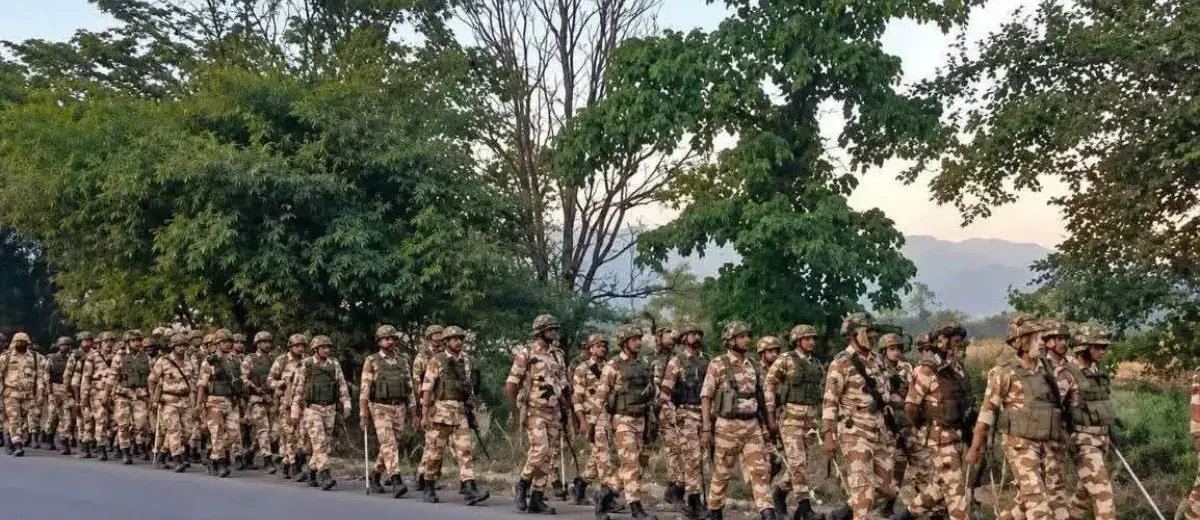
 Photo Courtesy: nenow
Itanagar: Arunachal Pradesh has flooded East Siang, Siang, and Upper Siang with 30 companies of central armed forces. The heavy deployment follows violent anti-dam demonstrations in Pasighat on October 23. Protesters targeted public property, leading to dozens of arrests and a massive security dragnet.
Inspector General of Police Hibu Tamang confirmed the surge includes the CRPF, ITBP, SSB, RAF, and Assam Police Battalion. Officers are guarding the homes of BJP president Kaling Moyong, MLAs Ninong Ering and Oni Panyang, and MP Tapir Gao. The state has already arrested 69 people for rioting and arson. Authorities have registered 53 criminal cases and issued notices to 201 individuals under the Bharatiya Nagarik Suraksha Sanhita. Five minors are currently in a juvenile home.
Tamang blamed the unrest on agitators without clear leadership. "Some misguided youths without any leadership had created law and order situation in Pasighat and vandalised public property. We have registered eight cases in Pasighat and arrested 26 persons in connection with the vandalism," he said. Police now aim to identify the masterminds behind the unrest.
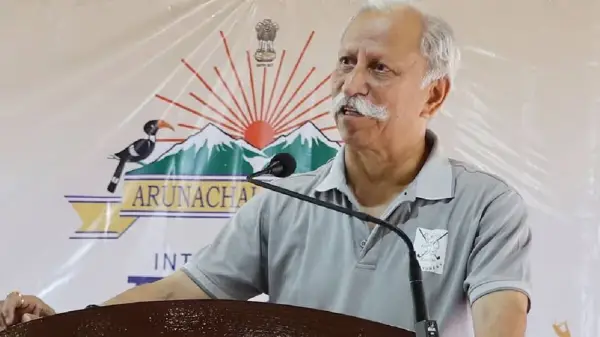
Despite the crackdown, Minister Ojing Tasing met with the East Siang Downstream Dam Affected People's Forum on October 27. Led by Oni Tamuk and Jobomchang Mengu, the group represents 72 villages concerned about the 11,200-MW Siang Upper Multipurpose Project. Tasing, who chairs a cabinet-appointed committee for the project's pre-feasibility report, insisted that development must move forward with public trust. The project aims to bolster national energy security, yet villagers remain sharply divided. Some signed study agreements, while others reject the survey entirely, fearing for their land and cultural survival.
Updated at 28th October 2026 at 2:00am
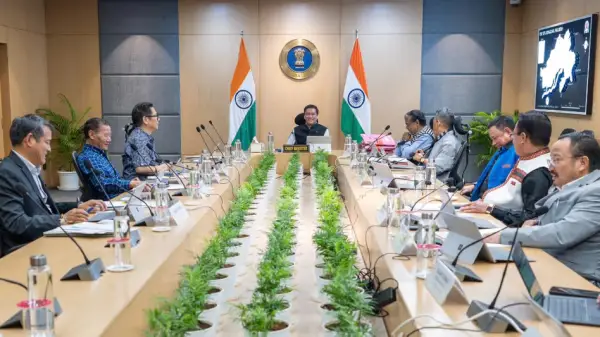
Chief Minister Pema Khandu stated in September that the ongoing feasibility assessment aims solely to verify technical viability, adding that the government has no intention of rushing the process beyond that stage. The state cabinet, acting in September, empowered the high-level committee to oversee all survey activities in Siang and Upper Siang, aiming to keep those operations transparent and peaceful.
Minister Tasing framed the recent dialogue as an effort to link the project's strategic goals—including flood moderation and countering upstream interventions in the Brahmaputra basin—with the protection of local rights. He maintains that the project's path forward hinges on balancing national energy security with the welfare of the affected communities.
Updated at 28th October 2026 at 5:49pm
IGP Hibu Tamang detailed the security deployment, confirming the 30 companies include 15 CRPF units, eight ITBP, four SSB, and three Assam Police battalions. Personnel from the Indian Reserve Battalion are also on the ground to back up the state police. Officials have slapped the Arunachal Pradesh Unlawful Activities Prevention Act (APUAPA) on six individuals held in connection with the unrest.
The criminal fallout from the protests spans the three districts, with 26 cases lodged in Upper Siang, 21 in Siang, and six in East Siang. Police are currently digging into the protest hierarchy to identify who incited the youth to attack property in Pasighat.
Updated at 29th October 2026 at 1:49pm
Civil society groups are now pushing for a seat at the table. The Arunachal Indigenous Tribes Forum (AITF) has stood up a high-level committee to get a pulse on the ground in Pasighat and Geku. AITF general secretary Tapi Tai says their peace committee plans to act as a neutral go-between to unclog communication channels. The group openly hammered the state for the heavy security presence, arguing that muscle should be replaced by direct talks with the families whose lives and land hang in the balance.
The Arunachal Christian Forum (ACF) is also tossing its hat into the ring, offering to broker a truce between the government and the Siang Indigenous Farmers Forum (SIFF). The ACF maintains its neutrality, stating its only goal is to open a channel for dialogue. They put a fine point on their stance: "Peace must precede progress, dialogue must replace confrontation and mutual understanding must guide the resolution of public concerns."
Updated at 29th October 2026 at 11:00pm
Protests hit the capital on Thursday as thousands marched from Akashdeep to Indira Gandhi Park to denounce the state crackdown. Demonstrators demanded the immediate release of those detained and slammed the government for its push to finalize a pre-feasibility report for the Siang project. Protesters asserted their rights over local resources and rejected the heavy-handed tactics currently blanketing the region.
Adi Bane Kebang United president Thomas Borang framed the movement as a stand against dictatorial governance rather than mere opposition to the country. Tagori Mize, representing the Siang Indigenous Farmers Forum, drew a hard line against the project, arguing that while small-scale power generation might be palatable, the current mega dam proposal invites displacement and ecological ruin.





Comments