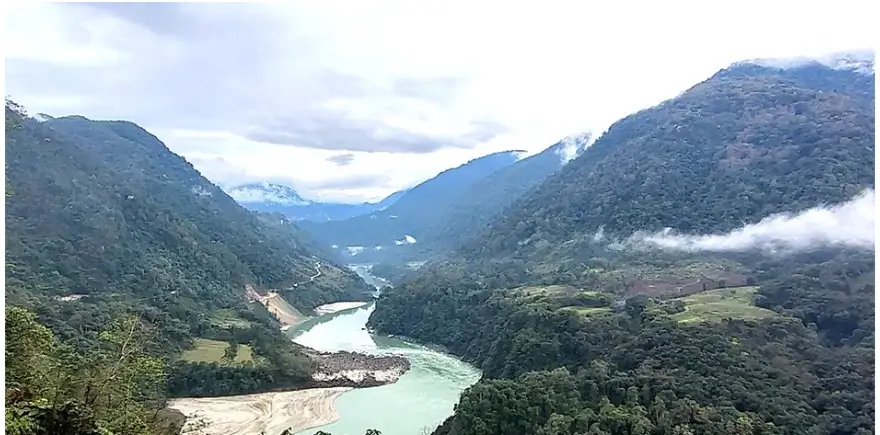
 Photo Courtesy: nenews
Itanagar: India is weighing the construction of the 11,200-megawatt Upper Siang Multipurpose Project in Arunachal Pradesh. First proposed in 2008, the plan remains in the pre-feasibility stage. Officials in New Delhi describe the dam as a geostrategic safeguard against China's upstream infrastructure on the Yarlung Tsangpo. They argue a massive reservoir could buffer against sudden water releases or diversions.
Critics remain unconvinced. The region sits in a high-risk seismic zone. The 1950 Assam-Tibet earthquake caused massive landslides and river blockages across the area. Environmentalists point to the 2023 collapse of the Teesta III dam in Sikkim as a warning. That disaster proved historical averages cannot predict modern climate-driven floods.
The Siang basin spans 15,000 square kilometres of forest and rare species habitat. A reservoir would drown these ecosystems, disrupting fish migration and local farming. Reuters reports that at least 16 Adi villages could vanish, impacting 10,000 residents directly. Community leaders claim the true figure exceeds 100,000 people.
Protests have stalled survey work. Residents from over 27 villages actively oppose the project. In May 2025, central armed personnel deployed to the area to secure survey sites. Local student groups and the Adi Bane Kebang, the traditional body of the Adi community, demanded the withdrawal of these forces.
The author argues that national security rhetoric should not override deep environmental and social concerns. The project takes a decade to build, creating a window of extreme vulnerability. During this phase, temporary structures would face risks from landslides and floods.
"A threat upstream cannot be converted into wisdom downstream simply by wrapping it in the language of national security," the author noted. Local leaders insist that the Siang is Ane Siang, a sacred river essential to their cultural identity. They argue that financial compensation cannot replace ancestral land or restore lost livelihoods. Experts are calling for an independent assessment to examine seismic activity, sediment loading, and dam-break scenarios before any further work proceeds.






Comments