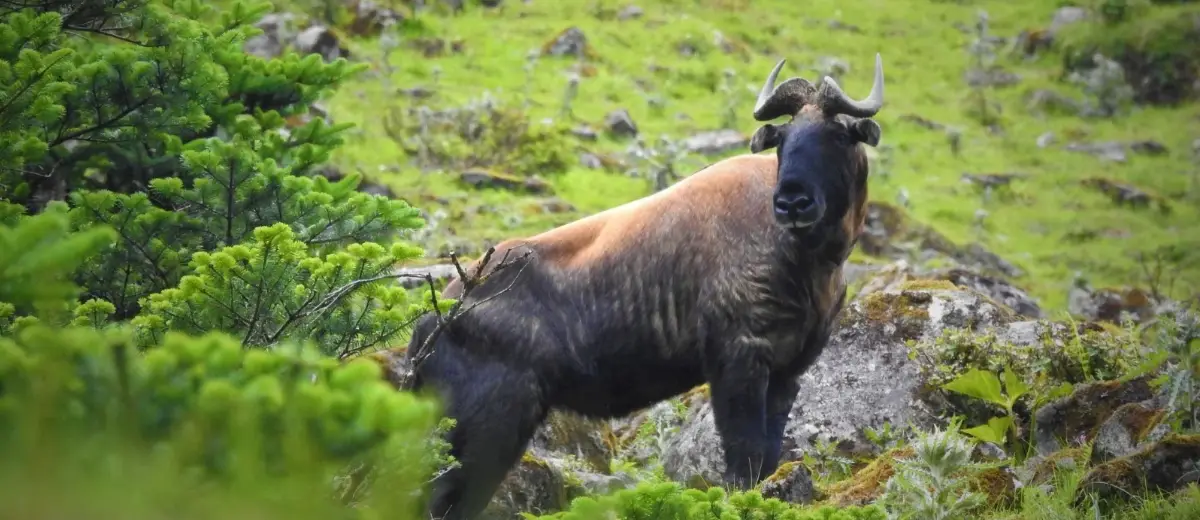
 Photo Courtesy: nenow
Itanagar: Indigenous communities in Arunachal Pradesh provided the key to tracking the elusive Mishmi Takin. Researchers from the Wildlife Institute of India spent two years, from 2021 to 2023, gathering insights from the Idu Mishmi, Digaru Mishmi, Miju Mishmi, and Meyor tribes. They interviewed 114 locals to build a clear picture of the ungulate's life in the Eastern Himalayas.
The study, published in Frontiers in Conservation Science, backed up tribal knowledge with 17,000 camera-trap photos. This data confirms the animals migrate based on the season. They stick to forests in spring, climb to high-altitude salt licks during the rains, and drop to lower ground for winter. These salt licks, called Aheko by the Idu Mishmi, serve as central hubs. Researchers spotted six major sites in Dibang Valley between 3,500 and 4,500 metres.
Herds often number 18 to 50 animals. During the rainy season, some sites host over 500 takins at once. The researchers noted that these numbers are not formal population counts. Still, the data highlights clear regional differences. While Dibang Valley takins rely on salt licks, those in Anjaw roam across more varied, lower-altitude terrain.
The animals face real dangers. Locals pointed to tigers, leopards, dholes, and bears as primary predators. They also flagged human interference, including hunting and the loss of traditional hunting regulations. Protecting these migration corridors remains a top priority. As the authors noted, "Indigenous knowledge should not be treated merely as anecdotal information."
The Mishmi Takin holds a vulnerable status on the IUCN Red List and stays protected under Schedule I of India’s Wildlife Protection Act. While the team admits that interview recall and camera access limits exist, they maintain that merging traditional history with field surveys provides a better roadmap for saving the species in the rough Himalayan terrain.







Comments