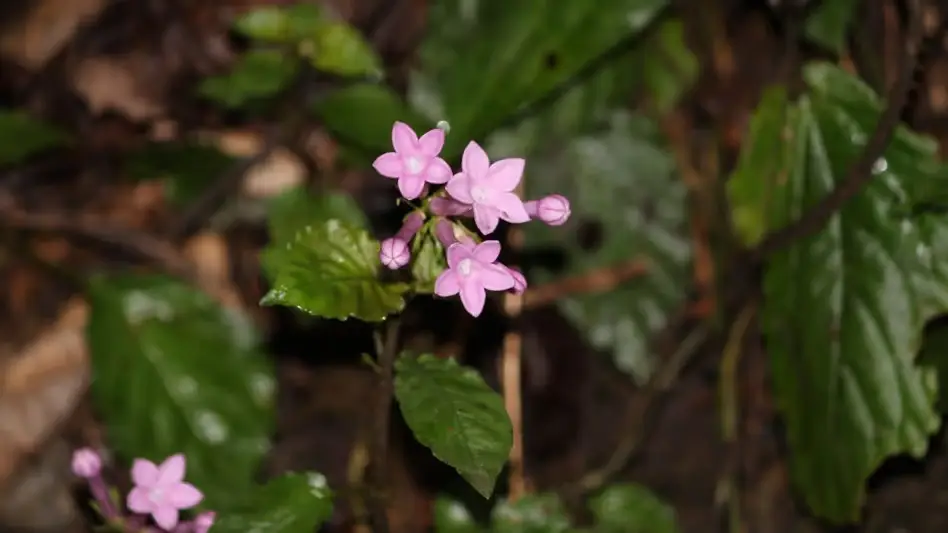
 Photo Courtesy: India Today Group
Itanagar: Scientists found two new plant species in Arunachal Pradesh. The discovery occurred in the Changlang district near Vijoynagar. Researchers Krishna Chowlu and Vinay Kumar Sahani from the Botanical Survey of India in Itanagar worked with Renthlei Lalnunfeli of Madras Christian College to identify the plants. The journal Taiwania published their findings on October 23, 2026.
The team first spotted the plants in March 2025. They returned in April 2026 to grab specimens. After checking literature and herbarium records, they confirmed these species were new. Both belong to the Rubiaceae family.
Ophiorrhiza shidiensis stands as an erect perennial herb reaching one metre. It features pale green leaf undersides and tubular flowers shifting from white to rose-pink. The name comes from Shidi, the Lisu community term for Gandhigram. The second plant, Ophiorrhiza pemae, resembles Ophiorrhiza himadrica but grows taller with larger leaves and purplish flowers. The experts confirmed, "the two species could be distinguished from their closest relatives through differences in their leaves, flowers, inflorescences and other physical characteristics."
Arunachal Pradesh sits in the Eastern Himalaya. It is part of the Indo-Burma biodiversity hotspot. Scientists admit that the genus Ophiorrhiza remains poorly documented in Northeast India. Further study of the local flora is needed to map the region's full botanical wealth.
Updated at 24th October 2026 at 3:00pm
Botanists named Ophiorrhiza pemae after Chief Minister Pema Khandu to honor his support for scientific activity in the state. The plant stands 25 to 40 centimetres tall and features hairy leaf stalks with wavy margins. It grows in temperate montane forests between 2,100 and 2,600 metres elevation. Researchers classify it as Vulnerable due to its restricted range of four square kilometres.
Ophiorrhiza shidiensis thrives in damp, shaded spots near streams and on slopes at elevations between 1,100 and 2,000 metres. The team considers this species Endangered, citing habitat damage from shifting cultivation across its known 12 square kilometre range. The Lisu community, also known as the Yobin, provided the traditional name for the site where the plant was collected.







Comments