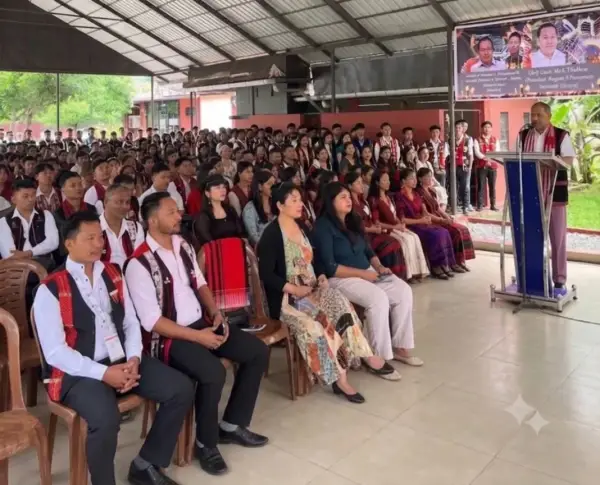
Kohima: Nagaland Environment, Forests and Climate Change Minister CL John demanded the rigorous application of the Wildlife Protection Act, 1972 on Tuesday. He addressed more than 250 officials and stakeholders at the State Level Workshop in Kohima. The minister wants an immediate halt to jungle burning and illegal hunting. He also pushed for more tree planting across the state.
The event, titled Community Conservation: Celebrating success and charting the future, focused on the Forest and Biodiversity Management in the Himalayan (Nagaland) Project. This program currently covers 64 villages across Kohima, Mokokchung, Peren, Shamator, Tuensang, and Wokha. It protects over 40,000 hectares of community forests. Minister John told attendees, "The department has been applying various mechanisms to address the issue," regarding the persistent Human-Elephant Conflict.
Project Director Sidramappa Chalkapure noted the initiative launched in 2020-21 through German-funded grants. The project relies on the Nagaland State Biodiversity Board and partners like the Wildlife Institute of India. It also tackles forest fragmentation and spring-shed restoration. Officials inaugurated a new toll-free helpline, 1800-2020-878, to manage conflicts with elephants. They also handed out Conservation Awards to Langa, Thenhayan, and Mmhayan villages for their success in infrastructure and sustainable work.
Nand Kishore Agarwal noted the state now hosts over 400 Community Conserved Areas. Speakers stressed that traditional knowledge must guide future policy. The workshop concludes on November 4, ending with a valedictory session featuring Y Kikheto Sema. The state aims to finalize all project goals by the end of next year.
Updated at 4th November 2026 at 1:50am
The project, commonly called the KfW Project, relies on grants from the Federal Republic of Germany. Officials pushed for the use of People's Biodiversity Registers and highlighted the Morung Experience Centre at Khonoma as a key model for the initiative. While the project focuses on 41,000 hectares of forest, the ministry is also calling for specific attention to the 29 project villages located within Tuensang district.
Technical partners aiding the project include the Nagaland Bio-Resources Mission, Kohima Science College Jotsoma, the Nagaland CCA Forum, and the Foundation for Ecological Services. Experts at the workshop cited the successful protection of the Amur Falcon as a blueprint for future community-led efforts. Officials also launched a new project website to track progress as the state works to align local policies with the Kunming-Montreal Global Biodiversity Framework.





Comments