 Photo Courtesy: India Today Group
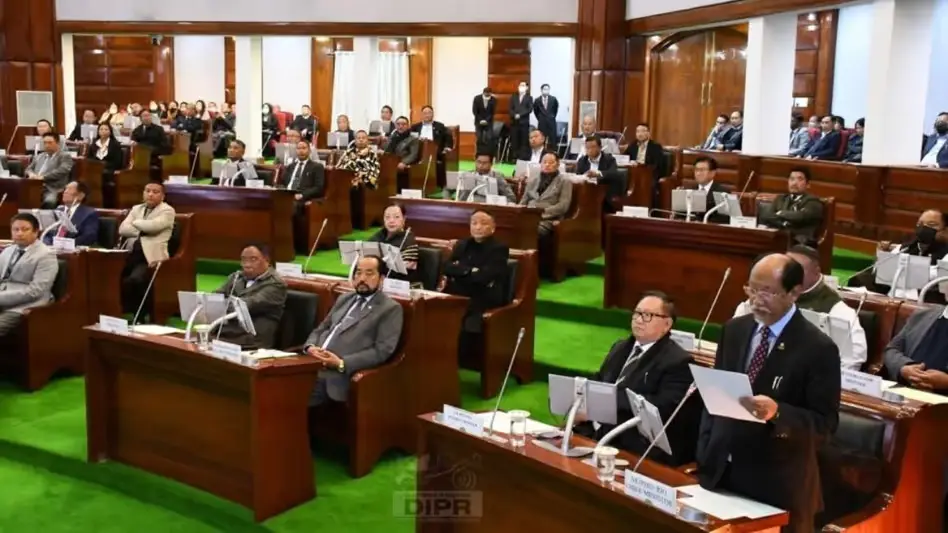
Kohima: Chief Minister Neiphiu Rio will present a revised bill for the Frontier Nagaland Territorial Authority during the upcoming monsoon session. The ninth session of the 14th Nagaland Legislative Assembly convenes on September 1 and 3. Legislators face a heavy agenda. This legislation targets the long-standing demand for autonomy in Mon, Tuensang, Longleng, Kiphire, Noklak, and Shamator.
The move follows a February Memorandum of Agreement between the state government, the Centre, and the Eastern Nagaland Peoples' Organisation. The state shelved an earlier version of the bill in March. Officials stalled the process because of concerns over the authority's legal standing and constitutional reach. "Rio had earlier indicated that the revised legislation would be brought before the Assembly during the upcoming session."
Consultations with stakeholders helped shape the new draft. Beyond the territorial authority proposal, the two-day meeting includes routine government business. Representatives will address questions, formal reports, and additional resolutions before the session wraps up.
Updated at 1st September 2026 at 10:00am
Officials confirmed the session kicks off Tuesday. The legislative agenda prioritizes the bill as the primary item of business for the two day meet.
Updated at 1st September 2026 at 5:49pm
Deputy Chief Minister Yanthungo Patton formally moved to pull the stalled March version of the bill on Tuesday. The House approved the withdrawal before he introduced the revised Frontier Nagaland Territorial Authority Bill, 2026. Speaker Sharingain Longkumer set the deadline for proposed amendments or clarification requests for 2 pm Wednesday, with the vote slated for Thursday.
The push for autonomy dates back to 2010 when the Eastern Nagaland Peoples Organisation first sought statehood, claiming years of government neglect. The group now backs the current framework.
Lawmakers also introduced five additional bills on the opening day. Chief Minister Rio tabled the Nagaland Goods and Services Tax (Eleventh and Twelfth Amendment) Bills, the Nagaland Town and Country Planning (Sixth Amendment) Bill, and the Nagaland Right to Public Services Bill. Health Minister P Paiwang Konyak introduced the Nagaland Paramedical Council (Repeal) Bill. All six measures are scheduled for debate and passage on Thursday.
Updated at 1st September 2026 at 9:52pm
Beyond the territorial authority bill, the House spent the opening day debating the central government's proposed amendments to the Foreign Contribution (Regulation) Act. Advisor Achumbemo Kikon sparked the discussion, warning that the changes could trigger aggressive asset seizures and stifle the work of churches and NGOs. Legislators argued that the state's Christian institutions, which have long provided the backbone for healthcare and education in remote regions, face existential threats from potential central oversight and registration hurdles.
Chief Minister Rio confirmed he has already pushed back against the plan in letters to the Union Home Minister, citing the unique history and social contributions of Nagaland's faith-based groups. He backed the decision to send the FCRA legislation to a Joint Parliamentary Committee, pinning hopes on that body to strip out the most punitive measures. Meanwhile, the Nagaland Joint Christian Forum has scheduled a rally in Kohima for September 12 to oppose the national policy changes.
Updated at 2nd September 2026 at 1:47am
The legislative debate revealed specific anxieties over the 2026 bill. Advisor P. Longon challenged the move to let a designated authority seize assets built over 150 years of Baptist mission work, calling the provision a weapon for punishment rather than mere oversight. He cited sharp declines in active registrations and warned that small Baptist education societies are already struggling with renewal delays lasting up to 18 months.
Adding to the pressure, the Nagaland Joint Christian Forum has finalized plans for a Rally for Religious Freedom. The gathering takes place at Khuochiezie, Kohima, on September 12 at 11 a.m. Organizers, including Rev. Dr. Vevo Phesao and Rev. Dr. N. Paphino, confirmed the event aims to push back against the FCRA amendments while reaffirming support for secular democracy. The forum is calling for attendance from all denominations, church leaders, and students across the state.
Updated at 2nd September 2026 at 5:47am
The proposed Frontier Nagaland Territorial Authority will be a body corporate with a common seal, overseeing 46 transferred subjects including agriculture, school education up to higher secondary level, and village customary courts. The authority's 62 members will include 40 elected seats, with one-third reserved for women, and two Governor-nominated members from unrepresented tribes. Twenty local MLAs will hold ex-officio status without voting power. While the bill grants the authority financial and executive control, the state government retains final oversight on geological and mining matters through a regional office.
Deputy Chief Minister Y Patton stated that the delegation of legislative powers remains limited to administrative and procedural needs. The state will fund the authority based on population and area, and the Comptroller and Auditor General will audit all development spending. The bill includes ambitious infrastructure goals, ranging from an Eastern Frontier Railway to new medical and nursing colleges in the region. If provisions within the bill conflict with state laws, existing state statutes will take precedence.
Separately, the Department of Animal Husbandry and Veterinary Services is pressuring the Home Department to reopen quarantine check posts for livestock and poultry. Director Dr. Kuokehebi Gwirie noted that the current ban on these posts makes it impossible to screen animals for diseases as required by the 2009 Prevention and Control of Infectious and Contagious Diseases in Animal Act. The department clarified that it has no jurisdiction over trade licenses or stockyard inspections, as those tasks fall under the municipal authorities.
Updated at 2nd September 2026 at 9:48am
While the House tackled the legislative agenda, the Naga Students Federation staged a march from Naga Solidarity Park to the Assembly gates. Protesters demanded that the government pass a resolution banning the singing or playing of Vande Mataram at both public and private functions. NSF president Mteisuding stated that the group views the song as a conflict with their faith, telling legislators they are Christians first and politicians second. The protesters vowed to remain outside the Assembly until the body adopts a formal resolution.
Debate over the Foreign Contribution Regulation Act deepened as members flagged specific administrative grievances. Advisor Achumbemo Kikon noted that the Diocese of Kohima faced refused renewal applications in 2024 and 2025, forcing the Bishop to petition the Deputy Chief Minister and the Governor. Kikon argued the proposed amendments threaten constitutional protections under Articles 25, 29, and 30, and urged the government to weigh the impact against the unique provisions of Article 371A.
Lawmakers also observed a moment of silence to pay tribute to former legislator G. Kughavi. Speaker Sharingain Longkumer formally welcomed the 14th Assembly’s newest and youngest member, Daochier I. Imchen, before the session adjourned to resume on September 3.
Updated at 2nd September 2026 at 1:48pm
While the Assembly floor heated up over the frontier bill and religious freedom, Governor Nand Kishore Yadav met with the Coffee Board of India and the Department of Land Resources at Lok Bhavan on September 1. The talks aimed to shift local coffee farming into the specialty and premium markets.
Officials flagged major roadblocks, including poor roads, climate shifts, and a lack of skilled labor. The Governor pushed for a total supply chain overhaul, eyeing organic certification, coffee tourism, and e-commerce to boost farm incomes. He noted that the state's growing cafe culture could help turn the region into a serious player in the national coffee market.
Updated at 2nd September 2026 at 5:48pm
Beyond the primary legislation, the Assembly received confirmation that Governor Nand Kishore Yadav has signed off on a string of recent measures, including the Nagaland Town and Country Planning (Fifth Amendment) Bill, 2025, and the Nagaland Jan Vishwas (Amendment of Provisions) Bill, 2026. The list also includes the first four Appropriation Bills for 2026 and the Nagaland Shops and Establishment (First Amendment) Bill, 2025.
Chief Minister Rio put the Nagaland Lokayukta Annual Report 2025 on the table, while Y. Patton laid out the State Human Rights Commission's annual report for 2026. Legislators also dug into a mountain of committee work. K.G. Kenye and his team pushed their internal rules for vetting central laws, while Achumbemo Kikon submitted the first comprehensive report on environment and climate change. Public Accounts Committee Chair Mhathung Yanthan dropped three separate reports covering state finances from 2019 through 2023, and Kuzholuzo Nienu presented the Estimates Committee’s findings on the Tribal Affairs and Urban Development departments.
The debate on the FCRA also surfaced specific concerns regarding the Missionaries of Charity. Rio pointed to their 2021 registration struggle as a cautionary tale of what happens when federal scrutiny goes unchecked. The Chief Minister noted that the Union government sent the controversial FCRA amendments to a 31-member Joint Parliamentary Committee on August 12, a move he believes could provide a path to fix the most problematic clauses.
Updated at 2nd September 2026 at 10:06pm
Governor Nand Kishore Yadav also met with the Rubber Board Regional Office to weigh the state’s rubber output. Records show over 29,794 hectares of rubber plantations across the state, with 13,617 metric tonnes produced annually as of March 2026. The Governor reviewed the INROAD project, which aims to beef up plantation infrastructure and farmer welfare.
Rubber officials are pushing for more Group Processing Centres to cut costs and improve sheet quality. They are also battling a shortage of experienced labor by running intensive tapping clinics. To combat Abnormal Leaf Fall disease, the board has deployed drones to spray Copper Oxychloride across nearly 172 hectares in Wokha, Peren, and Niuland. Despite the scale, the sector still grapples with wildlife damage, poor rural roads, and a heavy reliance on outside workers.
Updated at 3rd September 2026 at 10:30am
New data from the Rubber Board breaks down the state's 29,794 hectares into 11,977 hectares of mature trees and 17,816 hectares of immature plantations. The current yield sits at 1,166 kg per hectare. Officials noted that future growth depends on the upcoming INROAD 2.0 initiative and tighter coordination with the Department of Land Resources.
The board is ramping up field demonstrations and exposure visits for farmers. To fix the tapper shortage, they are pushing the Tappers' Intensive Skill Improvement Programme to get locals trained in scientific tapping techniques rather than relying on outside labor.
Updated at 3rd September 2026 at 1:49pm
Governor Nand Kishore Yadav met with the Coffee Board of India to push for a total overhaul of the state's coffee value chain. Officials identified specific bottlenecks hitting local growers, including small landholdings, limited access to international markets, and a lack of processing infrastructure. The Governor is demanding a shift toward specialty and premium Arabica and Robusta production to help local youth and entrepreneurs find better footing in the national market.
Rubber Board officials spelled out the technical strain of the INROAD project during their sit-down with the Governor. Beyond the known labor and infrastructure gaps, they pointed to the fragmented nature of the industry as a major efficiency killer. While drone spraying handles the current disease outbreaks, the board admits it needs a tighter grip on farmer education to move away from the current reliance on outside labor. Future plans hinge on the upcoming INROAD 2.0 initiative to scale up operations.



Comments