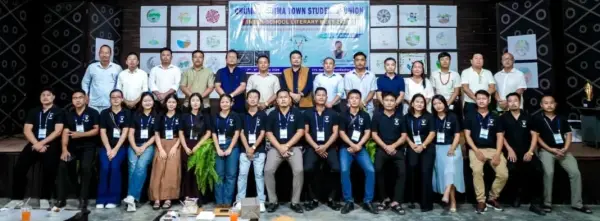
Kohima: Naga food traditions face an existential threat. A two-day international workshop in Chümoukedima concluded Tuesday with a call to save disappearing agricultural practices. The event brought together scholars, farmers, and students to stop a growing reliance on commercial seeds and market-bought goods.
Tetso College, Unity College, Asufii Christian Institute, and the University of California, Santa Cruz hosted the event. They launched new seed libraries under the banner, Save a Seed Today: Save the Future. Students have already gathered seeds from six districts.
Keynote speaker Seno Tsuhah argued that ancestral food security hinges on biological diversity. She warned that younger generations are losing their grip on history. "There is no food system without the seed system," Tsuhah said. She urged communities to stop viewing seed saving as purely agricultural, framing it instead as an act of restoring indigenous identity.
Dr. Daili Neli of ACI identified millet, known locally as Osütho, as a victim of changing times. He lamented that some varieties now exist only for decoration. He proposed a four-step rescue plan: Remember, Document, Research, and Revive. Dr. Mary N. Odyuo of Nagaland University warned that oral traditions are fading. She stressed that customs die without constant practice.
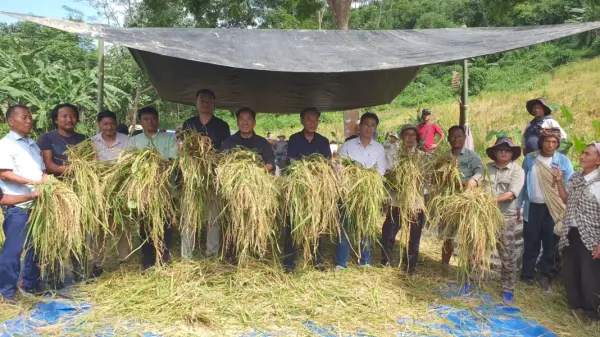
Panelists debated the future of the Naga Plate. Dr. James Kalong described food as a relational link between people and the land. Farmer Thejiano Makritsu noted the rising influence of hybrid seeds on local farming. Chef Aketoli H. Zhimomi noted that while Naga food is gaining global interest, the focus must remain on grassroots preservation over food tourism trends.
The workshop ended with a signed commitment. The Naga Well-being Pedagogy Vision requires participating schools to sustain their seed libraries and ecological research.
Updated at 26th August 2026 at 1:49pm
The event, titled Ecologies of Care: Food and Well-being in Naga Society, kicked off August 24 with the traditional watering of a Tree of Knowledge and local blessings. Dr. Hewasa L. Khing of Tetso College opened the proceedings by calling for action-based conservation. Kaini Lokho of ACI traced the collaboration back to the community welfare concerns held by Naga ancestors.
Prof. Dolly Kikon of UC Santa Cruz provided the driving vision for the event, grounding the discussions in ancestral land ties. Dr. Prithibi Prathibha Gogoi noted that seed libraries now include varieties recovered from local weekly markets. Adding to the discussion on heritage, Dr. Vinitoli Zhimo joined the call to address the decline of oral knowledge systems alongside Dr. Mary N. Odyuo.
Chef Aketoli H. Zhimomi clarified that the push for local food extends beyond fermented soybeans and smoked meat staples. She argued that smart food tourism could act as an economic engine for grassroots preservation. The formal proceedings closed with a vote of thanks from Rose Kikon of Unity College.




Comments