Itanagar: The Public Right Action Committee halted parts of the Itanagar Capital Region during a 12-hour strike on November 4. Chairman Takam Sonia led the protest from 5 am to 5 pm. The group pushed the government to act on a laundry list of grievances.
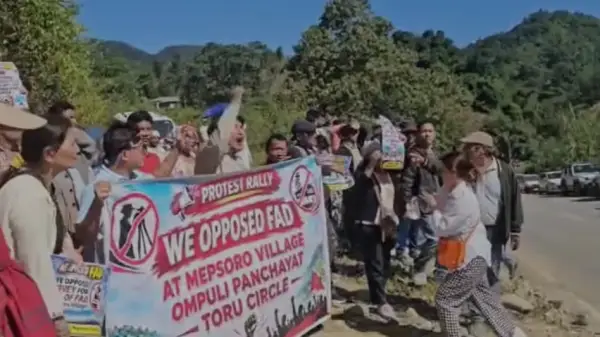
Protesters want the immediate release of people held over the Siang Upper Multipurpose Project. They also demanded the state fix the Drug Testing Laboratory and overhaul pharmacy regulations. The committee highlighted the need for repairs to National Highway 415.
District Magistrate Toko Babu stood in the way. He declared the strike illegal under Section 163 of the Bharatiya Nagarik Suraksha Sanhita. The move bypassed Supreme Court guidelines meant to curb such shutdowns.
Local authorities did not back down. The administration ordered the Superintendents of Police in Itanagar and Naharlagun to keep the peace and prevent the forced closure of businesses. Officials vowed to take penal action against anyone violating the order. Despite the heavy warnings, the committee maintained pressure. The region saw a partial shutdown as the committee stated the government faced a "failure to address its demands."
Updated at 5th November 2026 at 2:00am
The scope of the committee's demands expanded beyond initial reports. Protesters sought the withdrawal of security forces from project-affected areas, the revocation of suspension orders against village headmen, and a total halt to survey work for the Siang project's pre-feasibility report. Civic complaints also grew to include the need for better ambulance services and a steady supply of essential medicines.
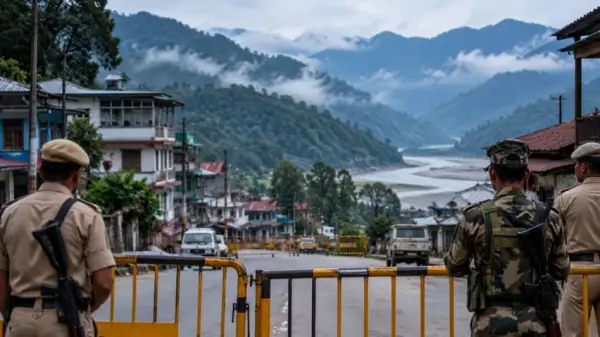
The shutdown drew a mixed response on the ground. While commercial storefronts stood empty, government offices remained open and traffic continued to flow. Police reported a peaceful day with no major violence, though officers intercepted about 30 protesters marching from Bage Tinali toward Indira Gandhi Park and sent them packing. Security forces bolstered their presence at key sites, including the Civil Secretariat and Lok Bhavan.
Pressure against the dam project is mounting beyond the city limits. The Adi Galo Welfare Society launched a foot march from Geku in the Upper Siang district headed for the capital. The group mirrors the committee's calls for the immediate withdrawal of paramilitary units and the release of those caught up in the October 23 clashes in Pasighat.
Updated at 5th November 2026 at 1:48pm
The proposed Siang Upper Multipurpose Project, the focal point of the unrest, is slated for 11,200 MW. Tensions remain high following the October 23 clashes in Pasighat, which continue to drive the opposition's agenda.
Police confirmed that while they kept the peace, their strategy included intercepting marchers near Nirjuli to prevent groups from reaching Indira Gandhi Park. Authorities maintained a heavy presence at sensitive government installations throughout the day to ensure business continued behind closed doors.
Updated at 5th November 2026 at 9:50pm
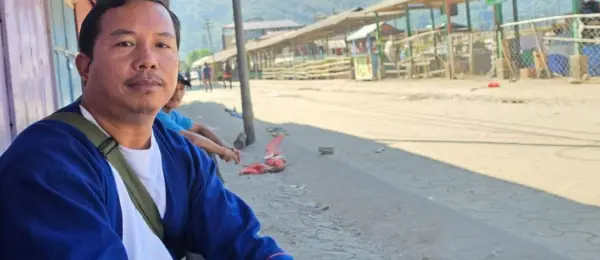
Activist and engineer Katon Moyong, known locally as Abor Man, stepped into the dispute by demanding the immediate release of those arrested and criticizing the heavy security footprint in the region. Moyong warned that the presence of armed personnel will only fuel public anger rather than suppress it. He insisted that no talk of the 11,200 MW project can proceed without the explicit consent of all 60 village councils and called for tribal unity against the development.
Moyong further criticized the government’s tactics, alleging that leadership has continuously shifted its narrative to force the project through. He questioned the tangible benefits such massive hydropower works provide to local communities and urged citizens to use the 2029 Assembly elections to drive political change.
Updated at 6th November 2026 at 1:48pm
Moyong challenged the state's national security justification for the 11,200 MW project, dismissing it as a false narrative meant to bypass local consent. He pointed to a 47-year history of Adi resistance to dams on the river, noting that the community rejected a 1979 proposal that framed the project as flood mitigation. He warned that while the tribe is open to developments on smaller tributaries, they will not surrender the main Siang river, stating, "You have to exterminate Adi people if you want to build a dam on Siang."
The activist accused both Congress and BJP leadership of prioritizing commission-based funds from mega-projects over the welfare of indigenous residents. He further questioned the government's focus on China’s 60 GW Medog project, suggesting officials should address those concerns directly with Beijing rather than pressuring local communities. Moyong also took aim at the appointment of Director General of Police Shiv Darshan Singh Jamwal, citing his previous tenure in Ladakh where police firing resulted in four deaths in 2025.
Moyong additionally blasted the government for restrictive trade policies with China and Myanmar, which force the region to rely on supply lines through Assam. He warned that while the Adi people have historically respected the Indian state, the current heavy-handed security presence is testing that loyalty. "If you come with guns and armies, that is how we will retaliate," he said.



Comments