
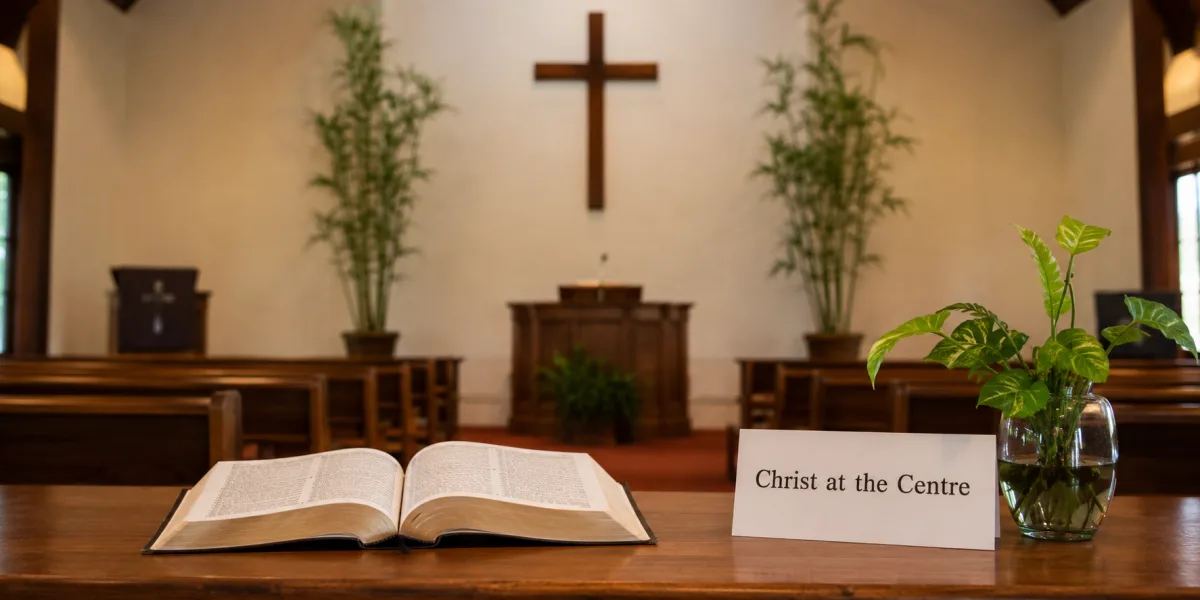
 Photo Courtesy: Representative Image
Every year, churches across the world observe occasions such as Mother's Day, Father's Day, Children's Sunday, Youth Sunday, and other special events. These occasions remind us to thank God for the people He has placed in our lives and the unique role each plays in the family, the Church, and society.
Giving thanks is biblical. Encouraging one another is biblical. Honouring those who faithfully serve God is biblical. Yet every celebration also presents an opportunity to ask a simple but important question: Are our practices helping us fulfil the mission Christ entrusted to His Church? These reflections are offered, not as criticism, but as an invitation for all of us to examine our traditions in the light of Scripture.
Every Generation Is a Gift
The Holy Bible honours every generation. Children are a heritage from the Lord (Psalm 127:3). Young people are encouraged to be examples in faith and purity (1 Timothy 4:12). Fathers are called to raise their children in the instruction of the Lord (Ephesians 6:4). Mothers are honoured for their godly influence (Proverbs 31), and older believers are respected for their wisdom and faithful witness (Leviticus 19:32).
The Church should continue to thank God for every generation and encourage each one to fulfil its God-given purpose.
More Than Annual Observances
While these occasions are meaningful, they are not biblical festivals instituted by Scripture. They are cultural observances that many churches have chosen to adopt.
Whether a congregation celebrates them every year or not is a matter of Christian liberty and local discernment. Our unity is not built upon a common calendar but upon our common faith in Jesus Christ.
What matters is not whether we celebrate these occasions, but whether Christ remains at the centre of everything.
A Question of Stewardship
For many years, I have quietly reflected on one aspect of these celebrations — the practice of purchasing gifts from church offerings. I fully understand that churches do so with sincere and generous intentions. Expressing appreciation is always meaningful, and every congregation is free to decide how it observes these days.
Yet every generation of believers should be willing to ask whether its practices best reflect the mission and stewardship entrusted to the Church.
Every offering placed before God is an act of worship. Whether given in abundance or through sacrifice, it represents faith, gratitude, and commitment to God's Kingdom. That is why the Church has a sacred responsibility to steward these resources wisely.
Jesus said, "Where your treasure is, there your heart will be also" (Matthew 6:21). Paul reminds us, "It is required that those who have been given a trust must prove faithful" (1 Corinthians 4:2). Stewardship is not merely about managing finances. It is about aligning every resource with God's purposes.
Could We Do Even More?
This naturally raises another question. Could some of the resources used for annual gifts also strengthen ministries that continue throughout the year? Could they support missions, evangelism, discipleship, theological education, church planting, orphans, widows, struggling families, or people living with disabilities?
This is not an argument against appreciation. It is simply an invitation to consider whether our generosity can accomplish an even greater Kingdom purpose.
Why Do We Gather?
The early Church devoted itself to the apostles' teaching, fellowship, the breaking of bread, and prayer (Acts 2:42). Their gatherings centred on worship, spiritual growth, and the advancement of the Gospel.
Acts of kindness certainly have their place. But the Church should always ensure that no tradition, however meaningful, overshadows its primary calling - to glorify God, proclaim Christ, and make disciples.
Our greatest gift to one another is not what we place into each other's hands, but what, by God's grace, we help place within each other's hearts.
Remembering Everyone
Special days are not joyful for everyone. Some have lost parents. Others have lost children. Some longed to become parents but never had that opportunity. Others quietly carry loneliness, broken relationships, illness, or financial hardship.
The Church should also honour those who have become spiritual fathers and mothers through faithful service - pastors, teachers, mentors, and many others whose influence has shaped generations of believers. A Christ-centred church is one where every person feels welcomed, valued, and included.
Keeping Christ at the Centre
Churches should never compete in the value of the gifts they distribute but in the depth of their faith, love, humility, compassion, and service. If special days are observed, let them become occasions to pray for families, commission parents, encourage young people, honour faithful senior members, and renew the Church's commitment to disciple every generation.
Above all, let them point people to Jesus Christ.
Beyond Special Days
Ultimately, this reflection is not about Mother's Day, Father's Day, Children's Sunday, or Youth Sunday. It is about the Church.
Every tradition deserves to be examined in the light of Scripture. Every resource entrusted to the Church deserves faithful stewardship. Long after flowers have faded and gifts have been forgotten, people will remember a church that loved them, prayed for them, taught them God's Word, and faithfully pointed them to Jesus Christ. That remains the Church's greatest gift - not only on special days, but every single day.
- This article was written by Rev. Dr. Meyu Changkiri, General Secretary of the North East India Christian Council (NEICC), Shillong.






Comments