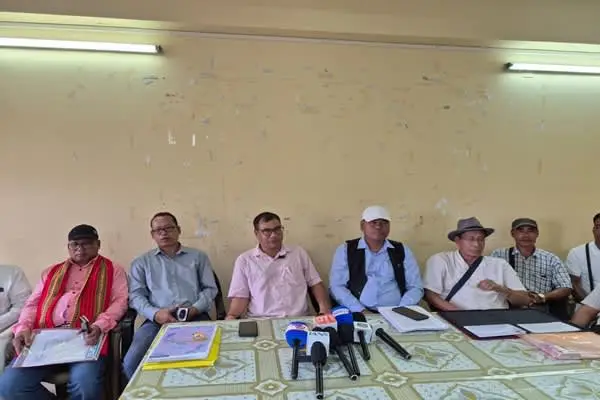
 Photo Courtesy: tripuratimes
Agartala: Tripura faces a massive shutdown starting September 4. Surrendered extremist groups declared a 72-hour statewide strike. This bandh serves as a warning shot to the state government. Leaders confirmed the escalation during a Thursday press conference at the Agartala Press Club.
Convenor Jibanjoy Reang and other group leaders said they reached a breaking point. They held prior meetings with Minister Bikash Debbarma but claim the talks produced zero results. The militants argue that state ministers lack the authority to fix their long-pending demands. One leader said, "The key to the lock is not with the ministers, it is with the Chief Minister."
The groups now demand direct intervention from Chief Minister Dr. Manik Saha. They refused further low-level negotiations. If the government ignores this 72-hour strike, the groups plan to launch an indefinite blockade. This would grind public life across the state to a halt. The organizations blamed the BJP administration for offering only empty promises. They warned that the state government carries full responsibility for any violence or untoward incidents occurring during the protest. Security forces remain on alert as the deadline approaches.
Updated at 4th September 2026 at 1:49am
The protest goes beyond a standard shutdown, with the Joint Movement Committee calling for a 72-hour blockade of both rail and road networks starting September 4. The groups intend to gather at three specific locations to choke off transportation across the state.
The agitation stems from a 2024 tripartite peace agreement signed by the National Liberation Front of Tripura, its Parimal Debbarma faction, and the All Tripura Tiger Force. Leaders claim the government failed to uphold the deal, specifically regarding the rehabilitation of more than 1,200 surrendered cadres. According to the groups, only 91 individuals have received their promised packages over the last two years.
Adding to the tension is a dispute over a Rs 250-crore rehabilitation project funded by the North Eastern Council. The groups expressed strong reservations over the implementation guidelines for these funds. They also previously held a similar blockade in June, which they only lifted after receiving government assurances that went unfulfilled.
Updated at 4th September 2026 at 1:48pm
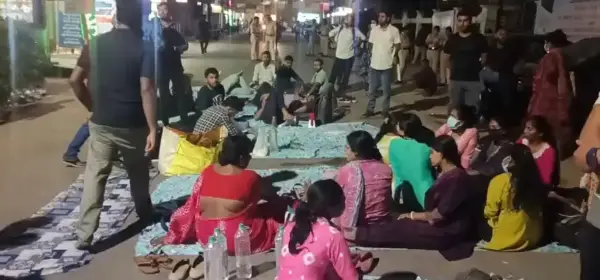
The protest expanded into a broader movement as seven distinct surrendered insurgent groups joined forces, including the NLFT (Original), NLFT (Nayan Bashi), and multiple factions of the ATTF. Protesters brought traffic to a grinding halt on the Assam-Agartala National Highway by igniting tyres and occupying the road at Chandra Sadhupada. Additional sites at Bighudas and Khowai Chowmuhani also saw disruptions to road and rail transport, leaving hundreds of passengers stranded.
The groups are now pushing an 11-point charter of demands. Beyond rehabilitation, they are calling for the withdrawal of pending police cases against returnee cadres and the inclusion of specific returnee lists. Their platform has also broadened to include indigenous issues, such as the adoption of the Roman script for the Kokborok language, the establishment of common customary laws for Tiprasa communities, and shifting land acquisition powers to the Tripura Tribal Areas Autonomous District Council.
Addressing the protest, NLFT leader Thomas Tripura noted that the 2024 peace accord carries a four-year implementation window, but claimed progress is too slow to wait until 2028. The timing of the standoff clashes with high-level talks in New Delhi, where Chief Minister Dr. Manik Saha and Union Home Minister Amit Shah met to discuss the status of the peace deal. While authorities have deployed extra police and paramilitary units to clear the routes, the groups maintain the blockade will persist until they receive concrete, written commitments.
Updated at 4th September 2026 at 5:48pm
Protesters are pressing for an 11-point charter of demands. Beyond immediate rehabilitation, they want the government to fill pending Scheduled Tribe vacancies, withdraw police cases against returnee cadres, and implement specific Socio-Economic Development Package projects, including those involving privately owned land. The groups also pushed for indigenous safeguards, demanding the adoption of the Roman script for the Kokborok language, a unified customary law for Tiprasa communities, and shifting land acquisition powers to the Tripura Tribal Areas Autonomous District Council.
The mobilization involved over 400 people, including women, gathering at Chandra Sadhu Para near the Hathai Kotor Bridge, Khowai Chowmuhani, and Brigudas Bari. West Tripura Superintendent of Police Namit Pathak arrived on-site as officials attempted to clear the arterial routes. The action coincides with high-level talks in New Delhi where Chief Minister Dr. Manik Saha and Tipra Motha founder Pradyot Kishore Deb Barma met with Union Home Minister Amit Shah to discuss the peace accord's status.
Updated at 5th September 2026 at 1:48am
Protesters are specifically demanding the restoration and renaming of traditional village names and the formal recognition of the Joint Action Rehabilitation Committee and the Joint Action Committee as stakeholders in the process. Leaders from the groups, including Sukumar Debbarma, indicated that the current escalation is a direct response to a two-month delay in fulfilling assurances made by Tribal Welfare Minister Bikash Debbarma following a previous protest in June.
The impact hit the ground hard Friday morning. Passenger services at the Chandrapur ISBT stalled as bus and jeep operators pulled vehicles off the road. The Northeast Frontier Railway cancelled or short-terminated multiple express and local trains. In one instance, a woman BSF jawan attempting to reach an airport to visit her critically ill father remained trapped in the gridlock, highlighting the human cost of the standoff.
Police estimates place the number of active protesters at roughly 400 individuals, including women. Security remains tight, with the Tripura State Rifles backing up local police at hotspots like the Hathai Kotor Bridge. While officials have engaged in rounds of talks, the agitators refuse to budge until they receive tangible proof that their list of returnees is being processed and that their land acquisition powers will move to the TTAADC.
Updated at 5th September 2026 at 1:48pm
By Saturday, the protest entered its second day as the All Returnees' Rehabilitation Committee solidified its hold on key transit points. West Tripura District Magistrate Vishal Kumar confirmed that while rail and road movement remains paralyzed, the administration initiated discussions with rebel leaders at Hataikotor. Kumar stated the government is committed to a time-bound implementation of the peace deal, noting that protest leaders are currently reviewing government proposals with their rank and file.
Despite the gridlock, authorities describe the protest as peaceful. The ongoing blockade continues to force the Northeast Frontier Railway to scrap, reschedule, or short-terminate long-distance and local services, keeping Tripura effectively cut off from the rest of the country.
Updated at 5th September 2026 at 5:49pm
Tension flared at Baramura when police tried to force a path for emergency travelers, sparking a confrontation that sent officers into a temporary retreat. The standoff reached a breaking point as a representative for the committee issued a stark warning: if the government continues to drag its feet, the groups may return their surrendered weapons and head back into the jungles to resume their armed struggle.
The blockade continues to choke the state economy, leaving the Chandrapur ISBT deserted and commuters stranded. With daily life paralyzed, the agitation has forced a reckoning over the state's fragile security, as officials scramble to contain the fallout from the two-year-old peace deal.
Updated at 5th September 2026 at 9:49pm
Tension boiled over at Baramura on Saturday morning. Police moved to carve out a path for emergency travelers, but the crowd swarmed the officers, forcing the cops to pull back to avoid a full-scale clash. The blockade remains absolute, with groups digging in at Hataikotor, Brigudasbari, and Khowai Chowmuhani.
The threat level has climbed as protest leaders issued a blunt ultimatum: if the government keeps stalling on the 11-point charter, these men will demand their weapons back and head back into the hills to resume their fight. This warning has officials scrambling to keep a lid on the fragile peace.
West Tripura District Magistrate Vishal Kumar confirmed that the administration has floated new proposals to the agitators. Rebel leaders are currently huddling with their rank and file to weigh those government offers against their original list of demands. Until a deal is struck, the state remains severed from its transit lifelines.

Comments