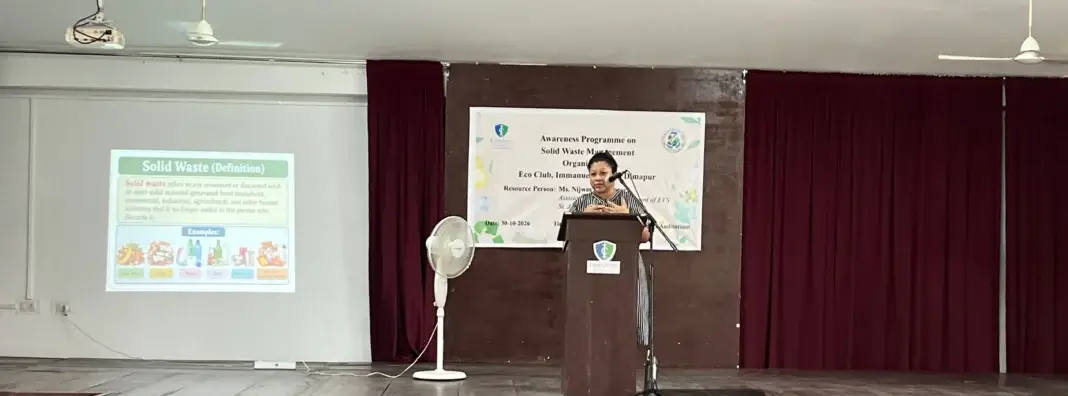
 Photo Courtesy: nagalandpost
Kohima: The Immanuel College Eco Club held an awareness program on solid waste management at the college auditorium on October 30. Nijwm Basumatary, an assistant professor from the Department of Environmental Science at St. John College, Dimapur, led the session. She broke down the various types of waste: municipal, industrial, hazardous, agricultural, and electronic. The consequences of poor disposal include pollution, disease spread, greenhouse gas emissions, and economic strain.
Basumatary described effective waste management as a systematic cycle. It involves collecting, segregating, transporting, treating, recycling, and disposing of waste safely. She listed several methods for handling refuse, including source reduction, reuse, composting, vermicomposting, incineration, sanitary landfilling, anaerobic digestion, and pyrolysis. These steps protect wildlife and conserve natural resources.
India currently produces about 178,600 tonnes of solid waste daily. Basumatary urged students to act responsibly and follow regulations. She pushed the attendees to take initiative: "Encouraged the students to practise responsible waste management and take an active role in creating awareness through social media, conduct debates and quizzes, organize cleanliness drives, and observance of special environment days."


Comments