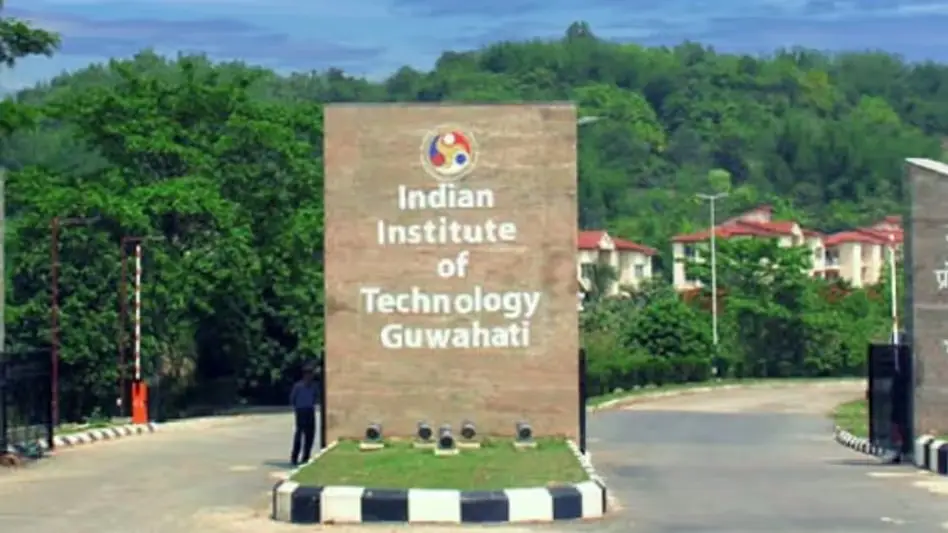
 Photo Courtesy: India Today Group
Guwahati: Researchers at the Indian Institute of Technology-Guwahati built a cheap catalyst to split water into hydrogen. This breakthrough supports India's National Green Hydrogen Mission. Most hydrogen today comes from fossil fuels like coal or natural gas. These methods leak greenhouse gases into the air. Water electrolysis offers a clean path, but it usually demands expensive noble metals. The team slashed these costs by using nickel salt.
The group combined nickel nodes with an anthracene-based organic molecule. They used ultrasonic waves at room temperature to synthesize the coordination polymer. This structure forces a high density of active sites for the reaction. It also speeds up electron transport across the material. Associate Professor Akshai Kumar led the study. He noted the team found the catalyst kept its stability during long-term tests. The system converts nearly 88 per cent of supplied electricity into water-splitting power.
Assistant Professor Kalishankar Bhattacharyya noted that the nickel and anthracene framework work together to boost performance. Chemical modeling confirmed the three-dimensional network architecture. The institute noted, "This low wastage is essential to develop practical systems for large-scale hydrogen production." The research appeared in the Journal of Materials Chemistry A. Co-authors include scholars Niharika Tanwar, Jumana Ishrat, and Khadimul Islam.





Comments