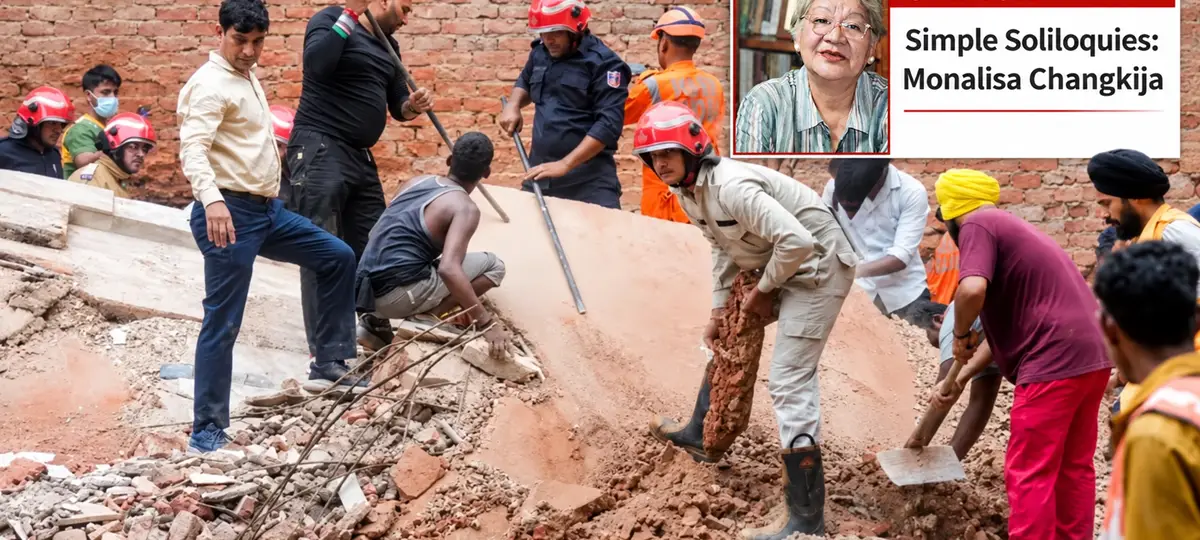
 Photo Courtesy: nenow
Kohima: Chief Minister Rekha Gupta announced a new policy for paying-guest accommodation on September 7, 2026. Owners of older buildings must now submit structural audit reports to certify safety. This requirement applies to PGs, nursing homes, schools, and commercial sites. The move follows a building collapse in Satya Niketan that killed and injured several university students.
Regulation attempts in Delhi date back to 1993. A 2006 Delhi High Court judgment noted that a central scheme then allowed residential buildings to house guests. The Delhi government introduced its own version in 2000 under former Chief Minister Sheila Dikshit. It restricted PGs to owners living in their own homes, limiting operations to four rooms or eight beds.
These rules failed to address the massive, commercial PGs that later appeared near coaching hubs and universities. The Assembly Committee on Petitions in 2019 tried to identify regulatory grey areas regarding fire safety and building norms, but received no data. Authorities in 2021 and 2022 proposed new registration and licensing regimes for roughly 700 private hostels. None were effectively implemented.
After a 2023 fire at a women's PG in Mukherjee Nagar, the Municipal Corporation of Delhi found over 100 establishments violating building bylaws. The current policy remains largely reactive. As the Nagamese maxim says, the government acts like a doctor arriving only after the patient has died. It is a case of, “bolting the stable after the horses have fled.” Without consistent enforcement, these new structural audits may suffer the same fate as thirty years of previous proposals.





Comments