 Photo Courtesy: nenews
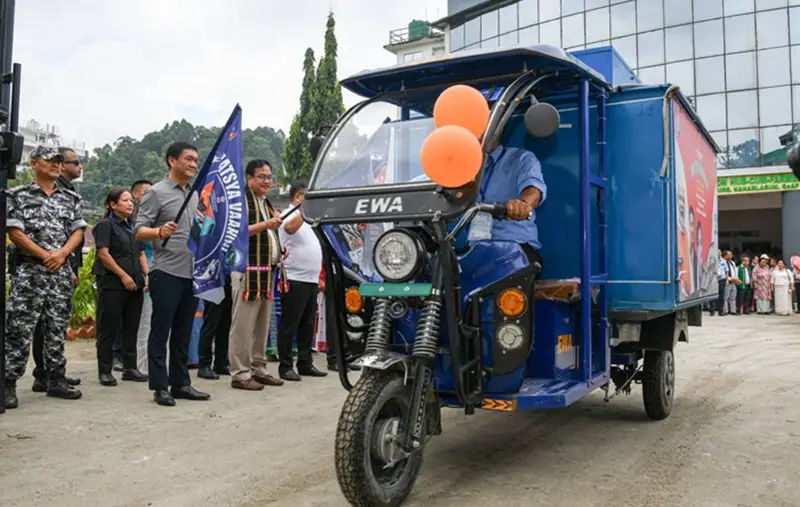
Itanagar: Arunachal Pradesh Chief Minister Pema Khandu rolled out the Matsya e-Vaahini program on Monday. He flagged off a fleet of eco-friendly e-rickshaws in Naharlagun to help fish farmers haul their catch to market. The move targets persistent transportation hurdles that have long hampered the state’s aquaculture sector.
Farmers now have a shot at higher profits. These vehicles provide a sustainable way to move produce, allowing growers to bypass middlemen and sell directly to consumers. The shift aims to modernise local fishing practices while cutting down on logistical headaches. Regarding the move, Khandu stated: "Launched the Matsya e-Vaahini and e-Rickshaw Initiative to give our fish farmers better access to markets and stronger opportunities to grow their incomes."
The government considers this a dual win for the economy and the environment. It pushes producers toward modern, sustainable methods while strengthening the entire agricultural value chain. Officials honoured 12 progressive fish farmers at the event for their innovation and hard work. These individuals serve as a benchmark for the rest of the industry.
Khandu also opened the State Agriculture Information Hub-cum-Farmers’ Hostel in Naharlagun during the same visit. The facility acts as a support base, offering growers access to critical data and essential services. Both projects highlight the state’s drive to overhaul rural support systems and build better livelihoods for local farmers.
Updated at 7th September 2026 at 9:50pm
Beyond the new transport fleet, Khandu opened the state's first dedicated agriculture hub and hostel in Naharlagun. He told officials the building must be more than a structure. It needs to host specialized training for farmers on everything from crop management to value-added production. He directed staff to pull in experts from across the country to teach better technical skills and market strategies.
Khandu is pushing a plan to feed the military and police units stationed in the state with locally grown produce. He wants the government to coordinate with armed forces to secure supply contracts for poultry, dairy, and meat. The strategy aims to cut dependence on goods hauled in from outside the state while keeping money in local pockets.
The government is also betting on oil palm and coffee to drive revenue. Plans are in motion to bring 36,000 hectares under oil palm cultivation over the next five years, with processing plants planned for Dibang Valley and East Siang. Meanwhile, new organic coffee initiatives are hitting the ground. To manage this, the administration is leaning on a mix of Self-Help Groups, Farmer Producer Organizations, and cooperatives to help growers tap into banking and professional business support.





Comments