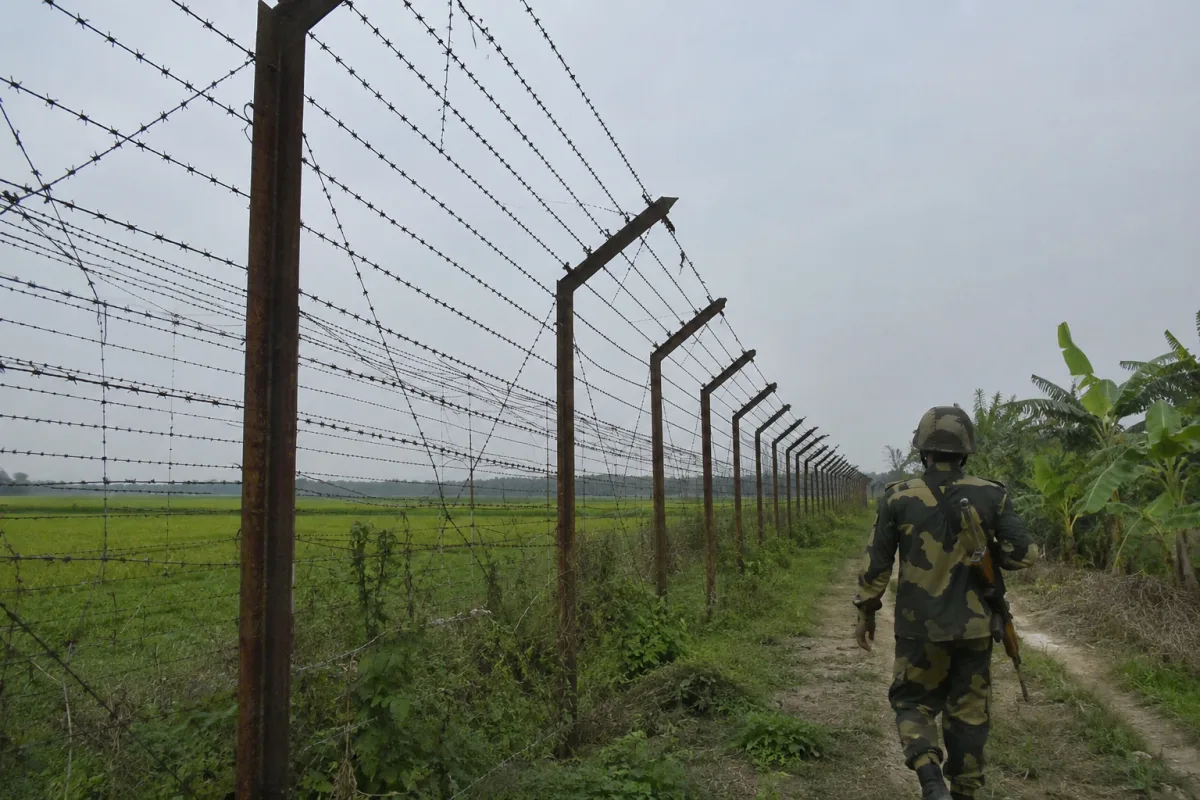
On a June morning in Lyngkhong village, East Khasi Hills, residents gathered with a single demand: halt the border fence until its alignment places their homes inside India. Their protest was quiet, disciplined, and desperate. Homes here stand mere metres from Bangladesh; a bamboo barrier from the pandemic is all that has separated them from the boundary. Now the state proposes a permanent fence that would leave the village on the wrong side.
We argue that the proposed alignment of the India-Bangladesh border fence in Meghalaya represents a failure of governance that prioritizes administrative convenience over the rights of citizens. The issue is urgent because it affects not only border security but the fundamental question of whether Indian citizens can remain on Indian soil with access to schools, markets, and healthcare.
This editorial examines the institutional process of border alignment and its governance consequences, not the merits of any bilateral diplomatic dispute between India and Bangladesh.
The facts are documented and stark. Meghalaya shares a 444-kilometre border with Bangladesh, of which less than 80 kilometres remains unfenced. The 1975 Joint India-Bangladesh Guidelines prohibit constructing defense structures within 150 yards of the zero line, a convention designed to protect communities that live astride the boundary. India has raised with Bangladesh the issue of erecting a single-row fence at the zero line, but Dhaka has yet to respond. Construction continues.
The administration faces a choice it has so far refused to make. It can either respect the 150-yard convention and accept that some villages will remain outside the fence, or it can negotiate a zero-line exception with Bangladesh and wait. Instead, the state machinery appears to be pressing ahead with an alignment that would strand Indian citizens between the boundary and the barrier. This is not border management. It is displacement by bureaucratic default.
This is not an isolated case. Across India's northeastern frontier, border fencing has repeatedly disrupted livelihoods, severed access to agricultural land, and separated communities from essential services. In Karimganj, Assam, eight villages were left outside the fence until local pressure forced realignment. In West Bengal, Border Guards Bangladesh have obstructed fencing work citing the same 1975 guidelines. The pattern is clear: when security infrastructure is designed without consultation, citizens become collateral damage.
National security is a legitimate concern. Cross-border smuggling, trafficking, and unauthorized movement are real threats that fencing can mitigate. The Border Security Force has established an outpost in Lyngkhong and insists all necessary measures are being taken. Yet security and justice are not mutually exclusive. A fence that isolates the people it claims to protect undermines the very sovereignty it is meant to enforce.
It is time for the Government of India to pause construction in Meghalaya until a negotiated alignment is reached, either through diplomatic agreement with Bangladesh or through genuine consultation with the affected villages. The question is not whether India has the right to secure its border. It is whether the state will secure its citizens while doing so.
References
Bhardwaj, Sanjay. "India-Bangladesh Land Boundary Agreement: Context, Correlations and Territoriality." Journal of the Asiatic Society of Bangladesh, vol. 69, no. 1, 2024, pp. 1-25.
Debroy, Gautam. "Honour Past Agreements On Border Fencing, India Tells Bangladesh." ETV Bharat, 4 Feb. 2025.
"Meghalaya Village Protests India-Bangladesh Border Fence Alignment, Fears Isolation." The Hindu, 7 June 2026.
"Meghalaya Villagers Protest India-Bangladesh Border Fence Alignment." Daily Pioneer, 7 June 2026.
Rabbani, Mohammad Golam. "Bangladesh-India Land Boundary Agreements, 1974-2015: Context, Correlations and Territoriality." Journal of the Asiatic Society of Bangladesh, 2024.
Rai, Nityanand. "Statement on India-Bangladesh Border Fencing." Lok Sabha Debates, 4 Feb. 2025.
Saikia, Arunabh. "Why Has India Missed Deadlines For Fencing the India-Bangladesh Border?" The Diplomat, 3 Feb. 2023.
"India-Bangladesh Border Fencing Dispute: A Growing Concern." Sanskriti IAS, 1 June 2026.


Comments