 Photo Courtesy: India Today Group
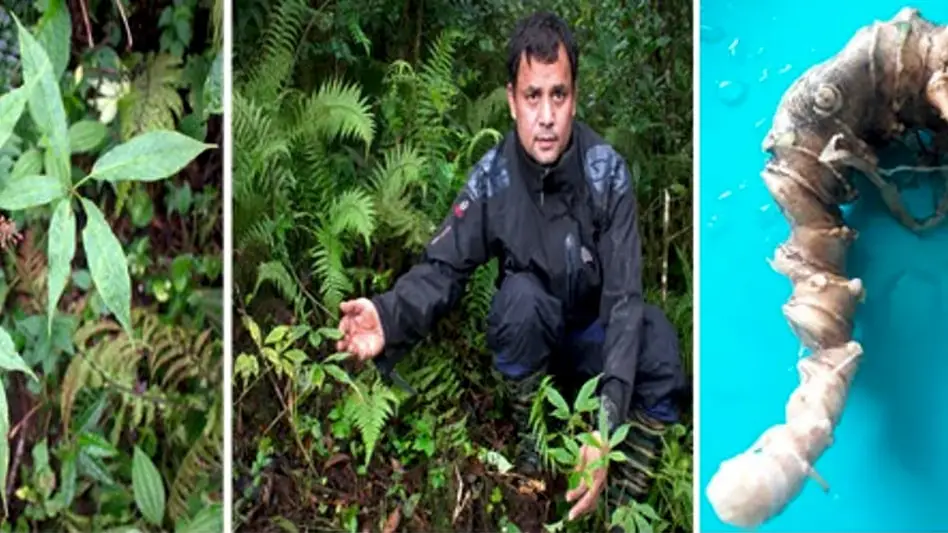
Imphal: A research team led by Manipur microbiologist Dr. Laishram Shantikumar Singh has identified a novel fungal species living on the rhizomes of the rare Panax sokpayensis plant. The discovery occurred in the West Sikkim region of Jorbotay, Uttarey, at an elevation between 1,800 and 2,300 meters. The team documented the find, named Mollisia sokpayensia, in the 2026 issue of the journal Fungal Diversity, Volume 136.
Dr. Singh worked alongside Subecha Rai, Gajanan V. Mane, Dr. Rohit Sharma, and Dr. Thounaojam Salvia to categorize the fungus. Both Dr. Singh and Dr. Salvia originate from Khangabok village in the Thoubal district of Manipur. The study was funded by the Department of Biotechnology, Government of India, under grant number DBT/NER/Agri/24/2013.
Laboratory analysis on Potato Dextrose Agar revealed the fungus grows slowly. Colonies start as brown and cottony before turning blackish-brown. They reach 2 to 3 centimeters in diameter after six days at 28 degrees Celsius, expanding to 8 centimeters by day 14. Scientists note that fungal endophytes often yield bioactive compounds useful for medicine. As the authors wrote, "Fungal endophytes are microorganisms that inhabit the internal tissues of healthy plants without causing visible disease symptoms."
Researchers hope this work helps uncover microbial resources that could lead to new drugs or biotechnology applications. Future studies will determine if these endophytes can provide medicinal benefits without the need to harvest rare plants from the wild. This discovery bolsters the scientific record of the Indo-Burma biodiversity hotspot.
Updated at 29th October 2026 at 10:15pm
The team published their findings as part of a broader paper titled Fungal Diversity Notes: Notes on Worldwide New Species and Records. The full study is now accessible to the public via the digital object identifier https://doi.org/10.65390/fdiv.2026.136019.
Researchers pointed out that the Sikkim Himalaya remains relatively underexplored for microbial resources when compared to the Chinese side of the mountain range. This discovery fills a specific gap in the scientific data concerning the Himalayan region.
Updated at 30th October 2026 at 1:46am
The team named the species Mollisia sokpayensis to formally recognize the ecological link between the fungus and its host plant. They note that the host genus, Panax, holds significant value in international markets for its traditional medicinal properties.
While the team identified the fungus, they caution that its specific biological properties and potential practical applications remain unstudied. Further research is required to determine if the fungus can eventually produce the same medicinal benefits currently harvested from the rare plants in the wild.






Comments