 Photo Courtesy: nagalandpost
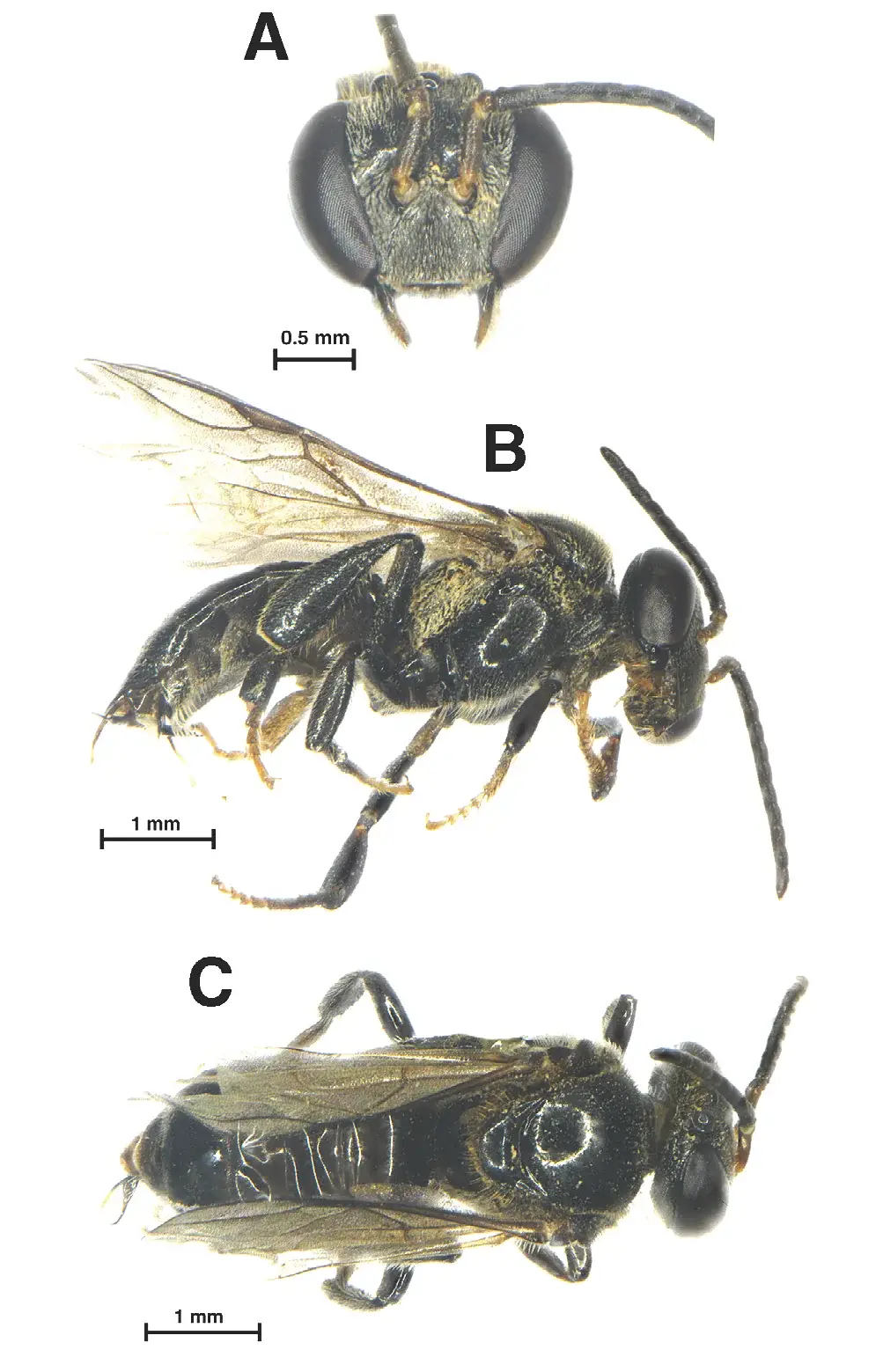
Kohima: A research team led by Nagaland University has identified a new species of stingless bee in the Wokha district. Named Tetragonula yikhumensis, the insect is the largest stingless bee ever recorded in India. It grows to 5.59 mm in body length with a 1.9 mm head width. This discovery brings the total count of known stingless bee species in the country from 25 to 26.
The study involved Noyingbeni M. Odyuo, Professors Bendang Ao and Ranjit Kumar of Nagaland University, plus Dr. Ramesh Kumar and Sudipto Dey from the Zoological Survey of India. They spent nearly four years on the project. The team began collecting specimens in November 2022 and wrapped up field surveys by June 2025. They visited 12 locations across Wokha to gather data.
The bee is known locally by the Lotha community as litsuk or ground bees. It represents the first subterranean member of the Tetragonula genus found in Nagaland and only the second underground-nesting species of its kind in India. Researchers performed detailed morphological analysis on 44 distinct characters and examined male genitalia to verify the classification. The species name honors Yikhum village, the site where the initial nest was retrieved.
Fieldwork proved grueling. The team trekked through dense forests, crossed rivers, and navigated steep hills. Excavating underground nests required extreme care to protect the colonies. During the process, they documented nest architecture and behavior to provide a complete biological profile. Researchers deposited type specimens at both Nagaland University and the Zoological Survey of India.
"It is a reminder that our forests still hold many secrets waiting to be discovered," said Noyingbeni M. Odyuo. The project relied on support from local community members, including family and colleagues who assisted with the physical demands of the expedition. The team now intends to continue investigating the nutritional and medicinal potential of the honey produced by these pollinators, which are vital for local agricultural health.



Comments