
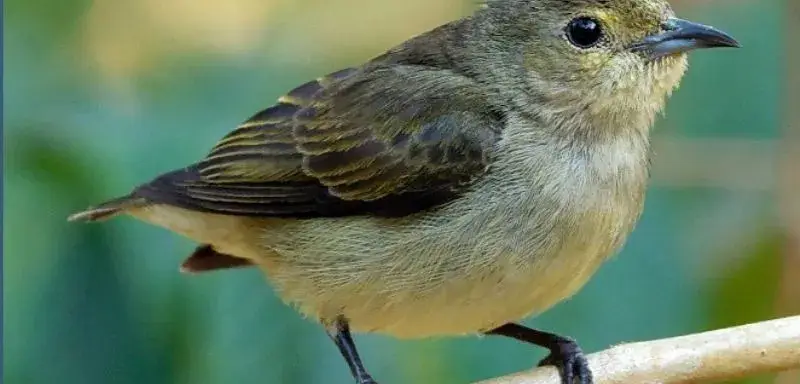
 Photo Courtesy: nenow
Imphal: Birders in Manipur’s Kamjong district have logged a rare sighting. The plain flowerpecker appeared in Kasom Khullen. It is the first time the species has shown up there in nearly 30 years. Local environmental activist Jojo Robertson reported the bird, bringing new focus to the forested frontier near the Myanmar border.
This songbird is tiny. It measures only 8 to 9 centimetres. It lacks the flash of other flowerpeckers, sporting brownish-olive upperparts and pale underparts instead. It possesses a curved dark bill and large dark eyes. The bird stays busy. It hunts for nectar and insects among flowering plants.
Locals know the bird as Aentek. It shares a tight bond with the red-spike mistletoe, or Aenjet Thae. The bird eats the plant's sticky berries and wipes its bill on bark to clean off the seeds. This process helps the parasitic plant spread to new branches. Robertson noted that the sighting is an encouraging sign, stating, "Robertson described the sighting as an encouraging sign of ecological recovery, particularly as communities in the region continue conservation and afforestation initiatives."
The plain flowerpecker ranges through the Himalayan foothills, northeastern India, Myanmar, and southern China. Its return to Kasom Khullen proves that protecting border forests matters. These ecosystems rely on the partnership between birds and plants to survive.






Comments