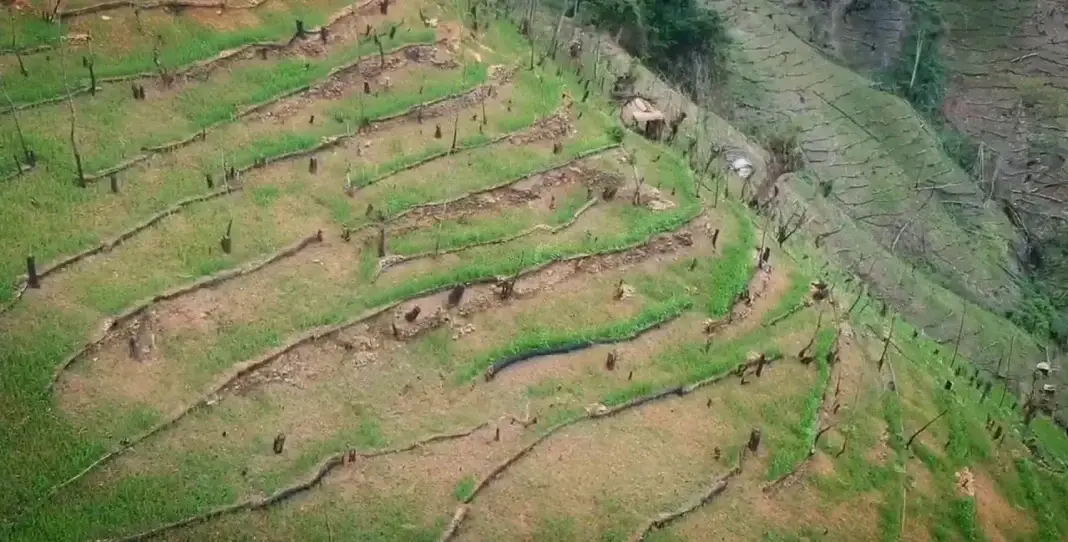
 Photo Courtesy: nagalandpost
Kohima: The International University Nagaland started a major research project to modernize Jhum cultivation across the state. This slash and burn farming technique once defined Naga life. Now, it faces threats from rapid population growth and shifting weather patterns. Farmers have cut their land rotation cycles from 15 years down to just five. This change ruins the soil, causes erosion, and kills crop yields.
The university team wants to save the tradition rather than end it. They are building a hybrid agroforestry model. It mixes high-value crops like cardamom, black pepper, and organic ginger with nitrogen-fixing trees. These additions keep the soil stable and allow farmers to work the same plot year after year. Dr. Roopam Bachhil says they have the equipment to track soil health in real time. "Our goal is not to force farmers to abandon ancestral practices but to empower them with scientific innovations that protect biodiversity while transforming them into sustainable agricultural entrepreneurs," he stated.
Prof. Zavise Rume plans to train village councils and local educators to bridge the gap between old wisdom and new science. The project hopes to restore forests while raising household incomes. Trials start this monsoon across selected villages. The school will eventually pitch this model to the Nagaland Department of Agriculture as a blueprint for policy change.






Comments