 Photo Courtesy: nenews
Kohima: Nagaland’s two largest cities are choking. Kohima and Dimapur landed in the National Clean Air Programme non-attainment category. Both cities breached particulate matter limits for five straight years. The Nagaland Pollution Control Board tracks the decline. Dimapur is hitting dangerous levels. Annual average RSPM concentrations jumped from 79 to 97 micrograms per cubic meter between 2019 and 2022. Across the city, pollution climbed 35 percent from 2020 to 2024. Three out of seven monitoring stations now exceed safety limits.
Kohima presents a mixed bag. Average levels dropped from 91 to 72 micrograms per cubic meter in three years, yet they still sit above the 60 microgram ceiling. Localized trouble spots persist. High School Junction worsened, climbing from 95 to 106 micrograms per cubic meter since 2020. Three of four stations in the capital report excessive pollution.
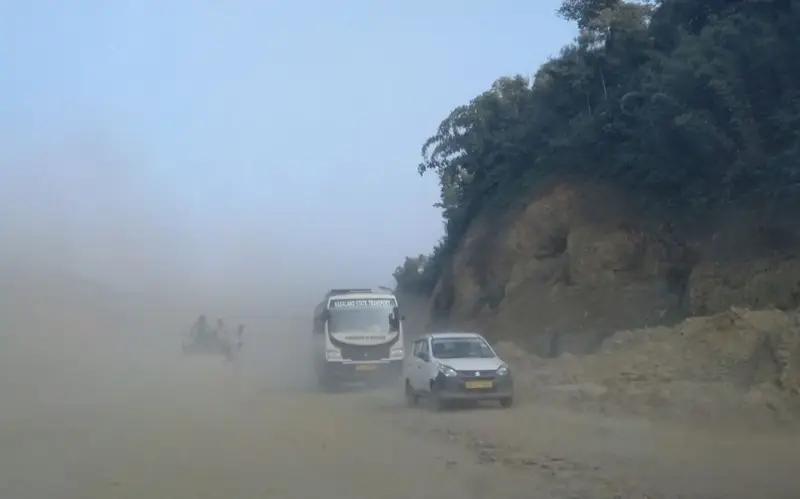
Road dust and broken infrastructure drive the filth. Unpaved streets, construction debris, and stone-crushing sites ruin the air along the Chumoukedima-Burma Camp corridor. Traffic hurts, too. Nagaland holds the Northeast's highest household vehicle ownership rate at 21 percent. Congestion and diesel engines choke the streets. Inspectors caught 26 vehicles failing emission standards out of 287 tested. Drivers face new controls like one-way systems and cameras at Dhobinalla, Tragopan, Purana Bazar, and Nagarjan.
Waste management remains a disaster. Kohima generates 90,000 kilograms of trash daily, while Dimapur dumps 75,000 kilograms. Residents often burn plastic and garden waste. The board warns that evening levels spike as fires ignite across the region. Officials are scrambling to revive the 50-tonne-per-day Lerie compost plant and the Meriema Faecal Sludge Treatment Plant. The Nagaland Pollution Control Board warns that winter will likely trap these pollutants near the ground.
"The Board has emphasised that official interventions alone cannot achieve the targets set under the NCAP." Success requires citizens to stop burning trash and start segregating waste. Authorities are now tightening regulations on stone-crushing units through village council permits to clear the air.







Comments