
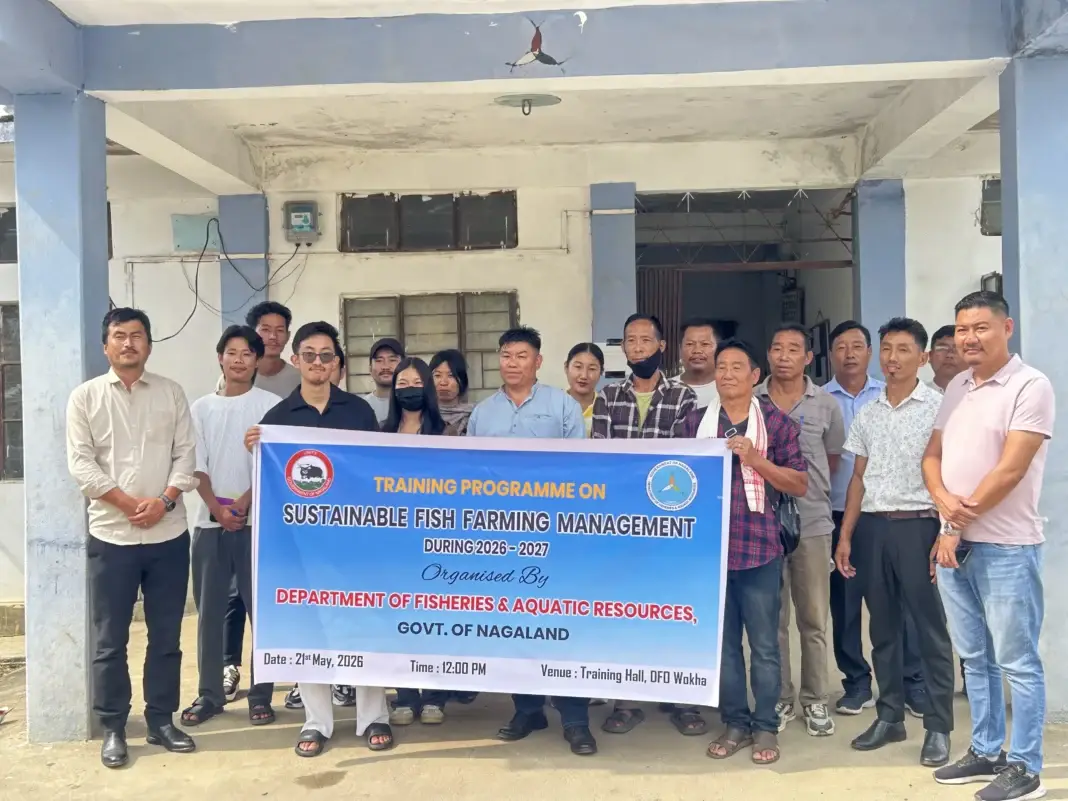
 Photo Courtesy: nagalandpost
Kohima: A training program on Sustainable Fish Farming Management took place in Wokha on May 21. The event focused on teaching farmers scientific techniques to improve productivity, ensure long-term economic gains, and protect aquatic ecosystems. District Fisheries Officer Rulanthung Ezung opened the session by highlighting how sustainable methods can provide reliable income and nutritional security for the local community.
During the first technical session, AFI Riimachang Aier introduced the concept of composite fish culture. This method involves raising multiple species in one pond by selecting fish that occupy different water levels. Surface feeders like Catla, middle column dwellers like Rohu and Grass Carp, and bottom feeders like Mrigal and Common Carp can coexist without hindering each other. By using species that consume different organic materials, farmers can reduce feed waste and maintain a healthier pond balance. Experts suggested stocking up to 10,000 fingerlings per hectare to reach optimum production levels.
The second session, led by AFI Khriezeto Zatsu, covered essential post-stocking care and fish health. Farmers learned that fish should be fed roughly three to five percent of their body weight daily, though he cautioned against feeding during heavy rainfall to avoid compromising water quality. Zatsu also recommended providing feed at a single location in the pond. This practice allows farmers to monitor the health and behavior of their stock while minimizing wasted food. Regular hygiene checks and careful observation of water conditions remain critical to reducing mortality rates and ensuring a successful harvest.





Comments