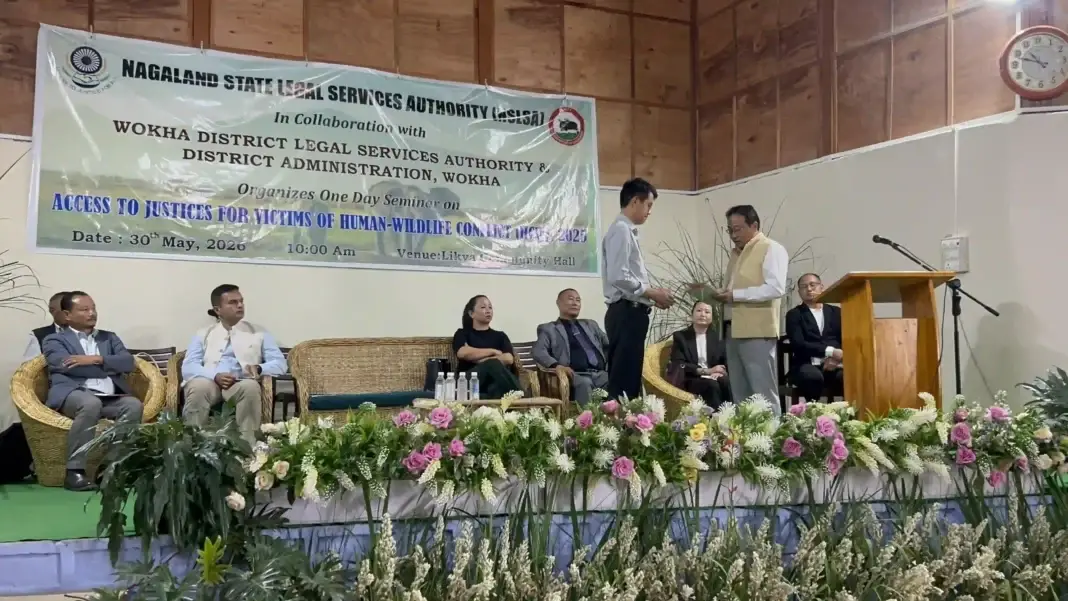
 Photo Courtesy: nagalandpost
Kohima: Wokha has become the most severely impacted district in Nagaland for human-elephant conflicts, with elephants documented in over 100 villages. Deputy Commissioner Mhathung Tsanglao stated that 60 of these areas are currently classified as active conflict zones. Since 2018, the region has recorded five human deaths as property damage to paddy fields, plantations, and farmhouses continues to escalate.
Officials attribute the rising tensions to habitat loss and the obstruction of traditional migratory corridors caused by human expansion. To address these challenges, the state recently formed the Doyang Wildlife Division, which covers Wokha, Mokokchung, and Zunheboto, to bolster mitigation strategies.
During a seminar held at Likya Community Hall, the Nagaland State Legal Services Authority introduced a new scheme to help victims navigate the legal system. Member secretary Neikho Akami explained that the initiative ensures residents receive support with documentation, filing claims, and securing compensation. This program marks the first of its kind in the state, specifically targeting those affected by wildlife encounters.
Data from the Nagaland State Disaster Management Authority shows that 483 people across 13 districts received over Rs. 70 lakh in relief between 2018 and 2026. Wokha received the largest portion of these funds, with 256 beneficiaries totaling Rs. 49.10 lakh. However, officials clarified that this funding serves as basic relief rather than full compensation.
Experts at the event, including Wildlife Warden Dr. C. Zubeni Tsanglao, emphasized that habitat preservation is a shared duty. They called for increased public awareness and better coordination between the government and local communities to foster peaceful coexistence.


Comments