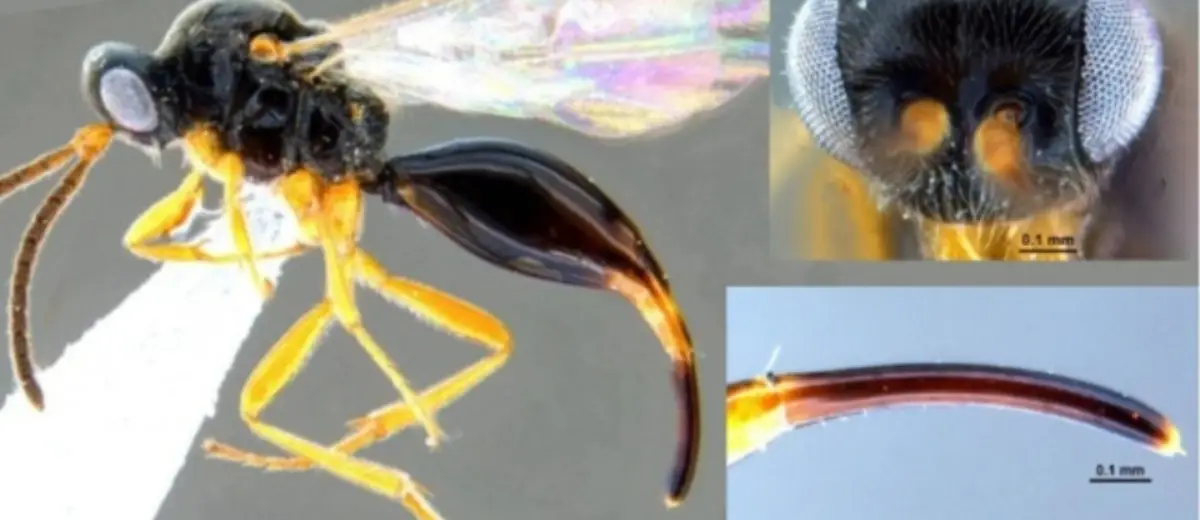
 Photo Courtesy: nenow
Guwahati: Researchers found a new species of parasitic wasp in Assam. The insect, named Oxyserphus narendrani, turned up in Dibru-Saikhowa National Park. Zoological Survey of India scientists Rupam Debnath and K. Rajmohana described the find in a September 2026 report. It marks the first time this genus has appeared in India or anywhere in the Oriental region.
The wasp is small. It measures just 3.3 mm. Experts captured the specimen in November 2024 using a yellow pan trap. A microscopic review confirmed it was a new species. It sports a single horizontal groove on its thorax, setting it apart from its Australian relative, Oxyserphus sulcatus, which carries six or seven radiating grooves. The new wasp also features a shorter ovipositor sheath and a specific wing spot.
The team named the insect after the late Dr. T. C. Narendran to honor his work on Indian parasitic wasps. While the genus typically lives in high-altitude zones, this one thrives in the lowlands. Before this discovery, researchers had only recorded eight species of the family Proctotrupidae in India. Scientists noted that "protected areas may contain species that have not yet been scientifically documented."
Dibru-Saikhowa spans the Tinsukia and Dibrugarh districts. The area became a Biosphere Reserve in 1997 and gained national park status in 1999. Known for birds and mammals, the park now proves it holds much deeper hidden biodiversity.






Comments