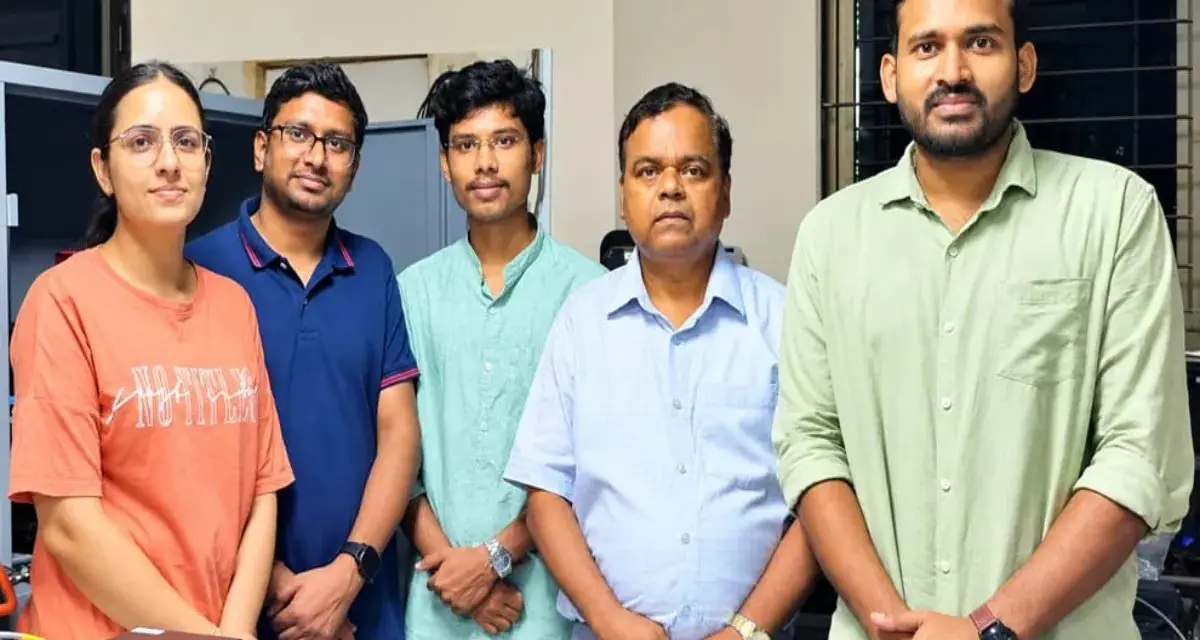
 Photo Courtesy: nenow
Guwahati: Researchers at the Indian Institute of Technology (IIT) Guwahati and IIT Kharagpur have engineered a light-sensitive device that mimics human brain functions. It handles sensing, memory, and processing on one platform. This design eliminates the need to move data between separate hardware components. The result is a system that uses 500 times less energy than standard MXene-based units.
The device relies on MXene nanosheets paired with an organic semiconductor named P3HT. These materials generate and hold electrical charges when exposed to light. The unit retains information after the light source shuts off. It also strengthens its response to repeated signals. During lab tests, the response to a second light signal jumped by 180 percent. Prof. P.K. Giri, the lead author from the IIT Guwahati physics department, noted the mechanism. "This is similar to our neurons learning through repeated stimulation," Giri explained.
The team put the tech to work on facial recognition and traffic-scene segmentation. It hit 90 percent accuracy in facial recognition. It reached 85 percent accuracy in traffic analysis. The device costs little to produce thanks to a solution-processing technique. The findings appeared in the journal Carbon. Future use cases include autonomous robotics and smart surveillance. The study co-authors include Sanjoy Sur Roy, Sanju Nandi, Debabrata Sahu, Garima Choudhary, M. Meyyappan, Saswata Goswami, and Chandra Sekhar Tiwary. Scientists must now work to scale the tech for real-world demands.







Comments