 Photo Courtesy: nenow
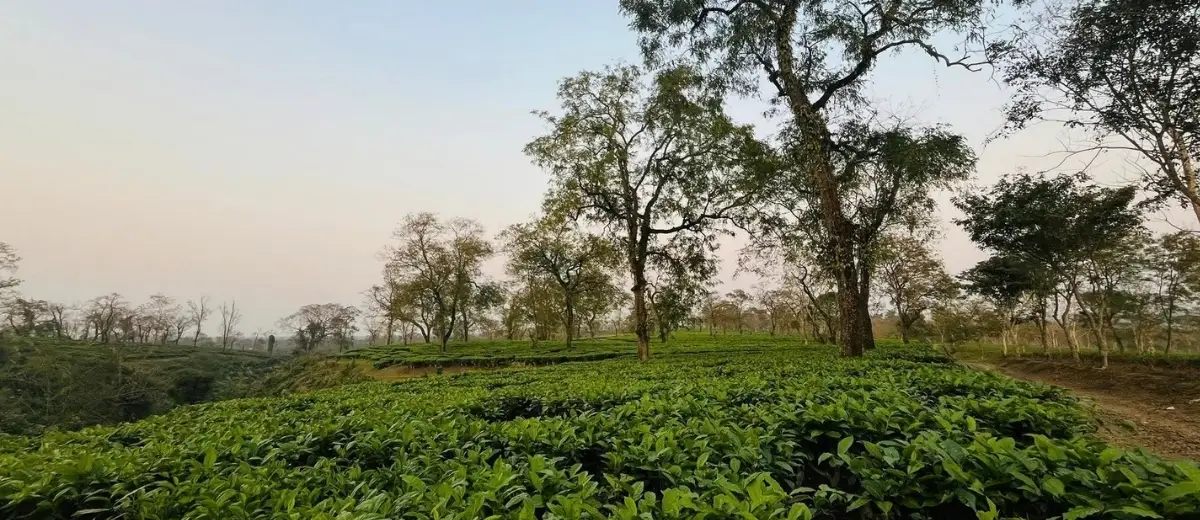
Guwahati: Wild tea plants tower 20 to 30 feet above the forest floor in the Charaideo district. They grow untended near the Assam-Nagaland border, buried in thick bamboo and vegetation. These trees mark the site of Senglung, a forgotten estate planted in 1845 by Maniram Dewan. He was the first Indian commercial tea planter and a leader in the resistance against British rule.
Dewan started Senglung and Cinnamara after quitting his executive role at the Assam Company. His life ended abruptly in 1858 when the British executed him for leading an uprising. The colonial government seized his estates and sold them to George Williamson, a British company. Local workers stayed loyal to their former boss. They refused to work for the new owners. The company eventually abandoned the site.
While Cinnamara thrived under new management, Senglung vanished from record. Local residents believe the name Singlo, a division of the nearby Suffry tea estate, stems from the original name of the garden. Workers still practice rituals to honor the past. The text notes, "Local traditions also suggest that workers connected with Dewan’s garden continue to perform Dewan Puja at the beginning of the tea production season."
The area, known as Nagasiri, features slopes once used by Naga communities for trade. Some of the ancient tea plants were cleared for construction or small farms. Researchers now want to study the survivors. These wild specimens may hold genetic secrets regarding disease resistance or local environmental adaptation. Experts argue that preserving this site protects both scientific data and the legacy of Indian independence efforts in the tea industry.






Comments