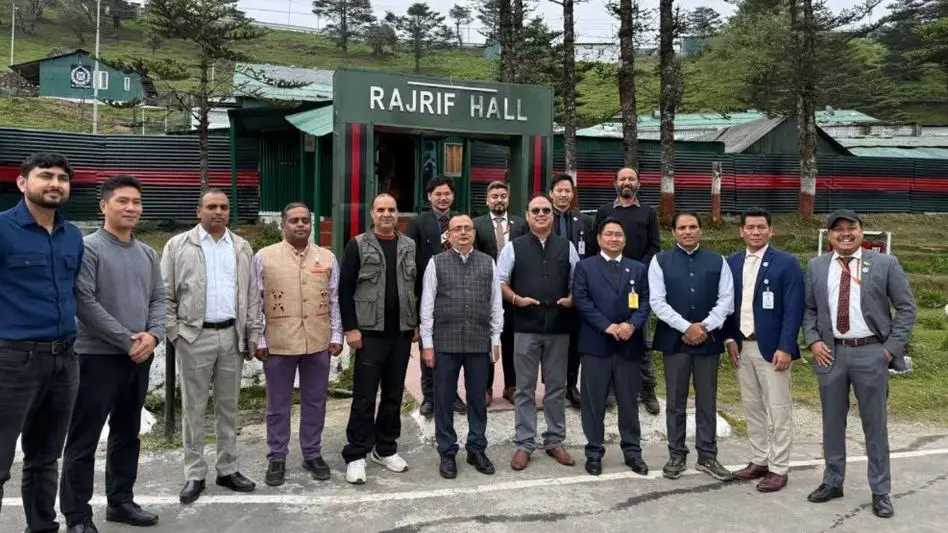
 Photo Courtesy: India Today Group
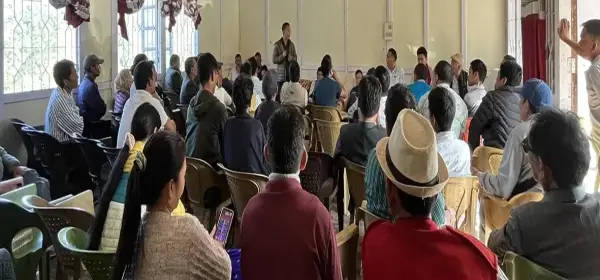
Itanagar: Scientific experts, government officials, and Indian Army representatives met in Tawang for a two-day consultation to address the rising danger of Glacial Lake Outburst Floods (GLOFs) in the Eastern Himalayas. The group focused specifically on the Mago Chu Basin, where the Khangri Glacier poses potential risks to downstream infrastructure and local communities.
Leading institutions involved in the review included the National Centre for Polar and Ocean Research, the Indian Institute of Technology Roorkee, and the Centre for Earth Sciences and Himalayan Studies. Participants noted that the region remains under-studied due to its high altitude and challenging terrain, forcing many researchers to rely on incomplete satellite data. Experts identified the need for detailed bathymetric surveys of sites like Sangye Neku Lake to better predict flood scenarios and understand water volume.
To mitigate these risks, specialists proposed using modular siphon-based drainage systems to lower water levels in a controlled, environmentally conscious manner. Addressing the meeting, the Director of the Centre for Earth Sciences and Himalayan Studies said, "Changes occurring in the Himalayan cryosphere have far-reaching consequences beyond mountain regions, affecting river systems, water security, energy production, ecosystems and communities downstream."
The consultation concluded with a unified commitment to improve field research and monitoring. Agencies plan to use these data-driven strategies to safeguard vulnerable populations and critical assets from future glacial hazards in Arunachal Pradesh.


Comments