 Photo Courtesy: nenow
Guwahati: Floodwaters tore through Assam on July 19, leaving thousands of families in Sivasagar and beyond without their homes or their primary source of income. In Nepali Khuti, residents watched as the Dikhow river surged, destroying livelihoods in a matter of hours. The water rose with terrifying speed. By 11 am, many families were trapped and unable to save even basic belongings. Kali Pradhan, a local resident, described the total loss: "Only the tin roof of our house is visible now. We could not save any household items. All our cows are gone. We have nothing left; everything has been destroyed."
The Assam State Disaster Management Authority reported 24,460 animals affected by the floods as of August 2. This count includes 13,835 large animals, 9,754 small animals, and 871 poultry birds. While official registers show zero animals washed away, local accounts from areas like Nepali Khuti contradict this, citing cattle swept into the current. Dhemaji recorded the highest impact with 10,527 affected animals, followed by Golaghat with 9,077, Jorhat with 3,114, and Sivasagar with 1,742.
Veterinary teams are now scrambling to prevent disease outbreaks in overcrowded relief shelters. Authorities have deployed 37 medical teams in Sivasagar and 43 in Charaideo to monitor health and provide treatment. Feed remains a critical shortage. The government has distributed 959 quintals of wheat fodder and 232.056 quintals of rice bran to support survivors. Relief camps are currently housing 7,553 large animals, 6,984 small animals, and 8,800 poultry birds.
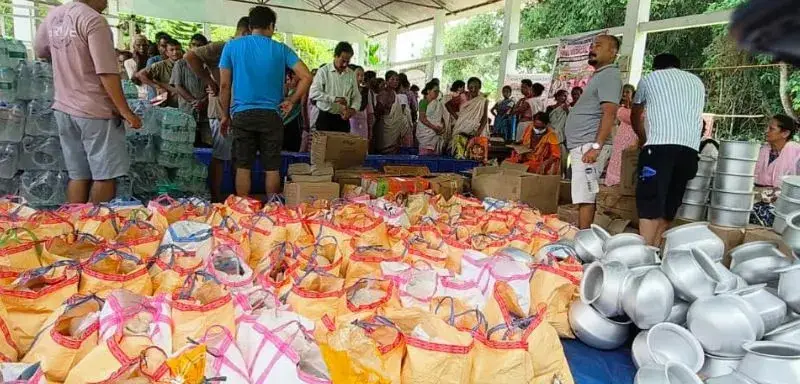
Humanitarian aid is reaching some corners. In Lakwa, the Amolapatty Rajohowa Namghar of Dibrugarh provided relief kits and medical services to 200 families in Loonporiya village. Supported by J.J. Memorial Hospital and Naharhabi Tea Estate, the group also pledged to fund the education of a local student who lost her school supplies to the flood. Despite these efforts, residents remain desperate. For dairy farmers like Rajen Pradhan, the loss of cattle is a permanent blow to their economic future. Recovery requires more than just clean-up. Families need livestock replacement, credit, and long-term aid to rebuild what the flood destroyed.




Comments