 Photo Courtesy: nagalandpost
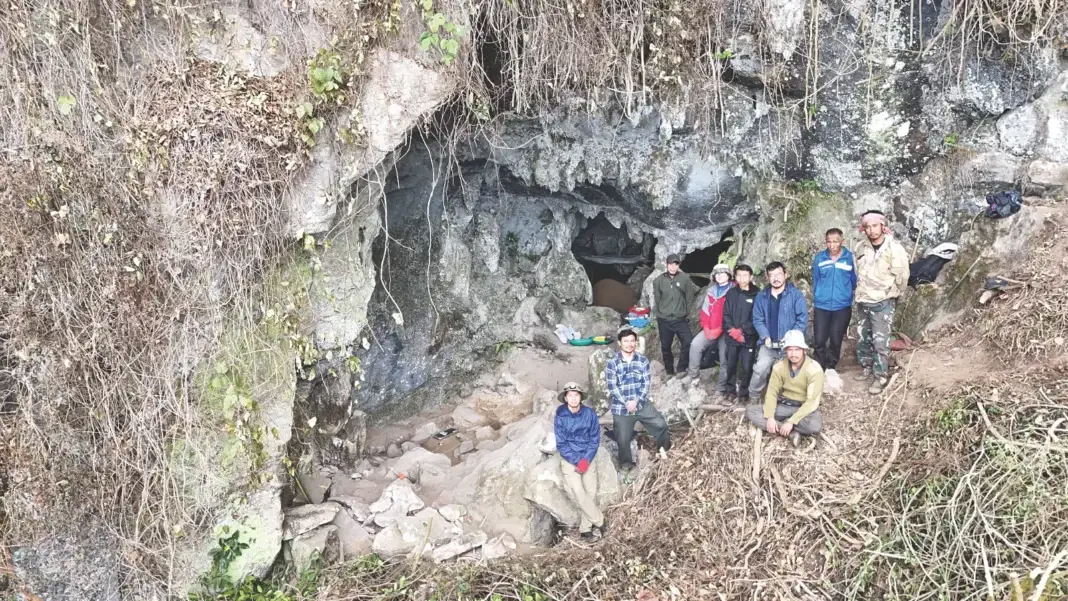
Kohima: Archaeologists have discovered prehistoric human habitation in the limestone caves and rockshelters of Nagaland’s Noklak district. The findings suggest early communities lived there 3,500 years ago. A joint team from Nagaland University and the state Department of Art and Culture led the exploration this March. They scouted the rugged terrain around Chiphur Village with help from the local village council.
The expedition identified five caves and four rockshelters. Excavations unearthed cord-marked pottery, ground stone tools, and ancient hearths. The team also found carbonised cereal grains, specifically foxtail millet and Job’s tears, alongside wild animal remains. These items point to a mixed lifestyle of hunting and farming.
Beta Analytic Laboratory in Florida performed Accelerator Mass Spectrometry dating on the deposits. Results place the Leilo Kaa rockshelter at 3,500 years old. The Kathso Kaa cave dates back 1,000 years. This confirms the sites were used continuously from prehistoric times through the historical era.
The research team included Prof. Tiatoshi Jamir, Dr. Heme Lamthaiu, Dr. Limasanen Longkumer, Archaeological Research Officer Khumeng T., Robinson Huidrom, and Victoria Leyri from Delhi University. Experts believe these findings confirm Northeast India acted as a key corridor for ancient human migration. The Naga Hills Ophiolite Belt and the Naga Metamorphic Complex offer deep potential for future study. Researchers noted, "Scientific dating of such sites is gradually revealing a more holistic picture of the subsistence lifestyle, tool and ceramic technology, burial traditions and worldviews of the early inhabitants."
The state government plans to host a public exhibition of the artefacts this October. The display will take place at the State Museum and Nagaland University.






Comments