 Photo Courtesy: morungexpress
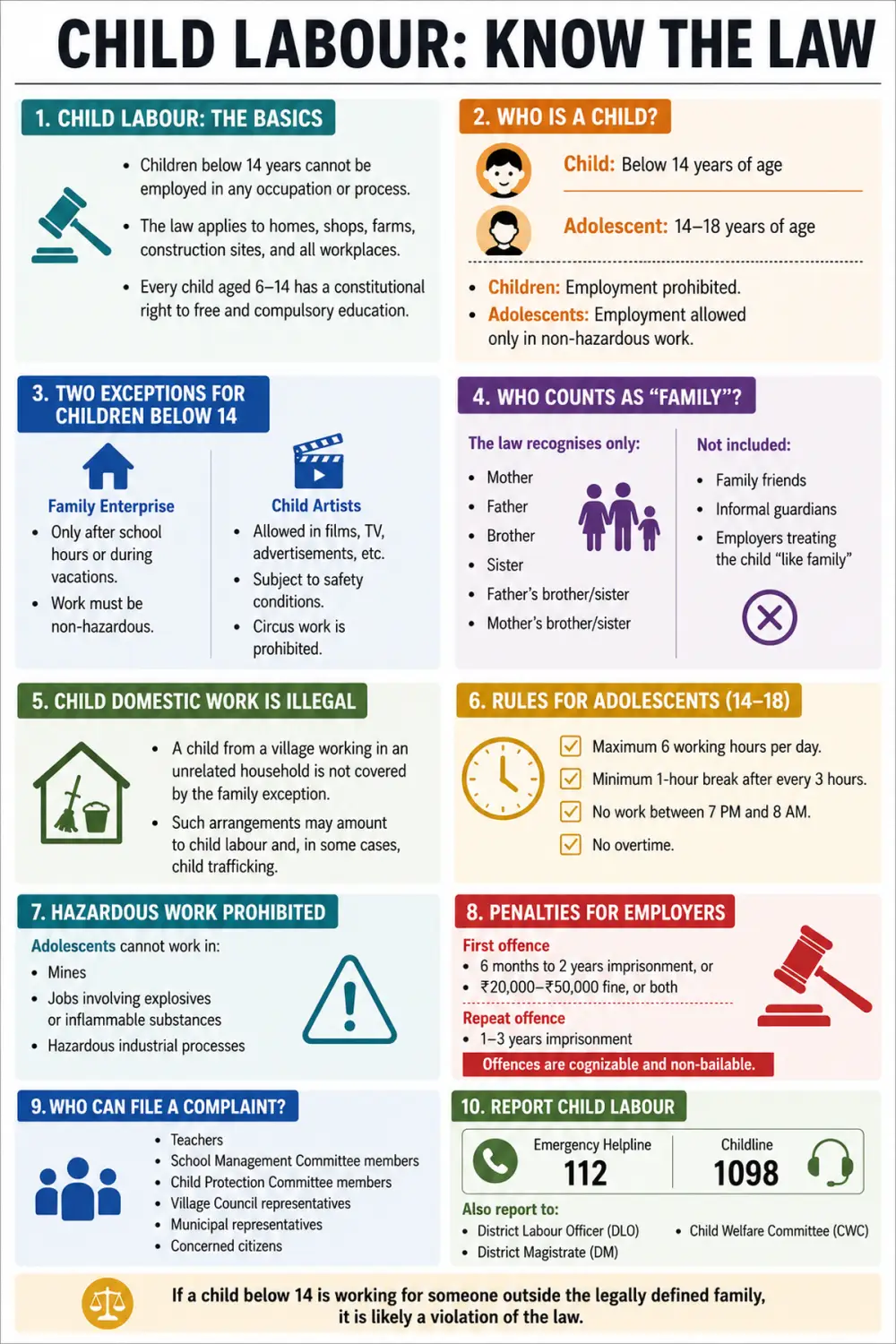
Kohima: In India, protecting children from exploitation is a fundamental constitutional right. The legal framework centers on two core pillars: Article 24, which bans the employment of children under 14 in hazardous industries, and Article 21A, which guarantees free and compulsory education for children up to age 14. These guarantees are enforced through the Child and Adolescent Labour (Prohibition and Regulation) Act of 1986, which underwent significant amendments in 2016 to move from regulation toward total prohibition.
The Act draws a sharp distinction between children and adolescents. A child is defined as someone under 14, while an adolescent is between 14 and 18 years old. For those under 14, the law is absolute. As stated in Section 3(1), "No child shall be employed or permitted to work in any occupation or process." This rule applies to every sector, including domestic work, construction, and agriculture.
Limited exceptions exist for children helping in family enterprises, provided the work is non-hazardous, happens outside of school hours, and involves only immediate family members. Any arrangement involving children from outside these biological definitions, such as rural children working in urban domestic settings, constitutes a legal violation and potentially human trafficking. Adolescents are permitted to work in non-hazardous roles, but they are protected by strict regulations regarding hours, rest intervals, and a total ban on night shifts.
Penalties for employers are severe, including imprisonment and hefty fines. Offenses are classified as cognizable and non-bailable, allowing law enforcement to intervene immediately. The 2016 amendment also established a rehabilitation fund to provide financial support to rescued minors, ensuring that victim care is not delayed by employer litigation. District Magistrates oversee the implementation of these rules, supported by local labor inspectors.
Citizens play a vital role in enforcement. Teachers, village representatives, and protection committee members are authorized to file official complaints. Suspected cases of child labor can be reported to the National Helpline at 1098, the Emergency Response Support System at 112, or local offices of the District Labour Officer and the Child Welfare Committee.


Comments