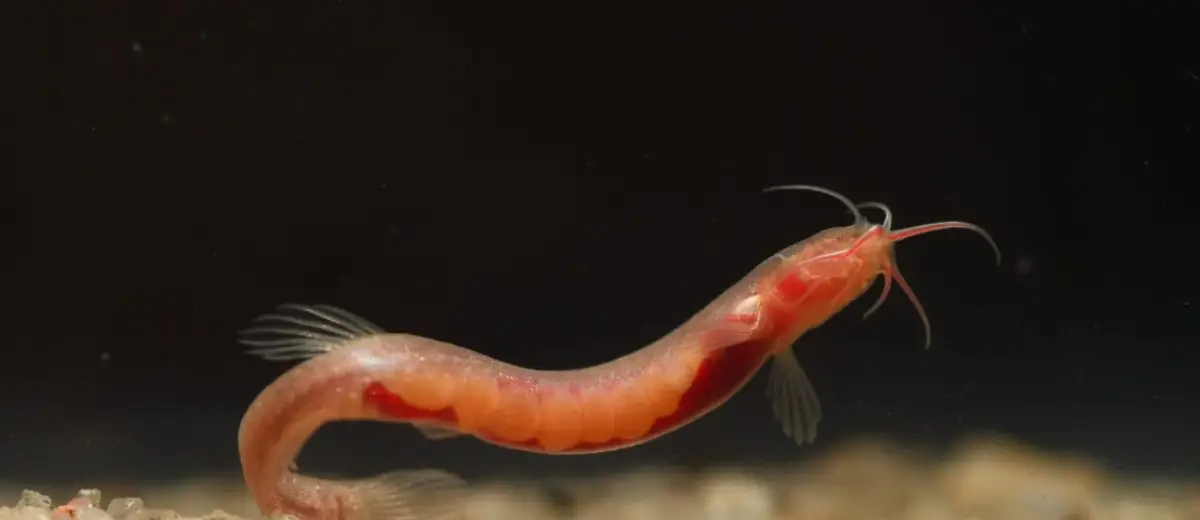
 Photo Courtesy: nenow
Guwahati: Researchers have identified two new subterranean fish species living in groundwater wells across Assam’s Goalpara district. The discoveries include a two-centimetre blind loach and a slender, eel-like fish. Locals often mistook the animals for worms.
Wimarithy K. Marak, a researcher who first encountered the loach in 2021, confirmed its identity after taking a specimen to a lab. The creature, named Gitchak nakana, possesses a transparent body and a striking red appearance. The name combines Garo terms for the color red, fish, and blindness. In 2024, Marak’s relatives found a second species, Rakthamichthys anchi, while cleaning a well. This specimen measured 310 mm and belongs to the Synbranchidae family, also known as swamp eels.
The research team collaborated with German experts to perform micro CT scans on the specimens. Lead author Ralf Britz noted the difficulty of understanding how these animals evolved in such a shifting environment. "The wells are situated in alluvial deposits, a quickly changing environment, in which it is difficult to imagine how a subterranean fauna evolved," Britz said. These fish likely dwell in aquifers, venturing into semi-open wells for food like insects or fallen debris.
Co-author Rajeev Raghavan of the Kerala University of Fisheries and Ocean Studies noted the danger of human-fish conflict. People often kill these creatures, fearing they are toxic or invasive. Researchers have kept the exact locations of these wells secret to prevent habitat exploitation. Experts warn that groundwater pollution from urbanization and agriculture threatens these species before they can even be fully cataloged.
Geologist Prerona Das pointed out that northeast India’s deeper groundwater systems remain largely unmapped. Increased regulation is vital. Without it, unique species may vanish before discovery.
Updated at 21st October 2026 at 6:00pm
The name Gitchak nakana breaks down into specific regional roots. Gitchak is a Garo word for the red shade of the fish, while nakana comes from natok, the Garo word for fish, and kana, meaning blind. For the eel, the name Rakthamichthys anchi pulls from two languages: anchi and raktham are Garo and Malayalam terms for blood, joined with the Greek word ichthys for fish.
These fish likely survive on a low metabolic rate, which allows them to go months without eating after a single meal. Experts suspect they migrate into wells because these spots provide more food, such as fallen insects and leaves, along with better oxygen and light compared to the dark, cramped spaces of the aquifer sediments.
Ecologists now suggest that simply looking in wells might provide a skewed view of these populations. Because wells act as traps, researchers recommend using environmental DNA (eDNA) sampling to confirm if these species live elsewhere in the surrounding underground aquifers. This process involves purging the well water and testing it for genetic material left behind by the fish.
State environment officials have officially recognized the findings, confirming that the specimens were verified through international partnerships. The discovery serves as a baseline for the region, as deeper groundwater systems in northeast India remain unmapped beyond 200 metres.




Comments