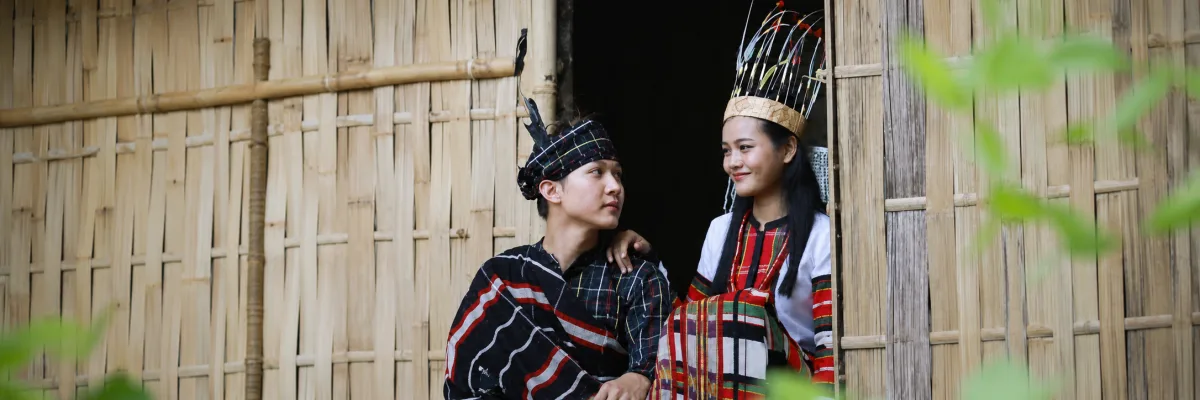
"A 2026 amendment to Mizoram's marriage and inheritance law excludes Mizo women married to non-Mizo men from statutory protections while retaining identical protections for Mizo men. A Supreme Court petition now asks whether tribal autonomy under Article 371G can shield a state legislature from the fundamental rights guarantees of Articles 14 and 15."
In 1984, Lalsangliani Colney married a non-Mizo man Her marriage did not invite any statutory consequence under Mizoram law for more than four decades. That changed in February 2026, when the Mizoram Legislative Assembly unanimously amended the Mizo Marriage, Divorce and Inheritance of Property Act, 2014, to exclude women in her position from the Act’s protections, while retaining those protections for Mizo men marrying non-Mizo women. On 8 May 2026, Colney filed a writ petition in the Supreme Court of India. Her case is not just a personal grievance. It tests the constitutionality of whether Article 371G that insulates Mizo customary law from parliamentary interference can also insulate a state legislature from the fundamental rights guarantees of Articles 14 and 15. The ruling will set a precedent for how every other northeastern state with special constitutional protections approaches balancing tribal sovereignty with gender equality.
The 2014 Act itself was a major piece of legislation. It codified Hnam Dan, the customary Mizo law which for centuries governed marriage, divorce and inheritance, in a manner accepted as progressive by women’s organisations. The Act was applicable to all Mizo persons and also to marriages in which the husband was Mizo irrespective of the community of the wife. It maintained the tradition of patrilineal ultimogeniture, where the youngest son was given an extra share of the family estate on the condition that he cared for his parents, but it also protected women's personal property and modified property rights in relation to divorce. The three Autonomous District Councils in Mizoram operate under the sixth Schedule of the Constitution and have their own set of customary laws. The Act did not apply to them.
The 2026 amendment changes this structure in four material respects. First, the amended Section 2 now restricts the application of the Act to marriages where both spouses are Mizo or where the husband is Mizo. Specifically excluded are Mizo women marrying non-Mizo men. Second, amended Section 3(m) redefines “Mizo” to include people by birth or people whose father is a member of a Mizo tribe, meaning that children of Mizo women who are married to non-Mizo men are rendered ineligible for statutory protections. Third, the amendment removes Section 26(1), which protected a woman’s personal property from interference. Fourth, it limits a woman’s claim to acquired property on divorce. It also bans polygamy and bigamy and removes leprosy from the list of grounds for divorce.
According to the petition filed through Advocate-on-Record Pulkit Agarwal, these changes violate Articles 14, 15, and 21 of the Constitution. The petition also contends that the Mizoram Legislative Assembly has no power to change the criteria of Scheduled Tribe, which is in the exclusive domain of the President under the Constitution under articles 341 and 342. The Supreme Court has received the petition but it is yet to be listed for hearing.
The constitutional architecture in which this dispute takes place is distinctive. The 53rd Amendment inserted Article 371G into the Constitution after the Mizo Accord of 1986. It states that no Act of Parliament shall apply to Mizoram pertaining to Mizo customary law, social practices and land ownership unless the state legislature resolves otherwise. The provision is an acknowledgement of the historic settlement which ended the Mizo National Front insurgency and recognised the cultural autonomy of the state. Meanwhile, the Sixth Schedule vests parallel legislative powers with the Autonomous District Councils over marriage, inheritance and social customs. The 2014 Act specifically excludes the three ADCs in Mizoram, leading to a dual legal regime within the state.
The key question of governance is whether Article 371G confers immunity from review of fundamental rights or merely limits parliamentary power. The explanation given by the state government that the amendment is only a “clarification” of the scope of the 2014 Act is hard to square with the documentary record. The 2014 Act applied to all Mizo persons regardless of the spouse’s community. The amendment of 2026 introduces a classification by gender and matrimonial choice that did not exist in the previous statute. Chief Minister Lalduhoma, who introduced the bill as the Minister for Law and Judicial Affairs, publicly said that Mizo women marrying non-Mizo men will lose their Mizo status and the entitlements that go with it. This is not a clarification . It is a legislative reversal with documented consequences for property rights, inheritance and, possibly, Scheduled Tribe status.
The gender asymmetry is the most important aspect of the amendment. A Mizo man marrying a non-Mizo woman is fully statutorily protected. A Mizo woman who makes the same choice is ostracised. Amended Section 3(m) reinforces this asymmetry further by defining Mizo identity through paternal descent, which has the effect of denying the protections available to children of Mizo men in inter-community marriages to children of Mizo women in similar marriages. Article 15(1) of the Constitution prohibits discrimination on grounds of religion, race, caste, sex or place of birth. The statutory text supports the petitioner’s contention that the amendment directly implicates this prohibition.
The issue of legislative competence poses a distinct constitutional problem. Articles 341 and 342 state that the President will specify the Scheduled Castes and Scheduled Tribes for each state, and Parliament can by law add or remove communities from those lists. The petition says the state legislature has changed the definition of Scheduled Tribe by redefining “Mizo” through the paternal lineage of a marriage law, without following the constitutional process. This is no technical objection. If a state legislature is permitted to change the criteria of tribal identity through personal law then the constitutional architecture that governs tribal status becomes unstable.
The behaviour of the Mizoram Legislative Assembly should be examined. The amendment passed unanimously on 24 February 2026, with no recorded dissent on its gender implications. The Assembly’s democratic mandate is unimpeachable. Its constitutional duty to make sure that legislation is in line with fundamental rights. The 2014 Act was lauded as liberatory. The 2026 amendment abolishes women’s property protections and introduces a gender-based exclusion. There is no evidence on record that customary law requires these changes. The 2014 Act codified the historic practice of patrilineal ultimogeniture but this in itself does not justify the new classification. In 2014, the superior right of the youngest son to one extra share of ancestral property was upheld as a conditional customary practice. It is a legislative innovation, rather than a customary codification, that the Act excludes women on the basis of the identity of their husband.
Editor's Note: This is the first of two parts. The second part will examine the institutional responsibilities of the Governor, the Supreme Court, and the central government; the competing narratives of tribal preservation and gender equality; and the governance recommendations arising from this case.





Comments